Weed management

How can farmers identify and address common seed-related issues, such as seed-borne diseases or poor seed vigor?

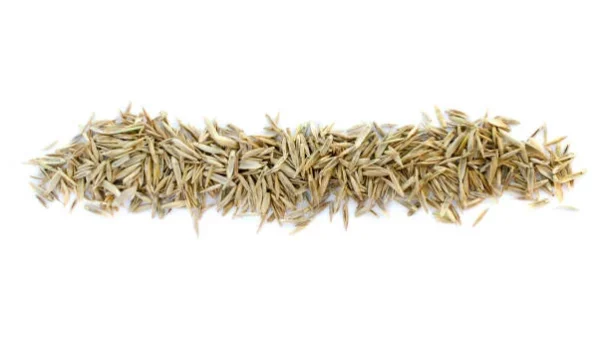
Obtain quality seeds: Begin with seeds of the highest caliber from dependable sources. Purchase seeds from trustworthy seed suppliers or reputable seed growers who adhere to ethical seed production procedures. Quality seeds have passed testing and adhere to strict guidelines for purity, germination, and disease-freeness.

Simple seed quality tests can be carried out by farmers to evaluate germination rates, purity, and vigor. In germination testing, a representative sample of seeds is planted in a controlled environment, and the proportion of seeds that successfully germinate is tracked. Seeds are visually inspected as part of purity testing to look for weed seeds, off-types, or foreign objects. Tests on seed vigor determine whether seedlings will germinate and grow quickly.
Practice seed treatment: Seed-borne infections can be addressed and seed performance can be improved by using seed treatment techniques. Fungicide or insecticide coatings, priming or pre-conditioning treatments to improve germination and early seedling growth, and biological treatments utilizing advantageous microorganisms to support plant health are some examples of treatments.

Ensure adequate seed storage: Maintaining the viability and quality of seeds requires proper seed storage. To reduce moisture and temperature variations, store seeds in a cold, dry, and well-ventilated environment. Use seed bags or airtight containers to keep pests and fungi out of your seeds. Seed variety, storage date, and any other pertinent information should be written on containers.
What are the issues related to gender inequality and women’s empowerment in the agriculture sector?

women

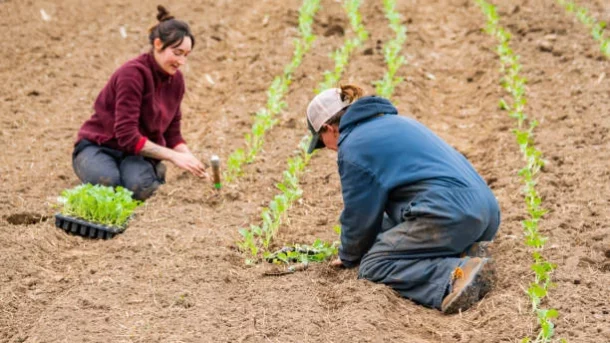
Access to resources is restricted for women frequently, including to land, loans, inputs, and technologies. Women’s access to land ownership and control can be limited by discriminatory societal norms and legislative restrictions, which makes it harder for them to finance and profit from agricultural endeavors. Women’s ability to grow their agricultural businesses or embrace contemporary farming methods is further hampered by their limited access to credit and financial services.

Unfair participation and decision-making: Women frequently have little voice in policy, community, and farm decision-making. Women are restricted by conventional gender roles and stereotypes to performing mostly unpaid domestic and caregiving duties, while men predominate in making decisions about farming, marketing, and resource allocation. Women’s views and perspectives are being marginalized, which reduces their influence on agricultural policies.

Unfair access to education and training: Women frequently have lower levels of education and training than men, especially in rural areas. This restricts their access to technical education, contemporary farming methods expertise, and agricultural extension services. As a result, women may rely on conventional farming practices that are less productive, which lowers production and decreases resilience to problems like climate change.

Unpaid and undervalued labor: Women’s contributions to agriculture, such as their unpaid domestic and agricultural work, are sometimes overlooked and underappreciated. Women perform a variety of responsibilities in agriculture, including planting, weeding, harvesting, and post-harvest work, yet their work is sometimes overlooked in official statistics and in agricultural policies and initiatives. This lack of visibility strengthens the undervaluation of women’s contributions and gender inequality.

What are the implications of changing consumer demands for organic and locally sourced products?

organic and locally

For the agricultural sector, shifting customer preferences for organic and locally sourced goods have important ramifications. Here are some significant ramifications:

Market Opportunities: In recent years, the demand for organic and locally derived products has been continuously increasing. For farmers who can satisfy these consumer preferences, this opens up new market prospects. Producers who can adopt sustainable agricultural methods or gain organic certifications can take advantage of this specialized market and possibly charge better prices for their goods.

Change in Production Methods: In order to meet consumer demand for organic and locally sourced goods, production methods frequently need to change. Changes in crop rotation, pest and weed control, and the use of organic farming techniques may be necessary for farmers to move from conventional farming methods to organic farming practices.

Benefits for Sustainability and the Environment: Organic farming methods, which eschew synthetic chemicals and put soil health first, can benefit the environment. Organic farming can reduce soil erosion, water pollution, and harmful effects on biodiversity by using less synthetic pesticides and fertilizers. Locally sourced goods can also support local food systems and lessen the environmental impact of long-distance shipping.

What are the current debates on genetically modified crops and their impact on ecosystems?

modified

Genetically modified organisms (GMOs) and their effects on ecosystems are the subject of a complicated and frequently divisive discussion. Here are some salient issues that sum up the ongoing discussions on this subject:

Possible advantages of GMOs:

Increased Crop Productivity: GMO supporters contend that their products can increase crop productivity, resulting in larger yields and more food being produced. This is especially important when trying to solve problems with global food security.
The demand for chemical pesticides and herbicides can be reduced by engineering GMOs to have built-in resistance to pests, illnesses, and environmental challenges.
Enhanced Nutritional Content: Genetic modification can be used to enhance the nutritional profile of crops, possibly addressing nutritional deficits in some populations, by adding more vitamins or minerals, for example.

Environmental Issues:-

Ecological Impact: GMO critics express concern over possible unexpected effects on ecosystems. The potential for harm to unintended organisms, the disturbance of natural processes, and the likelihood of gene flow to wild relatives are all included in this.
Loss of Biodiversity: According to some, the acceptance of GMOs on a large scale could result in a decline in biodiversity if a few genetically modified crop varieties come to dominate agricultural landscapes, displacing more conventional and locally adapted kinds.
Herbicide Resistance: The usage of GMOs designed to resist herbicides has, in some situations, resulted in increased herbicide use, which can have detrimental effects on ecosystems and promote the growth of weeds that are resistant to herbicides.

How is the use of artificial intelligence and machine learning revolutionizing agriculture?

artificial intelligence

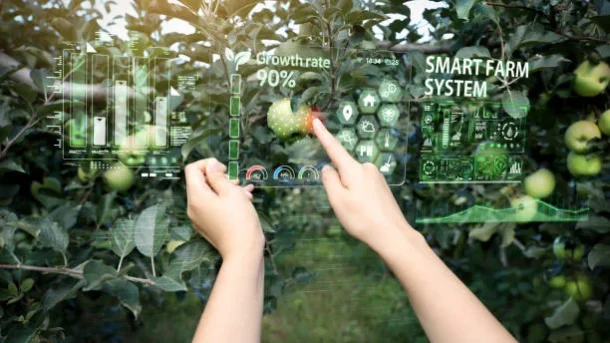
By enabling data-driven decision-making, optimising farming techniques, and raising productivity, artificial intelligence (AI) and machine learning (ML) are transforming agriculture. Here are some significant changes that AI and ML are making to agriculture.

In order to offer information on crop health, soil conditions, and pest infestations,artificial intelligence and machine learning systems analyse data from a variety of sources, including satellite imagery, drones, and sensors. With the use of inputs like water, fertiliser, and pesticides, farmers may target particular areas, maximising resource allocation and minimising waste.

Crop monitoring and yield forecasting: AI-powered systems can keep an eye on crops all through the growing season, gathering information on things like plant health, growth rates, and weather. By examining this data, machine learning (ML) models can forecast crop yields, assisting farmers in making decisions about harvesting, storing, and marketing.

Weed and Pest Management: Using photos taken in the field, AI and ML systems can recognise and categorise weeds and pests. The use of pesticides or herbicides on a large scale can be avoided by farmers who use this information to adopt tailored control techniques.

How Weeding Management is done through Robotics?

Weeding

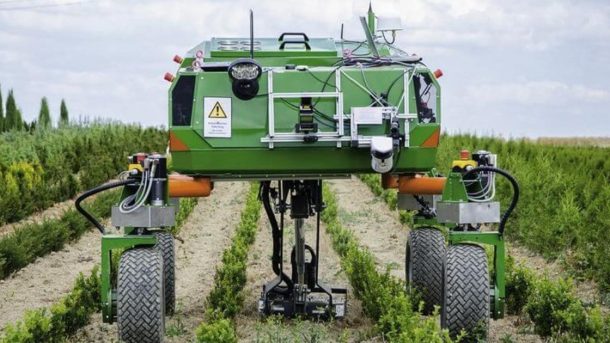
To describe the position of the weeding more precisely, there are two different methods to do it. The first method is to record the increased leaf area in the weedy areas. The difference between crop and weed is that weed grows patchy while crop grows in rows. The other method is more accurate and uses shape recognition. This method recognizes the weed species on their outline shape and up to 19 different species can be recognized by this method. The recorded data is turned into a treatment map for the field. This weed map can be used for the weeding. The weed can also be removed while the robot is recognizing the unwanted plants.

How Weeds are Controlled in Holy basil?

Weeds

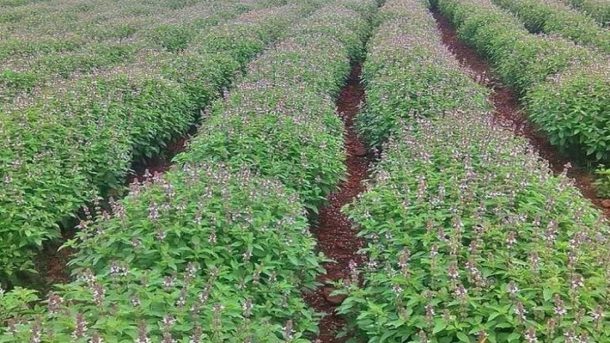
 Interspaces of Tulsi Garden needs to be maintained weeds free. The first weeding and hoeing should be carried out 30 days after transplanting and the second weeding after 1 month from the first weeding time. At this point in time, usually, the tulsi plant become bushy and cover the soil, hence there is no need of carrying any weeding operations. However, weeding operations should be continued after every harvest.