Seed

Can biofertilizers be used to promote root nodulation in legume crops?

root nodulation

Enhancing root nodulation in legumes using biofertilizers containing suitable rhizobia strains can promote nitrogen fixation and improve plant development. In legume crops, biofertilizers encourage root nodulation in the following ways:

Rhizobia inoculation: Compatible rhizobia strains are frequently present in biofertilizers made for legume crops. These biofertilizers transfer the advantageous rhizobia to the root zone when applied to legume seeds or plant roots, aiding in the development of a symbiotic connection.

The rhizobia in the biofertilizers infect the roots of the legume plants and cause the growth of root nodules. Rhizobia in these nodules use biological nitrogen fixation to change atmospheric nitrogen (N2) into ammonia (NH3). Rhizobia are given carbon sources from legumes in exchange for a supply of fixed nitrogen.

Increased nitrogen availability: Biofertilizers improve the availability of nitrogen for the legume plants through root nodulation and nitrogen fixation. This increases the fertility of the soil and lessens the legume’s reliance on synthetic nitrogen fertilizers.

Promotion of plant development: Better plant growth is supported by the increased nitrogen supply provided by root nodules, which results in healthier legume crops with higher yields.

Agriculture that is sustainable must include biological nitrogen fixation and root nodulation as key elements. Farmers can use more inexpensive and environmentally friendly methods of managing nitrogen by using biofertilizers that encourage root nodulations.


How do biofertilizers influence the production of plant growth hormones?

production

Through the actions of some helpful microorganisms they contain, biofertilizers can affect the production of plant growth hormones. These bacteria have the ability to either directly make plant growth hormones or indirectly encourage the host plant to produce hormones. Plant growth hormones, sometimes referred to as phytohormones, are essential for controlling a variety of physiological activities in plants, including as growth, development, and stress responses. The following describes how biofertilizers affect the synthesis of plant growth hormones:

Production of auxins: Some biofertilizers, notably bacteria that promote plant development, have the ability to produce and release auxins like indole-3-acetic acid (IAA). Auxins play a role in apical dominance, root growth, and cell elongation. These auxin-producing bacteria can improve root development and branching when administered to plants.

Production of cytokinins: Some biofertilizers include microbes that create cytokinins, including zeatin. Cell division and differentiation depend on cytokinins. Enhanced nutrient transfer, postponed senescence, and increased shoot growth are all effects of higher cytokinin levels in plants.

Production of gibberellins: Some biofertilizers could include bacteria that can produce gibberellins. Gibberellins play a role in flowering, seed germination, and stem lengthening. The use of such biofertilizers can encourage the growth of taller plants and longer stems.

Modulation of ethylene: Ethylene is another crucial plant growth hormone, and several biofertilizers have the ability to control its production or activity. Several processes, including fruit ripening, leaf abscission, and stress reactions are influenced by ethylene. In order to promote delayed senescence and increase the shelf life of fruits and vegetables, biofertilizers may assist lower ethylene levels.

What are the different application methods for biofertilizers?

different

Depending on the type of biofertilizer and the particular needs of the crops being cultivated, different ways can be used to apply it to soil and crops. The following are some typical techniques for applying biofertilizers:

Biofertilizers can also be used as seed treatments, in which case the seeds are coated or injected with the advantageous bacteria prior to planting. The symbiotic association between the microorganisms and the developing plant is established from the earliest stages of development with the aid of seed treatment.

Before being transplanted into the field, the roots of the plant are covered in a biofertilizer suspension using the root dip technique. By ensuring direct contact between the helpful bacteria and the root system, root dipping helps to promote colonization and nutrient absorption.

Soil Drench: Biofertilizers can be sprayed or drenched over the ground near plant roots to fertilize the soil. By directly introducing the beneficial microbes to the rhizosphere by soil soaking, one can encourage their establishment and interaction with plant roots.

Before transferring seedlings or young plants to the field, this technique calls for dipping the roots in a suspension of biofertilizer. By enhancing early root colonization and nutrient uptake, seedling dipping can give plants a head start in their growth.

Spraying a liquid biofertilizer solution onto the leaves of the plants is known as different foliar application of biofertilizers. Foliar application makes it possible for the advantageous bacteria to make direct contact with the plant leaves, which facilitates nutrient absorption through the stomata.

What is the role of agricultural insurance in mitigating production risks?

agricultural insurance

For farmers and agribusinesses, agricultural insurance is essential for reducing production risks. Agriculture is always vulnerable to a range of risks, such as unfavorable weather, pests, illnesses, price swings, and market uncertainty. Crop failures, decreased yields, and financial hardship for farmers are all possible outcomes of these hazards. A safety net and financial shield against such hazards are provided by agricultural insurance, assisting farmers in recouping losses and sustaining their livelihoods. Here are some ways that agriculture insurance reduces production risk:

Weather-related Risks: Crop insurance, a popular form of agriculture insurance, provides coverage for losses brought on by unfavorable weather conditions like floods, storms, and excessive rainfall. Farmers can recover some of their investment from crop losses and lessen the financial burden of weather-related risks by paying for crop losses.

Crop Failure and Yield Loss: Crop insurance covers crop failure and yield losses brought on by outside forces such as pests, diseases, and other natural calamities that are beyond the control of the farmer. It makes sure that farmers can continue their agricultural endeavors and recover some of their losses.

Price Fluctuations: Some agricultural insurance plans, such as revenue insurance, shield farmers against market price swings. Farmers are compensated to help cover the difference and stabilize their income if market prices fall below a specific threshold.

In some circumstances, agricultural insurance may provide compensation for input expenditures, such as those associated with seeds, fertilizer, and pesticides, in the event that a crop fails. In the event of unanticipated situations, this aids farmers in recovering their expenses.

How are agricultural subsidies and support programs distributed globally?

subsidies

Global distribution of agricultural assistance and subsidy schemes is achieved through a confluence of national and international legislation. Depending on each nation’s agricultural interests, economic situation, and trade agreements, the distribution and types of subsidies vary widely. The following are some typical methods used to disseminate agricultural support and subsidy programs across the globe:

Domestic Subsidies: To boost their agricultural sectors, the majority of nations offer domestic subsidies. These subsidies may be designed to directly aid farmers financially, support a certain agricultural technique, increase production, or stabilize farm incomes. Direct payments, price support mechanisms, input subsidies (such as for fertilizer and seeds), and risk management programs (such as crop insurance) are all examples of domestic subsidie.

Export Subsidies: Some nations provide export subsidie to increase the competitiveness of their agricultural products on world markets. In order to lower the cost of exporting agricultural products, exporters may receive financial aid or incentives.

Market Price Support: To maintain the pricing of agricultural commodities, governments may employ market price support schemes. These schemes entail buying excess produce from farmers at set rates or becoming involved in the market to stabilize prices.

Input Subsidies: To help farmers afford the cost of agricultural inputs including fertilizer, seeds, herbicides, and machinery, several nations offer input subsidie. Input subsidie are intended to increase productivity and increase the economic viability of agricultural production.

Support for Rural Development and Infrastructure: Governments may make investments in rural development in addition to providing direct payments to farmers.

What are the challenges in implementing sustainable agricultural practices in developing countries?

implementing sustainable

Economic, social, and environmental considerations might make it difficult to implementing sustainable agriculture techniques in underdeveloped nations. Depending on the unique circumstances of each nation, these difficulties can vary, however some typical roadblocks include:

Limited Access to Resources: In developing nations, smallholder farmers frequently have trouble getting access to basic resources including land, water, high-quality seeds, fertilizer, and agricultural inputs. Adoption of sustainable methods may be hampered by high costs and limited supply.

Financial Restrictions: Many farmers in poor nations have financial restrictions when investing in environmentally friendly techniques and technologies due to their restricted access to credit. They could be unable to buy equipment or implement sustainable practices because of a lack of funding, which could result in higher initial costs.

Education and Awareness: Farmers and rural communities may have insufficient knowledge and awareness of sustainable agriculture practices. The adoption of implementing sustainable practices must be encouraged through educational outreach and capacity-building initiatives.

Traditional Farming Methods: Some rural communities have a strong heritage of using old-fashioned farming techniques that may not be viable. It might be difficult to persuade farmers to switch to new and unorthodox sustainable techniques.

Infrastructure and Technology: The adoption and implementation of sustainable practices can be hampered by inadequate infrastructure, particularly inadequate roadways, transportation, and storage facilities. Farmers can also find it difficult to learn about and use sustainable practices if they have restricted access to technology and the internet.

What is the role of agribusiness companies in the agricultural market?

agribusiness

Due to their involvement in many parts of the agricultural value chain, agribusiness enterprises are essential in the agricultural industry. These businesses operate at various stages, from input production and supply to agricultural product processing, distribution, and marketing. In the agriculture market, agribusiness enterprises play the following major roles:

Technology and Input Supply: Agribusines firms supply farmers with necessary inputs like seeds, fertilizer, insecticides, and agricultural equipment. Additionally, they make investments in R&D to create enhanced crop types and cutting-edge agricultural technologies.

Agribusiness firms provide farm management services to farmers, offering them agronomic guidance, soil testing, crop monitoring, and precision agriculture techniques to maximize output and resource efficiency.

Production and agro-processing: Agribusiness firms can either carry out their own agricultural production or hire farmers to grow their crops and rear their livestock. They also transform unprocessed agricultural materials into value-added goods including food, drinks, and biofuels.

Market Access and Distribution: Agribusiness firms are essential in bridging the gap between farmers and markets. They offer storage facilities, logistics, and distribution networks to make sure that agricultural products get to consumers quickly.

Agribusiness firms provide farmers with risk management tools, such as crop insurance and weather risk protection, to help them lessen the impact of unplanned events on their output and income.

What are the latest innovations in agricultural machinery and equipment?

equipment

Several advancements in agricultural technology and equipment were being created and deployed as of my most recent update in September 2021 to increase productivity, sustainability, and efficiency in the agricultural industry. Here are some of the most recent advancements in agricultural gear and equipment as of that time, despite the fact that agricultural technology is constantly changing:

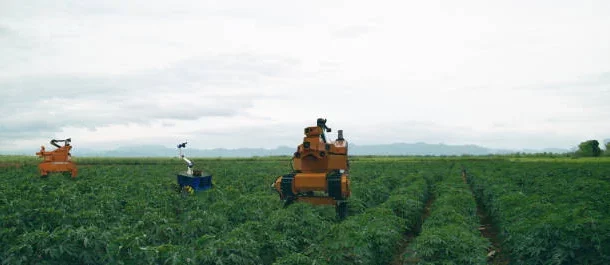
Autonomous tractors and equipment: Equipped with GPS and cutting-edge sensors, self-driving tractors and equipment may carry out a variety of tasks, including planting, spraying, and harvesting. Equipment that is autonomous lowers the need for manpower and allows more precise and effective operations.

Drones and Unmanned Aerial Vehicles (UAVs): Drones with cameras and sensors are used for data collecting, aerial imaging, and crop monitoring. They offer farmers useful information for enhancing crop health, insect control, and irrigation.

Robotic Systems for Harvesting: In order to alleviate the labor shortage and improve harvesting efficiency, robotic systems that can pick fruits and vegetables are currently being developed.

Using real-time data and field conditions, farmers may administer inputs like fertilizer, herbicides, and seeds at different rates using a technology called variable rate technology (VRT). This technology lessens the impact on the environment while maximizing resource consumption.

Precision planting systems make use of cutting-edge technology to guarantee precise seed placement, spacing, and depth, improving crop establishment and yields.

What is the role of agricultural cooperatives in the market?

agricultural cooperatives

Since they were established by farmers and agricultural producers to work together and collaboratively address shared needs and issues, agricultural cooperatives play a key role in the agricultural market. These cooperative groups run on the tenets of shared benefits, democratic control, and reciprocal aid. The following are some of the major functions that agricultural cooperatives play in the market:

Collective Bargaining Power: Farmers and producers have more negotiating clout with consumers, processors, and suppliers thanks to agricultural cooperative. Cooperatives can better its members’ rates and terms by pooling their resources and goods.

Market Access and Distribution: Cooperatives can give its members better market access, which enables them to more effectively reach buyers and consumers. They frequently manage the marketing and distribution of their members’ products, opening them bigger markets for small-scale farmers.

Risk management: Cooperatives provide methods for sharing risks, enabling members to collaborate on managing risks associated with production, price swings, and market uncertainty.

Input Procurement: Cooperatives can gain discounts and cost reductions for its members by buying agricultural inputs, such as seeds, fertilizer, and equipment, in bulk.

Financial Access: Agricultural cooperatives can make it easier for their members to get loans and funding, supporting investments in infrastructure, production processes, and machinery.

How are supply and demand factors influencing agricultural prices?

supply and demand

Market-based agricultural pricing are heavily influenced by supply and demand variables. Market equilibrium and price levels are determined by the interaction between the quantity of agricultural commodities producers are willing to supply and the quantity of agricultural commodities consumers are willing to demand at various price levels. As an example of how supply and demand affect agricultural price:

Production Levels (Supply): Prices are directly influenced by the volume of agricultural products produced and supplied to the market. When production is high, the supply grows and prices decline. On the other hand, when output is low, the supply shrinks, pushing up prices.

Weather: Weather has a significant impact on agricultural production. Favorable weather conditions, such enough rain and mild temperatures, can increase agricultural yields, increase supply, and possibly cut costs. Unfavorable weather conditions, such as droughts, floods, or extremely high temperatures, can lower harvests and constrict supply, raising costs.

Changes in Input Costs: Farmers’ production costs can be impacted by the price of inputs such seeds, fertilizer, pesticides, labor, and gasoline. Increased input costs may cause supply to decline and prices to rise.

Technological innovations: By enhancing productivity and expanding supply, innovations in agriculture technology and methods may result in cheaper costs.