Livestock

What are the potential impacts of plant-based meat alternatives on the agricultural market?

plant-based

The agricultural sector could be severely impacted by plant-based meat substitutes in a number of ways. These substitutes, which are frequently constructed of plant proteins, strive to imitate the flavor, texture, and look of conventional meat products while also providing advantages for the environment and human health. On the agricultural market, the following effects of plant-based meat substitutes are possible:

Demand Shift: The popularity of plant-based meat substitutes may cause consumers’ preferences for traditional animal-based meat products to change. The market for livestock products may decline as more people choose plant-based diets, which would have an impact on the meat and dairy industries.

Reduced Livestock Production: As the demand for meat declines, fewer animals may be kept for food, which could alter livestock farming methods and the use of related agricultural land.

Land Use and Resource Efficiency: Compared to conventional cattle production, plant-based meat substitutes often use less land and water. This might result in more effective use of agricultural resources and possibly result in the release of land for other uses.

Environmental Benefits: Compared to growing cattle, the manufacturing of plant-based meat substitutes often produces fewer greenhouse gas emissions, contributes less to deforestation, and uses less water. This can have a good effect on the environment and combat climate change.


How does the rise of urban farming impact the agricultural market?

urban farming

Urban farming is becoming more popular, and this has a big impact on the agricultural industry as well as how food is produced, distributed, and consumed. Urban farming is the activity of growing food and rearing livestock on vacant lots, rooftops, and other urban structures. The agricultural market is impacted by urban farming in the following ways:

Urban farming boosts local food production by supplying cities with fresh produce and livestock products. This can shorten the supply chain and lessen reliance on far-off rural sources.

Reduced Food Miles: Because urban farmings is situated closer to customers, less food miles are required for food to travel from farm to plate. Reduced transportation costs and positive effects on the environment, such as a decline in greenhouse

Urban farmings enables the development of a wide variety of crops, including speciality and niche types. This could increase customer options and promote culinary variety.

Food Security and Resilience: Urban farmings boosts local food availability, especially in places with limited access to fresh produce, which helps to increase food security. In situations where the food supply is disrupted, it can also increase community resilience.

Community Engagement and Social Benefits: Urban farmings fosters civic participation, educational possibilities, and interpersonal relationships. Urban dwellers gain a sense of pride and connection to food production as a result.

What are the key factors driving the demand for plant-based proteins in the market?

plant-based

The market has seen a steady increase in the demand for plant-based proteins, which is being fueled by a number of factors including shifting consumer tastes, environmental concerns, health issues, and technological improvements. The following are some major aspects influencing the need for plant-based proteins:

Consumers are increasingly looking for diets that are more balanced and conducive to their health. Due to their reduced concentration of saturated fat and potential health advantages, such as lowering the risk of heart disease and some chronic illnesses, plants-based proteins are frequently seen as healthier alternatives to animal-based proteins.

Sustainability and Environmental Awareness: Due to worries about the effects of animal agriculture on the environment, such as greenhouse gas emissions, deforestation, and water use, many customers now choose plant-based proteins as a more environmentally responsible choice.

Concerns about ethics and animal welfare have prompted some customers to prefer plant-based proteins as a method to lessen their involvement in animal suffering across the food supply chain.

Concerns concerning the sustainability of traditional livestock-based protein sources in fulfilling future food demand are raised as the world’s population continues to increase. A expanding population can be fed with more resource-effective plant-based proteins.

What are the prospects for agricultural market development in Latin America?

prospects

Due to a number of important variables, Latin America has bright possibilities for the development of the agricultural sector. The area is a major player in the world’s agricultural commerce thanks to its abundance of natural resources, different climates, and huge fertile territory. The following are some prospects for Latin America’s agriculture market development:

Demand for food and agricultural goods has increased globally as a result of the expanding global population. Due to its agricultural potential, Latin America can supply a large amount of the world’s expanding need.

Opportunities for Export: Latin American nations have historically been significant exporters of agricultural products such beans, coffee, sugar, livestock, and fruits. Export markets could grow even more, particularly to Asia and other developing nations.

Climate Resilience: The varying climates of Latin America allow for the year-round cultivation of a wide range of crops. The area’s capacity to reliably deliver agricultural products is improved by prospects ability to adjust to climate unpredictability.

Agriculture that is Sustainable: The area has made progress in implementing agricultural methods that are Sustainable. Latin American companies have a chance to seize premium markets thanks to rising consumer demand for items made with responsibly derived materials.

Investment in Technology: Increasing the use of agricultural technology, such as remote sensing, digital platforms, and precision agriculture, can boost the industry’s productivity and efficiency.

What are the key factors influencing agricultural land prices?

agricultural land

Various variables that depend on the geography, the state of the market, and particular agricultural practices have an impact on the price of agricultural land. A few of the main elements affecting the cost of agricultural land are as follows:

Location: The price of the land is significantly influenced by its location. Agriculture property can be worth more if it is close to urban areas, transit hubs, and other advantages.

Crop Productivity: The land’s productivity, which includes the quality of the soil, the availability of water, and the climate, is a major factor in determining the price of the property. Land that is extremely productive and fertile frequently fetches greater prices.

Demand for Agricultural Products: Farming operations on the land are more profitable when there is a demand for the products they produce. Increased competition for agricultural land might result in higher costs if crop or livestock demand increases.

Economic Situation: Prices for agricultural lands can be influenced by economic variables like interest rates, inflation, and general economic growth. Favorable economic conditions might encourage more investment in agriculture, which would impact land prices.

Government Policies: Government policies, such as taxation, subsidies, and restrictions on land usage, can have an impact on the price of agricultural land.

How does the use of IoT (Internet of Things) technology benefit the agricultural market?

Internet of Things

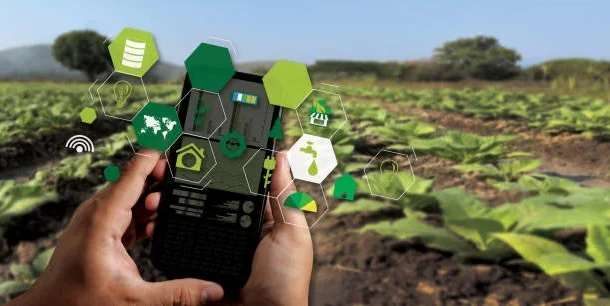
The utilization of IoT (Internet of Things) technology provides creative solutions to multiple difficulties faced by farmers and agribusinesses, which has a number of advantages for the agricultural industry. IoT technology comprises the internet-based integration of sensors, devices, and data analytics to track, gather, and analyze real-time data. IoT has the power to completely change the agricultural industry by increasing productivity, sustainability, and efficiency. IoT helps the agriculture market in the following ways:

Precision Agriculture: Using real-time data, farmers can customize inputs like water, fertilizer, and herbicides to their specific needs. It is possible to precisely and effectively regulate resource use by using sensors to track soil moisture, temperature, and nutrient levels.

Real-time Monitoring: Farmers can use IoT devices to remotely and continuously monitor their crops, livestock, and environmental factors. This aids in making quick decisions and acting quickly in situations like spotting early symptoms of sickness or pests.

Water management: IoT-based irrigation systems can reduce water waste and resource consumption by delivering the appropriate amount of water to crops depending on their individual demands.

Monitoring of livestock: IoT sensors can keep tabs on the condition, activity, and position of livestock, offering information about their well-being, enhancing feeding procedures, and enhancing general herd management.

IoT weather stations capture and communicate weather data, giving farmers precise and localized weather forecasts to help them properly plan their farming activities.

What are the potential impacts of biotechnology on the agricultural market?

biotechnology

By providing new tools and procedures that improve agricultural production, sustainability, and product quality, biotechnology has the potential to have a large impact on the agricultural industry. The use of biotechnology in agriculture entails the genetic engineering and manipulation of livestock and crops to enhance desired qualities. A few potential effects of biotechnology on the agriculture market are listed below:

Increased Crop Yields: Genetically modified (GM) crops with better tolerance to pests, diseases, and unfavorable environmental conditions may be developed as a result of biotechnology. These crops have the potential to boost agricultural productivity overall and yield greater production levels.

Enhanced Pest and Disease Resistance: Plants can be genetically modified to incorporate features that give them a higher level of resistance to pests and diseases. As a result, farmers and the environment gain from a decrease in the demand for chemical pesticides.

Improved Crop Nutritional Content: By boosting the levels of vital vitamins and minerals in staple crops, for example, biotechnology can help combat hunger in disadvantaged communities.

Drought and Stress Tolerance: By using biotechnology’s, it is possible to create crops with enhanced resistance to drought and stress, enabling their production in marginal lands and areas with difficult environmental circumstances.

Reduced Environmental Impact: By lowering the need for chemical inputs, biotechnology can help create a more environmentally friendly agricultural system with fewer negative effects, such as less soil erosion and less pesticide use.

How do market trends influence agricultural production practices?

market trends

Farmers and agricultural producers adapt their techniques to changing customer preferences, market needs, and economic conditions, which has a substantial impact on market trends. The agricultural industry is very dynamic and adaptable, and production strategies are frequently influenced by market signals and new trends. Following are some ways that market trends affect agricultural production methods:

Changes in Consumer Preferences: Farmers may modify their production techniques to accommodate changes in consumer preferences, such as rising demand for organic, non-GMO, or locally sourced goods.

Rising Global Demand: Farmers may concentrate on producing crops or livestock that are in high demand as a result of growing population and rising incomes in some countries, which can lead to an increase in demand for specific agricultural commodities.

Market trends that place a strong emphasis on environmental stewardship and sustainability may have an impact on agricultural operations. To fulfill customer expectations, farmers may use precision agriculture, conservation tillage, and other sustainable practices.

Value-Added Products: Farmers may be encouraged to diversify their operations and take part in on-farm processing or partnerships with food processors as a result of the market trend toward value-added and processed agricultural products.

Technological Advancements: To maximize resource utilization and boost yields, new technologies and precision farming techniques are frequently used as a result of market trend that favor productivity and efficiency.

What are the emerging technologies disrupting the agricultural market?

technologies disrupting

As technology develops, various new developments are upending the agricultural industry and transforming farming and agribusiness operations. These innovations are meant to increase agricultural productivity, sustainability, and effectiveness. The following are a few of the major new technologies disrupting the agriculture market:

Internet of Things (IoT): IoT devices and sensors are being used in agriculture to gather information on the health of crops, livestock behavior, weather patterns, and soil conditions. Real-time monitoring and data-driven decision-making are made possible by IoT, which optimizes resource consumption and boosts productivity.

Artificial intelligence (AI): Through data analytics, machine learning techniques, and predictive modeling, AI is revolutionizing the agricultural sector. Large datasets can be analyzed by AI to find patterns, forecast crop yields, plan planting times, and discover crop diseases.

Automation and robotics in agriculture: Planting, harvesting, weeding, and spraying are just a few of the duties that agricultural robots are supposed to carry out. Automation lessens the demand for manual work, solves the manpower shortage, and improves farming operations’ precision.

Drones and UAVs: Drones with cameras and sensors are used to monitor crops, map them, and determine the health of the plants. They enable focused interventions and give farmers insightful information about the state of their land.

Utilizing blockchain technologies disrupting, supply networks in agriculture can be made transparent and traceable. It increases consumer trust and food safety by enabling them to confirm the place of origin and travel of agricultural products.

How are weather patterns and natural disasters affecting the agricultural market?

natural disasters

The agricultural market can be significantly impacted by weather patterns and natural disasters, which can change production, supply, prices, and market dynamics. The weather has a significant impact on agriculture, and severe weather can interrupt the entire supply chain. Following are some ways that weather and natural calamities affect the agricultural market:

Crop Production and Yields: Good weather conditions, such enough rain and moderate temperatures, can encourage strong crop growth and better yields. On the other hand, adverse weather conditions including droughts, floods, heat waves, and frost can harm crops and diminish yields, which could result in reduced output levels and higher prices.

Supply and Availability: Changes in agricultural supply may be caused by weather-related phenomena. Harvests that are plentiful during favorable weather conditions may lead to excess supply, which will push prices. On the other hand, crop failures brought on by weather might result in supply constraints and price volatility.

Extreme weather events can lead to price volatility in the agricultural market, particularly for products like grains, fruits, and vegetables that are very weather-sensitive.

Adverse weather conditions can have an impact on the quality of agricultural products, which can lower their marketability and value. For instance, significant rain during harvest may cause problems with grain quality, allowing it to be sold in lower-grade markets.

Livestock & Animal Health: natural disasters catastrophes can interfere with the management of livestock and jeopardize animal welfare. harsh cold, hurricanes, or flooding