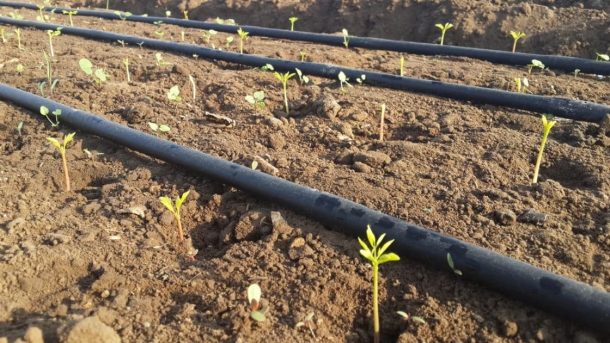
Moringa plants need very little irrigation for better growth. It can withstand drought conditions for up to six months but too dry or too wet soil conditions could lead to flower drop and so for maximum yielding of the crops it requires maintenance of optimum soil moisture avoiding the stagnation of water. Rainy season doesn’t require any irrigation.
Irrigation
How irrigation is done to the peppermint plant?
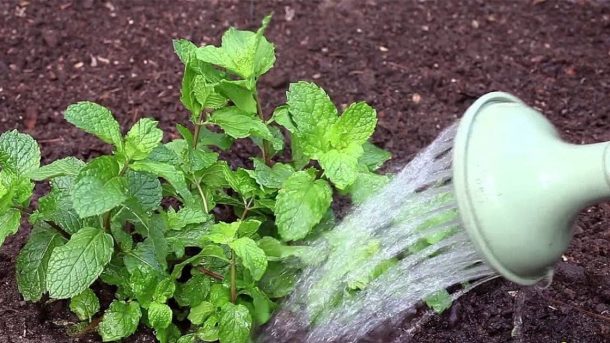
The crop requires high water management so irrigation should be done properly, and should have a controlled water table. Mints are considered to be thirsty plants so they should be continuously supplied with water all throughout the year. The plant loses much water through evaporation in sunny locations so the watering should be increased slightly in these areas.
What is the irrigation requirement for vanilla farming?
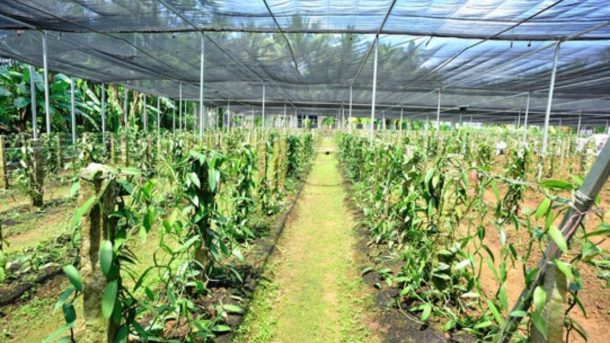
Irrigation is important during the dry & hot summer seasons and also during the first 2 to 3 years of planting. Sprinkler Irrigation is ideal for Vanilla. However, you can also opt for micro irrigation or drip irrigation but water stagnation or flooding should be avoided as the crop is sensitive to these conditions.
How much water is required by the potato plants?
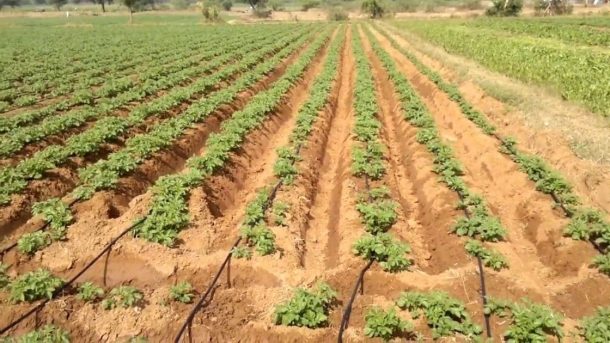
Relatively higher amount of soil moisture is required for potato plants. It is considered that a 120-150 days potato crop needs 500 to 700 mm, i.e., 20 to 27.5 inches of water. Sufficient water should be supplied to the plants during the growing period, otherwise it would cause the plants to produce low yield. In the region with low water availability, it is recommended to direct the water for maximum production rather than supplying water to a larger area. Sprinkler irrigation system is used in the potato farm because these plants have shallow roots and providing water frequently produce high yield.
How watering is done in orange cultivation?
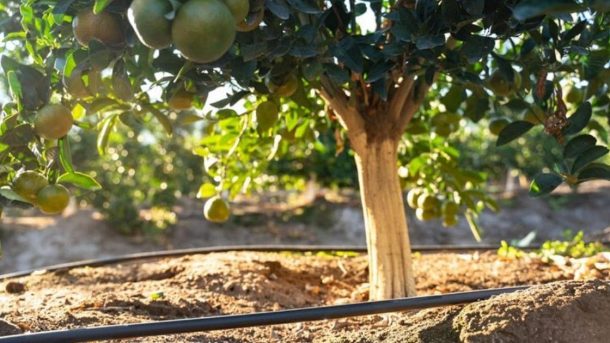
After the planting hole is filled, irrigate immediately to saturate the soil. After soil is settled, ensure that the graft union is still 2 – 3 inches above the soil level. When rainfall is not adequate, irrigate the newly planted trees at least once each week during the first growing season. Earthing up soil around the tree trunks can help prevent spread of diseases like Phytophthora. Some trees like mango, citrus require stress period for flowering. Avoid irrigation before flowering period. Irrigate at 10-15 days intervals when fruits are growing till maturity. Stop irrigation during fruit ripening period. Irrigation at the time of fruit ripening period will reduce sweetness.
What is the water requirement for banana?
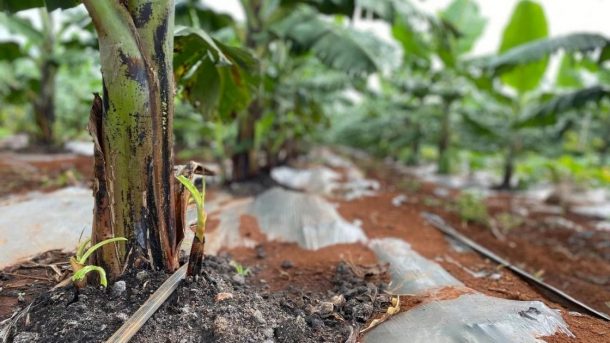
Banana plants require a minimum of 1,000 mm of rainfall annually. Irrigation is therefore necessary where the rainfall received is less than this amount. Water is critical at flowering. Therefore, in drier areas, supplemental irrigation may be necessary during this time 40-60 litres/plant per week split into 20L (in two splits).
What is the Water requirement for Pumpkin plants?
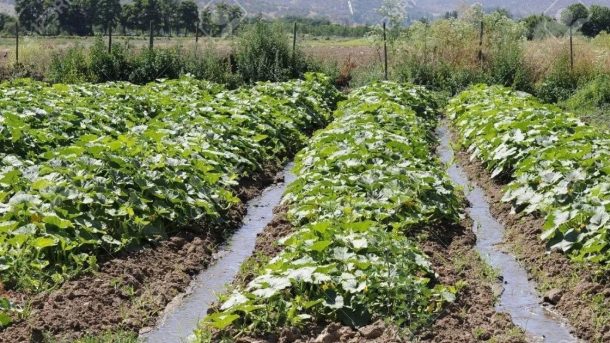
The irrigation should be given in an open field as per the requirement of the plants. During the initial stages of pumpkin plant growth, irrigate at an interval of 3 to 4 days. Irrigating on alternate days during flowering and fruiting will return in high-quality fruits.
What is the irrigation requirement for Snake Gourd cultivation?
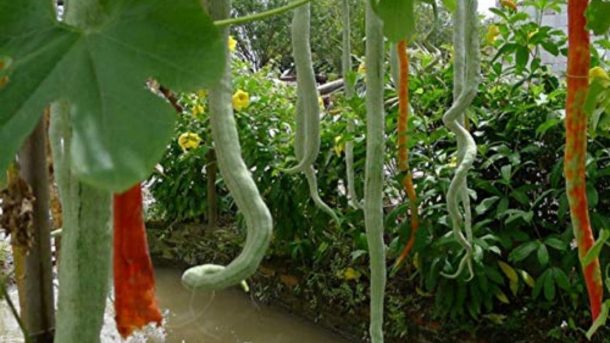
Snake gourd in its entire crop duration requires a steady supply of moisture but is sensitive to excessive water application or water logging conditions, thus, providing frequent but shallow irrigation is rather beneficial. The first irrigation may be given immediately after sowing, if moisture in the field at the time of sowing is not sufficient for proper germination of seeds.
For spring-summer crop, regular irrigation at 3-5 days intervals is necessary to uphold the desired soil-moisture level. At the time of fruit set and fruit development, sufficient moisture should be maintained, and there should not be any dry spell during this period.
What are the critical stages in groundnut for irrigation?
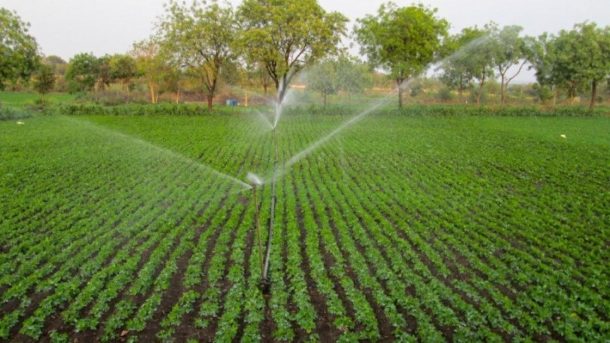
Generally, 8-9 irrigations are required for the crop season. After the crop is established, it is necessary to withheld the irrigation for about 25 days and create stress which will encourage early flush of heavy flowering, root development, nodulation and checks excessive vegetative growth. The first irrigation should be given immediately after sowing the crop. The second irrigation is given when the flowering is observed in 50 % plants. During pegging and pod filling, the irrigation should be given at an interval of 8-10 or 10-12 days. Fifty to eighty (50 – 80) days after sowing are most critical period and during this period there should not be a water shortage because peg penetration, pod formation take place during this period.
What is the irrigation requirement for Hazelnut farming?
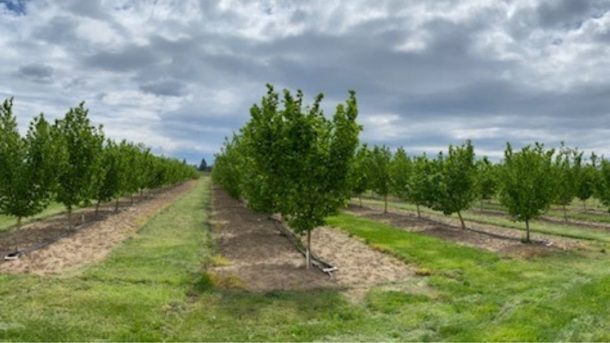
Irrigation is the best method to establish large trees rapidly and it uses countering excessive dry conditions for filling the stage for the production. In summer, 60 cm of the soil must dry on the other side deeper soil may not dry until the end of summer. Then, it fills the shell of the nut from December to February accordingly. So, irrigation is not necessary from the surface of the soil in summer. In cooler climates, irrigation is not necessary. In warmer climates with hot summers and long periods without rain, applying 30 litres of water per tree every 3-4 weeks without rain and mulching well is effective. Drip irrigation system produces bigger trees, more nuts sooner, fuller and heavier kernels. Drip irrigation is increasingly being adopted. Hazelnut trees must be irrigated every year during the periods of low rainfall.