It is a serious pest on new flush. The aphids infest tender shoots, leaves, flower bud and fruits.
It can be managed by Single spray of neem seed kernel extract @ 2 % at the initiation of new flush. Spray dimethoate @ 0.03 % or phosalone @ 0.05 %.
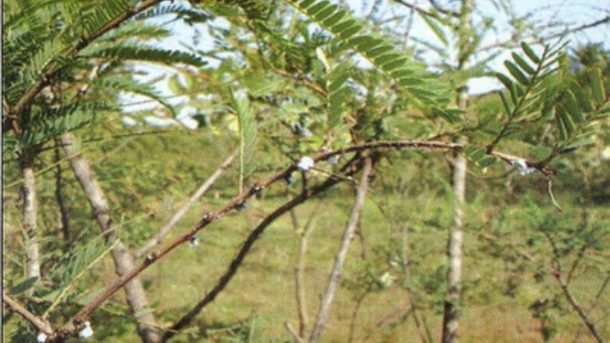
It is a serious pest on new flush. The aphids infest tender shoots, leaves, flower bud and fruits.
It can be managed by Single spray of neem seed kernel extract @ 2 % at the initiation of new flush. Spray dimethoate @ 0.03 % or phosalone @ 0.05 %.
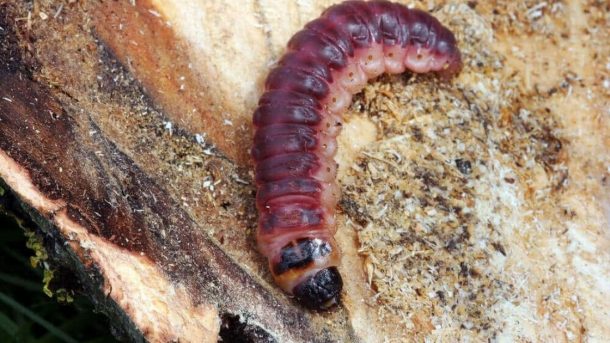
It affects the main trunk of the plant and makes tunnels. Feed on the bark under silken ribbon-shaped webs. It causes damage up to 80 percent.
It can be managed through clean cultivation, avoiding the overcrowding of branches. Spraying 0.03% endrin or furadan or injecting kerosene oil or petrol in the holes and plugging them with cotton or wet soil during September-October or February-March.
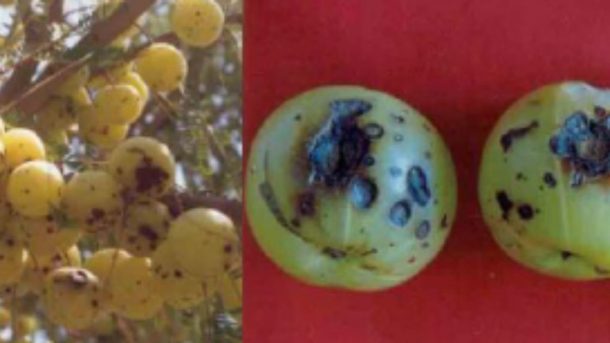
It is caused by Phoma sp. i.e., Phomopsis phyllanthi, Nigrospora sphearica, Cladosporium tenuissium, Pestalotia creenta, Alternaria alternata, Cytospora sp. The disease appears as small, pinkish brown necrotic spots. Smoke brown to black round lesions, black ring spots or colourless soft areas appear resulting in partial or complete rotting of fruit.
It can be managed by giving post-harvest treatment to the fruit with difolaton @ 1.5 g/l of water or mancozeb @ 1 g/l of water or carbendazim @ 0.5 g/l of water.
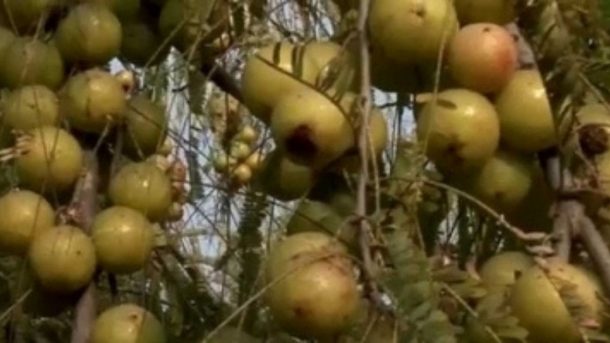
It is caused by Colletotrichum sp. The symptom is minute, circular, greyish spots with yellow margins appear on leaflets, central area remaining greyish with dot-like fruit bodies. Lesions on fruits are depressed, turn dark in the centre, acervuline formed which are arranged in rings. Lesions may vary in size and shape; spore mass appear on fruiting bodies at high humidity. Infected fruits become shrivelled and rot.
It can be managed by Spray mancozeb @ 2 g/l of water or copper oxychloride @ 3 g/l of water or carbendazim @ 0.5 g/l of water at 15 days interval. Repeat sprays as per severity.
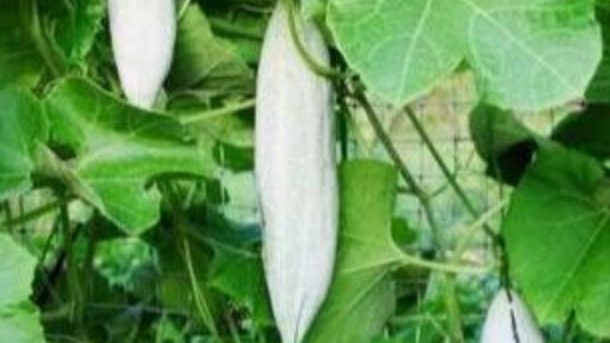
It is the cultivar of Snake gourd. An attractive small-fruited variety developed through a natural selection from the locally collected material of Peruva, Ernakulam district. The fruits are small (30-40 cm), elongated, and uniformly white in colour. Its single fruit weight is about 470 g, and yield potential is about 56 t/ha in 8 to 10 pickings. First picking starts in about 55 days after sowing and total crop duration ranges between 120 and 140 days. It can be grown all through Kerala but mainly suited for cultivation in central zone of the State.
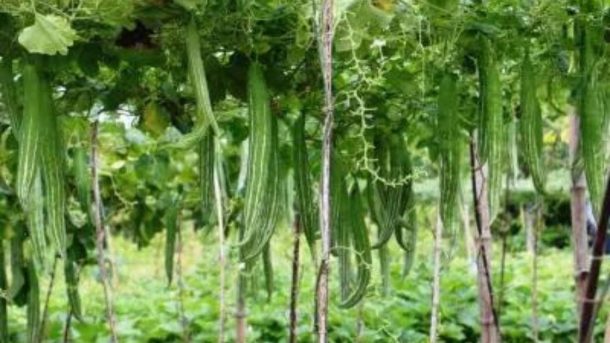
It is the cultivar of Snake gourd.It was developed at Kerala Agricultural University, Vellanikkara. At immature stage, fruits are about 60 cm long and light green with white stripes at styler end. Fruits are harvested in about 65-70 days after sowing. The average weight of single fruit is 600 g.
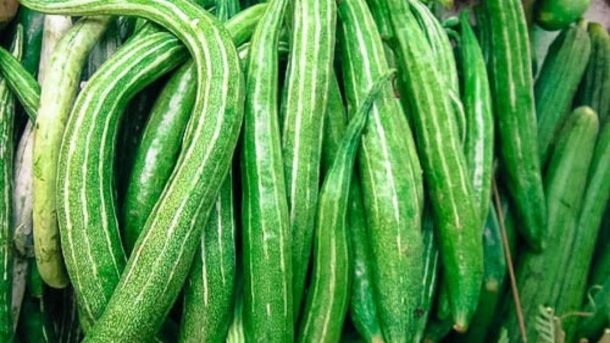
It is the cultivar of Snake gourd.An early maturing variety was evolved at Tamil Nadu Agricultural University, Coimbatore. The first marketable fruit may be harvested in about 70 days after sowing. Fruits are 160-190 cm long, dark-green with white stripes and light green flesh. Each plant bears 10-12 fruits, which weigh about 4-5 kg.
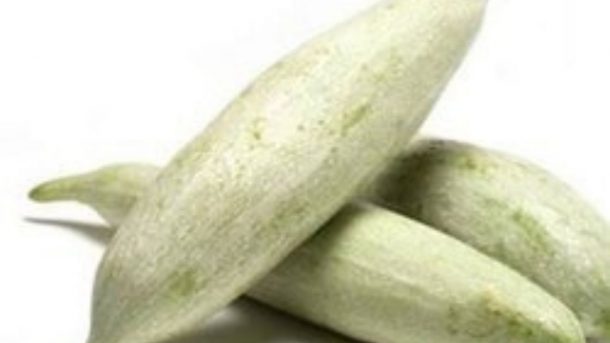
It is the cultivar of Snake gourd. A variety developed at Tamil Nadu Agricultural University, Coimbatore through selection. It is suitable for high density planting. Fruits are short (30 cm) and light greenish-white in colour. It gives an average yield of 35 t/ha within a crop duration from 105 to 120 days.
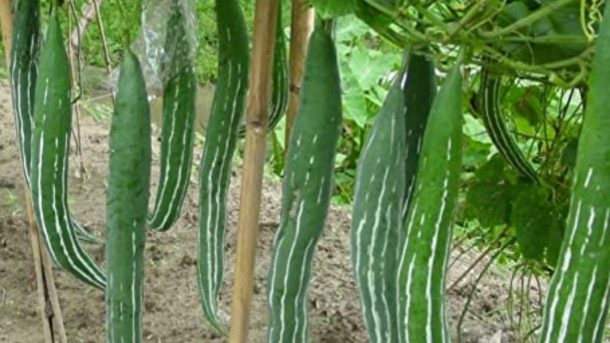
It is the cultivar of Snake gourd.An early maturing cultivar with moderately spreading habit was developed at Tamil Nadu Agricultural University, Coimbatore. The first fruit becomes ready for harvesting in about 70 days after sowing. Fruits are 160-180 cm long, dark-green with white stripes and light-green flesh, and are of good cooking quality. Single fruit weighs 500-750 g. Each plant/vine bears 10-12 fruits with an average fruit yield of 18 t/ha in crop duration of 135 days.
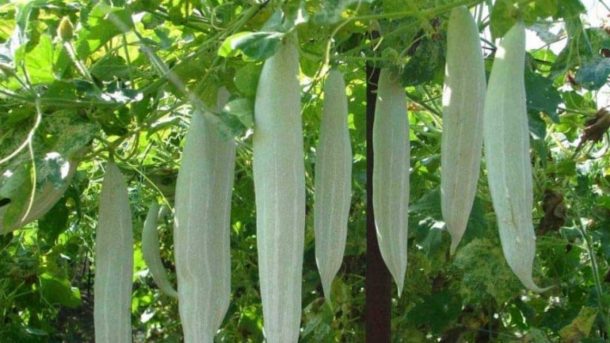
A single plant of traditional cultivar yields about 6-10 fruits and of improved cultivar up to 50 fruits. Single fruit weight varies from 300 g to 1.0 kg and average fruit yield is 10 to 15 t/ha, however, the yield as high as 50 t/ha may be obtained with good agronomic practices.