POSTEDITOR OFFICE

 What are the latest developments in soil health monitoring techniques?

soil health

Imaging and spectroscopy: For the examination of soil, spectroscopic methods like infrared spectroscopy and hyperspectral imaging are becoming more and more popular. These methods examine the light reflected or emitted from soil samples to determine soil health, chemical composition, and amount of organic matter. Imaging technology can deliver spatially resolved data on soil characteristics, enabling tailored actions depending on particular soil circumstances.

Microbial analysis and DNA sequencing techniques are being utilised to evaluate the microbial populations in soil and their roles. These methods offer information on the variety and activity of soil microbes, which are essential for nutrient cycling, the breakdown of organic materials, and plant health. Farmers can choose the best soil management practises and maximise microbial activity for better soil health’s by having a thorough grasp of the microbial communities in their soils.

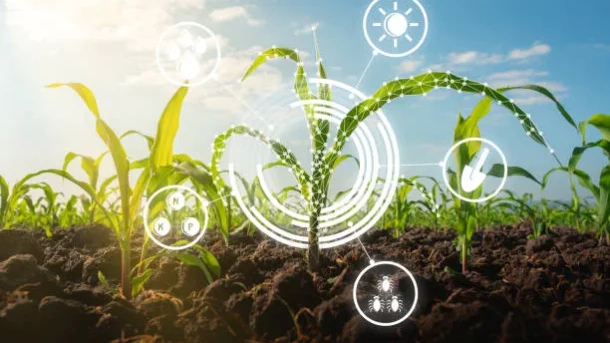
Satellite images and remote sensing technology, such as aerial drones, can provide important information about the overall health of the soil. Satellites with multispectral or hyperspectral sensors are able to collect information on the characteristics of the soil, vegetation indices, and land cover. This information can be analysed to create maps of the health of the soil, find signs of soil deterioration, and track changes over time. Aerial drones with sensors and cameras can give localised areas with high-resolution, precise soil information, enabling focused soil management techniques.
How is artificial intelligence being applied in pest management?

artificial intelligence

Artificial intelligence-based systems can identify and detect pests by analysing photos or sensor data gathered from fields. Using photos or videos taken by drones, cameras, or sensors, computer vision algorithms can identify pest species, damage signs, or pest activity patterns. This makes it possible to identify pests early and supports farmers in acting quickly to stop the spread of such pests.

In order to forecast and predict pest outbreaks, AI systems can process data from a variety of sources, including weather patterns, crop phenology, and insect population dynamics. AI algorithms can produce precise pest risk assessments by examining historical data and real-time inputs, assisting farmers in foreseeing pest outbreaks and organising preventative measures. Through focused therapies made possible by this proactive strategy, there is less need for

Artificial intelligence-powered decision support systems give farmers access to real-time information and pest management advice. These systems combine information from several sources, such as historical records, crop status, pest monitoring data, and weather forecasts. AI algorithms can use this data to analyse pest management procedures that are most effective, such as when and how much to apply pesticides, cultural norms, or biological control techniques. This helps farmers make wise judgements, use less pesticides, and have a smaller negative environmental impact.

What are the advancements in indoor farming technologies?

indoor farming

Vertical farming systems: Indoor farming employs Artificial lighting, climate control, and hydroponic or aeroponic systems are used to grow crops in stacked layers or vertical racks. The energy efficiency of LED lighting has increased, and exact light spectra for various phases of plant growth are now available. Vertical farming allows for year-round production in urban settings while maximising land utilisation and consuming less water.

Hydroponics and Aeroponics: These soilless growing methods that provide plants with nutrient-rich water or mist are known as hydroponics and aeroponics, respectively. These devices provide effective fertiliser uptake and water conservation by delivering nutrients directly to plant roots. The accuracy and control of fertiliser and water management in hydroponic and aeroponic setups have increased thanks to developments in nutrient delivery systems, automation, and sensing technologies.

Indoor Climate Control: To maximise plant growth and productivity, indoor farming depends on careful regulation of temperature, humidity, and CO2 levels. Precision changes are made possible by advancements in climate control systems, including sensors, ventilation, and HVAC technology. Automated climate control systems can continuously check environmental conditions and make adjustments to provide the best conditions for various crops.

How are autonomous robots being used for harvesting crops?

robots being

Sustainability along the Value Chain in Agriculture: Biodegradable packaging is consistent with the concept of sustainability, with robots being essential in the agricultural value chain. Sustainable packaging helps agricultural goods’ overall environmental impact be reduced from production to consumption. It enhances resource conservation efforts, appropriate waste management, and sustainable agricultural methods, making the agriculture sector more robust and sustainable.

It’s crucial to remember that the development of composting infrastructure and adequate disposal methods are prerequisites for the effective use of biodegradable packaging. For the management and processing of biodegradable packaging waste to be successful, cooperation between stakeholders, such as packaging producers, waste management facilities, and policymakers, is essential.

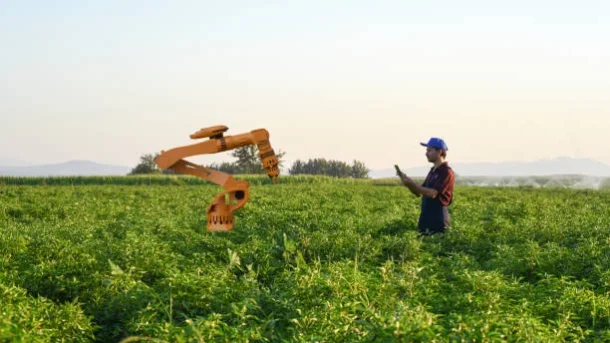
Increased Productivity and Efficiency: Autonomous harvesting robots being able to work constantly without becoming tired, resulting in higher productivity and efficiency. They can work both during the day and at night, in different sorts of weather, and with diverse crop varieties. Autonomous robots can greatly speed up the harvesting process by eliminating the reliance on physical labour, enabling farmers to harvest crops at the ideal moment and maximise output.

Mitigation of Labour Shortages: The agriculture industry frequently struggles with issues connected to a lack of labour and growing labour prices. A potential solution is provided by autonomous harvesting robots that lessen the need for human labour. Even in areas with a restricted personnel availability, farmers can overcome the problem of timely crop harvesting. This can assist in addressing production issues and promoting agricultural sustainability.

 What is the role of biodegradable packaging in sustainable agriculture?

biodegradable packaging

Environmental Impact: Biodegradable packaging materials are made to disintegrate into the environment organically and naturally without leaving any harmful leftovers. Biodegradable pack lessens trash buildup and has a less negative environmental impact than non-biodegradable materials like plastic, which linger in the environment for a long time and cause pollution. This promotes the preservation of natural resources, wildlife, and ecosystems.

Waste reduction: Agriculture produces a lot of packaging waste, such as bags, labels, wraps, and containers. By supplying packaging materials that can be composted or broken down naturally, biodegradable pack offers a way to reduce this waste. Farmers and agricultural businesses can help reduce waste and advance a circular economy by utilising biodegradable packaging.

Sustainability along the Value Chain in Agriculture: Biodegradable pack is consistent with the concept of sustainability in general along the agricultural value chain. Sustainable packaging helps agricultural goods’ overall environmental impact be reduced from production to consumption. It enhances resource conservation efforts, appropriate waste management, and sustainable agricultural methods, making the agriculture sector more robust and sustainable.

It’s crucial to remember that the development of composting infrastructure and adequate disposal methods are prerequisites for the effective use of biodegradable pack. For the management and processing of biodegradable pack waste to be successful, cooperation between stakeholders, such as packaging producers, waste management facilities, and policymakers, is essential.

 How is data-driven decision making transforming agriculture?

data-driven

Precision Agriculture: Data-driven decision making enables farmers to use practises that allow them to target their activities and inputs to certain fields. Farmers may administer inputs (such as fertilisers, water, and pesticides) precisely where and when they are required by gathering and analysing data on soil characteristics, moisture levels, nutrient content, and crop health. This optimisation improves overall efficiency while minimising resource waste and environmental effect.

Crop management: By offering insights into crop health, growth trends, and prospective yield, data-driven decision making promotes improved crop management. Farmers can monitor crop conditions, spot early indications of illnesses or pest infestations, and spot nutrient deficits using data obtained from sensors, drones, satellite imagery, and field observations. Farmers can use this knowledge to implement timely interventions.

Farm Management and Automation: Effective farm management and automation are supported by data-driven decision making. Farmers can monitor and analyse a variety of farm operations, such as equipment usage, labour productivity, financial performance, and inventory management, using data analytics and farm management software. Farmers can detect inefficiencies, streamline processes, and make well-informed decisions about investment, expansion, or diversification with the assistance of these insights.

Continuous Learning and Improvement: Data-driven decision making encourages an agricultural culture of ongoing learning and development. Farmers can find trends, patterns, and best practises that produce better results by collecting and analysing data over time. Farmers and other interested parties can exchange this knowledge, fostering creativity, learning as a group, and the adoption of improved farming practises and technologies.

What are the latest advancements in agricultural drones and their applications?

agricultural drones

Longer flight periods, bigger payloads, and better stability and manoeuvrability are just a few of the improved flight capabilities that contemporary agricultural drones have. These developments enable drones to operate in hazardous environments, cover wider regions, and transport more advanced sensors and equipment.

High-Resolution Imaging: Drones used for agriculture are outfitted with high-resolution cameras and sensors that can take precise aerial photos of crop areas. The health, growth, and stress levels of plants can all be inferred from this imagery. Computer vision and machine learning algorithms can process the photographs to provide maps and useful information for farmers.

Agricultural drones are now equipped with multispectral and hyperspectral sensors that take pictures in a variety of spectral bands. Indicators of crop health like chlorophyll content, water stress, nutritional deficiency, and pest and disease infestations can all be found and measured by these sensors. Using multispectral and hyperspectral imaging, farmers may spot crop health problems early on and take action, resulting in more focused interventions and better yield results.

Drones using thermal cameras can take thermal images, which can be used to detect temperature differences across a field. For spotting irrigation problems, determining plant stress, finding water leaks, and keeping tabs on livestock health, thermal imaging is especially helpful. Farmers can improve irrigation techniques, deal with water stress, and spot anomalies in animal behaviour by identifying problem regions.

 How are smart sensors used for monitoring soil conditions?

smart sensors

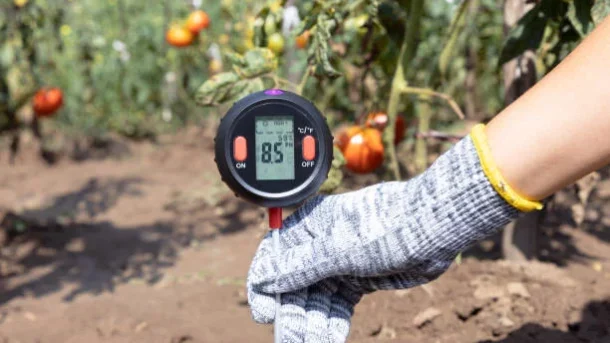
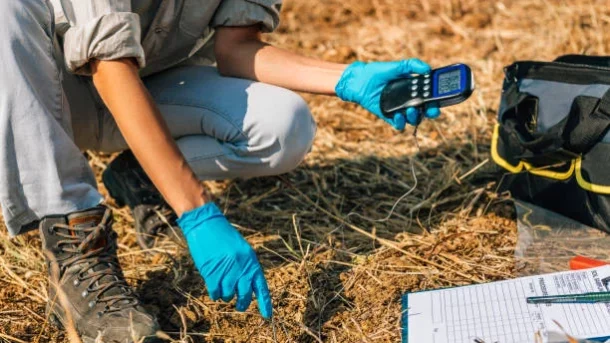
In order to regulate irrigation effectively, it is essential to measure the moisture content of the soil using soil moisture smart sensors. To track moisture levels at multiple layers, these sensors can be inserted at various depths in the soil profile. Farmers may optimise irrigation practises, prevent under- or overwatering, and determine when and how much water to use by continuously monitoring soil moisture. Farmers can monitor soil moisture levels and make irrigation decisions based on reliable information thanks to the real-time data that smart soil moisture smart sensors provide.

Sensors that monitor soil temperature can gauge the temperature of the ground at different depths. Seed germination, nutrient availability, microbial activity, and plant growth are all influenced by soil temperature. Farmers can choose the ideal soil temperature by keeping an eye on it.

pH sensors for soil: These sensors gauge the soil’s acidity or alkalinity. The availability of nutrients to plants is impacted by soil pH, which also impacts soil microbial activity. Farmers can assess the compatibility of the soil for various crops by monitoring the pH of the soil and can determine whether pH adjustments through soil amendments are necessary. The accurate and fast pH measurements provided by smart soil pH sensors enable farmers to maintain the ideal pH values for certain crops and modify their soil management techniques as necessary.

The amounts of different nutrients in the soil, such as nitrogen, phosphorous, and potassium, which are critical for plant growth, are measured using soil nutrient sensors. Farmers can optimise fertiliser applications and avoid nutrient excesses or shortfalls by keeping track of the soil’s nutrient levels. Real-time nutrient data is provided by intelligent soil nutrient sensors.

 What is the concept of sustainable agriculture?

sustainable agriculture

Environmental Stewardship: Sustainable agriculture places a high priority on protecting and restoring the ecosystems and natural resources that are necessary for agricultural production. It encourages techniques that reduce soil erosion, enhance soil fertility and health, safeguard water quality, safeguard water resources, protect biodiversity, and employ less chemical inputs. It promotes the use of agroecological practises that place an emphasis on utilising ecological principles and natural processes, such as organic farming, conservation agriculture, and agroforestry.

Economic Viability: The goal of sustainable agriculture is to guarantee the resilience and economic viability of farming systems. It aims to minimise production risks and reduce dependency on outside inputs while preserving or increasing farm profitability. It promotes value-added activities, diversification, and the growth of regional markets. Fair prices and equitable access are important components of sustainable agriculture.

Food Security and Safety: By providing wholesome foods in adequate numbers, sustainable agriculture aims to assure food security. It encourages resource efficiency and sustainable intensification in order to boost productivity without harming the environment. It promotes the use of agroecological and organic methods that reduce chemical inputs and improve nutritional value. Additionally, it stresses the significance of transparent labelling, food safety, and traceability.

Knowledge and Innovation: Continuous learning, innovation, and knowledge sharing are key components of sustainable agriculture. It promotes the fusion of conventional wisdom and cutting-edge scientific inquiry to produce solutions tailored to particular situations. To spread best practises and make the adoption of sustainable farming practises easier, it encourages farmer-to-farmer exchanges, participatory research, and extension services.

 What is the role of data analytics in optimizing agricultural production?

data analytics

Data-driven decision-making: Data analytics enables farmers to make well-informed decisions based on precise and current data. Farmers can learn a lot about crop performance, resource use, and market demand by analysing a variety of data sources, including weather patterns, soil conditions, crop health, and market trends. With the use of these insights, they are able to decide on the type of crop to grow, the timing of planting and harvesting, and how to manage irrigation and fertiliser applications.

Precision agriculture and resource optimisation rely on applying the appropriate inputs at the right time and in the right amount to maximise resource utilisation and reduce waste. Precision agriculture is made possible by data analytics. Farmers can accurately control the application of fertiliser, pesticides, and irrigation by analysing data from sensors, satellite imagery, and historical records.Data analytics can be used to create predictive models that project agricultural yields based on historical data, current circumstances, and numerous affecting factors.

Predictive analytics algorithms can estimate projected yields with a certain level of accuracy by examining weather patterns, soil properties, crop genetics, and management techniques. Farmers can use this information to organise their activities, determine the supply of the market, manage storage and logistics, and make wise economic decisions.