POSTEDITOR OFFICE

What are the challenges and opportunities in agricultural supply chain management?

supply chain

Fragmentation: There are many different parties involved in the agricultural supply chain, including farmers, suppliers, distributors, and retailers. Due to the industry’s fragmentation, it might be difficult to coordinate and integrate their efforts.

Seasonal Variability: Seasonal elements, such as weather patterns and crop cycles, have a significant impact on agriculture. It can be challenging to manage changes in supply and demand throughout the year; this calls for good planning and forecasting.

Transporting agricultural goods from farms to markets can be difficult, particularly in isolated locations with poor infrastructure. Post-harvest losses and increased costs might result from poor logistics and insufficient storage facilities.

Maintaining the high standards of quality and safety for agricultural goods all the way through the supply chain is essential. But problems like contamination, spoilage, and pest infestation might arise at different times and call for strong quality control procedures and traceability systems.
How is the use of artificial intelligence and machine learning revolutionizing agriculture?

artificial intelligence

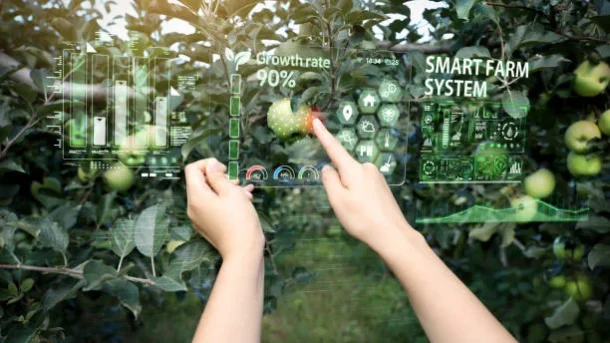
By enabling data-driven decision-making, optimising farming techniques, and raising productivity, artificial intelligence (AI) and machine learning (ML) are transforming agriculture. Here are some significant changes that AI and ML are making to agriculture.

In order to offer information on crop health, soil conditions, and pest infestations,artificial intelligence and machine learning systems analyse data from a variety of sources, including satellite imagery, drones, and sensors. With the use of inputs like water, fertiliser, and pesticides, farmers may target particular areas, maximising resource allocation and minimising waste.

Crop monitoring and yield forecasting: AI-powered systems can keep an eye on crops all through the growing season, gathering information on things like plant health, growth rates, and weather. By examining this data, machine learning (ML) models can forecast crop yields, assisting farmers in making decisions about harvesting, storing, and marketing.

Weed and Pest Management: Using photos taken in the field, AI and ML systems can recognise and categorise weeds and pests. The use of pesticides or herbicides on a large scale can be avoided by farmers who use this information to adopt tailored control techniques.

What are the recent advancements in aquaculture and fish farming?

fish farming

Enhancing sustainability, production, and the wellbeing of farmed fish have been the main goals of recent breakthroughs in aquaculture and fish farming. Here are a few noteworthy developments.

Recirculating Aquaculture Systems (RAS): A closed-loop system, RAS circulates and filters water inside fish tanks to save water and have a less negative impact on the environment. Fish health and growth are recent improved thanks to RAS since it enables better control of water quality, disease prevention, and waste management.

The goal of integrated multitrophic aquaculture (IMTA) is to cultivate various species in the same aquatic ecosystem while minimising the effects on the environment. fish farming waste, for instance, can be used in conjunction with the growing of seaweed or shellfish to create a symbiotic connection where one species benefits from the nutrients provided by the other.

Genetic improvement programmes concentrate on breeding fish with desirable qualities, such as disease resistance, quicker growth, and increased feed conversion efficiency. These fish are referred to as genetically enhanced farmed species (GIFS). These initiatives seek to lessen dependency on wild fish sources while improving the performance and production of farmed fish.

How is vertical farming being adopted in urban areas?

urban

Due to its potential to make the most of limited space and grow food in a controlled environment, vertical farming is gaining popularity as a promising agricultural practice in urban areas. Here is how urban areas are embracing vertical farming.

Systems for vertical farming: Often indoors or in controlled circumstances, vertical farming involves growing crops in stacked layers or vertically inclined structures. These systems frequently employ soilless techniques like hydroponics, aquaponics, or aeroponics, in which plants are cultivated in water solutions or mist conditions rich in nutrients.

Warehouses and high-rise buildings: Urban vertical farms are frequently constructed in repurposed buildings like warehouses, high-rise buildings, or abandoned industrial locations. Multiple layers of crops can be planted vertically, greatly increasing the amount of food that can be produced per square metre of floor area.

LED lighting and climate control: LED lighting systems are used in vertical farms to deliver precise light spectrums that are optimised for plant growth and enable year-round production regardless of the availability of natural light. To establish the best growing circumstances, climate control technologies are used, including temperature, humidity, and CO2 management.

What are the initiatives to promote gender equality and women empowerment in agriculture?

gender

It is essential to advance gender equality and women’s empowerment in agriculture if we are to reduce poverty, improve food security, and achieve sustainable development. The following are important programmes and tactics to overcome gender inequality in agriculture.

Gender-responsive agricultural programmes and policies are being developed and put into effect by governments and other organisations. These laws acknowledge and take into account the unique requirements, functions, and contributions of women in agriculture. They want to make sure that women have equal access to the sector’s resources, services, and opportunities.

Women’s land rights: Programmes are focused on advancing and defending women’s land rights since having control over and ownership of land is essential for empowering women in agriculture. Reforms to the law, awareness campaigns, capacity building, and assistance with women’s land registration and documentation are all part of the efforts.

Access to credit and financial services: Measures are being taken to increase women’s access to credit, savings options, and financial services. This entails establishing microfinance programmes that specifically target women working in agriculture, offering training in financial literacy and business management, and encouraging female entrepreneurship and the growth of agribusinesses.

How are digital platforms and e-commerce transforming agricultural markets?

e-commerce

In order to interact, transact, and obtain information, farmers, buyers, and consumers now have new opportunities thanks to digital platforms and e-commerce, which is altering agricultural markets. Here are some ways that e-commerce and digital platforms are changing the world.

Market accessibility and transparency: E-commerce and digital platforms give farmers access to a wider range of markets outside of their immediate geographic area. They offer online markets that allow farmers and buyers to communicate directly, cutting out middlemen and facilitating transparent pricing. This enables producers to access a larger pool of potential clients and achieve higher rates for their produce.

Better market information is available because to digital platforms, which offer real-time data on prices, demand patterns, and supply chain dynamics. Farmers can use this information to make educated decisions about what to produce, when to sell, and where to sell it.

Streamlined logistics and distribution: By connecting farmers with transporters and logistics providers, e-commerce platforms enable effective logistics and distribution. As a result, post-harvest losses are decreased, the efficiency of the supply chain is increased, and timely delivery of agricultural products to consumers is ensured.

Financial services accessibility: Financial services including mobile banking, electronic payments, and credit facilities are frequently integrated into digital platforms. Farmers now have easy access to financial services, allowing them to better manage their finances and receive payments and working capital.

What are the current trends in agricultural investment and financing?

current trends

The increased understanding of agriculture’s significance in achieving food security, sustainability, and rural development is reflected in current trends in agricultural investment and financing. These significant developments.

Impact investing: Current trends show a growing number of impact investors are allocating money to support food and agricultural systems. Along with financial gains, impact investment seeks to have a beneficial social and environmental impact. These investments are concentrated on fields like sustainable farming methods, smallholder support, agribusiness growth, and advancements in agricultural technology.

Climate-smart investments: Mitigation and adaptation to climate change are becoming important factors in agriculture investment. Investors are searching for projects and programmes that support climate-smart agriculture, such as agroforestry, sustainable land management, integrating renewable energy sources, and resilient farming practises. Green bonds, specialised climate funds, and climate finance structures are possible sources of funding.

Agtech investments and digital agriculture: Agtech investments are becoming more and more popular. This involves financial commitments to robotics, drones, remote sensing, farm management software, and data analytics. Solutions for digital agriculture are thought to increase farming operations’ productivity, efficiency, and sustainability.

How are sustainable farming practices being promoted and incentivized?

farming practices

Through a combination of legislative initiatives, financial rewards, outreach initiatives, educational initiatives, and market mechanisms, sustainable farming practices are being encouraged and promoted. Here are a few of the main methods employed to promote sustainable agriculture.

Government policies and rules: Governments all over the world are putting them into practice in order to encourage sustainable agricultural methods. These can entail establishing criteria for organic farming, limiting the use of specific fertilisers and pesticides, encouraging agro ecological methods, and putting conservation programmes in place for the management of natural resources.

Financial incentives and subsidies: To encourage farmers to adopt sustainable practices, governments and organisations offer financial incentives and subsidies. Direct payments for the implementation of conservation measures, money for organic certification, grants for switching to sustainable practices, and assistance with agroforestry or reforestation initiatives are a few examples of these.

Technical support and instruction: Programmes for agricultural extension services and instruction are essential in promoting sustainable farming practices methods. Giving farmers access to research-based knowledge, training sessions, and technical support enables them to adopt and use sustainable practices successfully.

What are the implications of agricultural labor shortages and migration?

shortages

Migration and labour shortages in agriculture have substantial effects on the industry as well as society at large. Here are some significant ramifications.

Lowered agricultural productivity: Lowered agricultural output can result from a labour shortage. Farmers may experience poorer yields and financial losses as a result of delayed planting, insufficient cultivation, and incomplete harvesting due to a lack of available labour. Food security, supply chains, and food production may all be impacted by this.

Costlier production: As farmers compete for a small pool of workers, labour shortages frequently result in higher labour costs. In order to recruit and keep staff, farmers may need to give greater wages or additional incentives, which will increase the cost of production. Increased labour costs may affect agricultural product affordability, competitiveness, and farm profitability.

Mechanisation of agriculture and changes in agricultural practises: Labour shortages may lead to the adoption of labor-saving technologies. To compensate for labour shortages, farmers may invest in machinery, automation, and robots. While mechanisation can boost productivity and efficiency, it may also need for financial outlays, specialised knowledge, and changes to standard farm management procedures.

Dependence on migrant labour: In many areas, the lack of agricultural labour is alleviated by hiring migrant workers, frequently from foreign nations. Seasonal labour shortages in agriculture are largely met by migrant labour. However, relying heavily on migrant labour may present problems with regard to worker protections, labour laws, social integration, and issues with immigration law and policy.

How is urban agriculture gaining momentum in addressing food security?

urban agriculture

Increased food production: Urban agriculture reduces the distance between food sources and consumers by bringing food production closer to urban areas. Particularly in regions with limited access to fresh and wholesome products, this localised production aids in ensuring a more constant and dependable food supply. Urban agriculture boosts the overall capacity for food production in cities by utilising underutilised urban areas including roofs, vacant lots, and community gardens.

Access to food is improved: Urban agriculture improves food access for urban inhabitants, especially in low-income areas and food deserts where there are few fresh, healthy food options. Urban agriculture promotes the availability of fresh vegetables at reasonable rates while reducing reliance on lengthy supply lines. Farmers’ markets, urban farms, and community gardens offer immediate access to wholesome food.

Diversification of food sources: Encouraging the development of a variety of crops, which helps to diversify food supplies. This diversity boosts the availability of a wide range of fresh produce while reducing reliance on a small number of basic crops. It supports a diet that is more nutritious and well-balanced, addressing nutrient inadequacies and enhancing overall food security.

Urban agriculture can increase resilience to shocks like climate change and others that might disrupt traditional food supply lines. Cities can reduce the dangers brought on by severe weather, traffic jams, and fluctuating food prices by cultivating food locally. City residents have the chance to learn about environmentally friendly farming methods, promoting self-reliance and resilience.