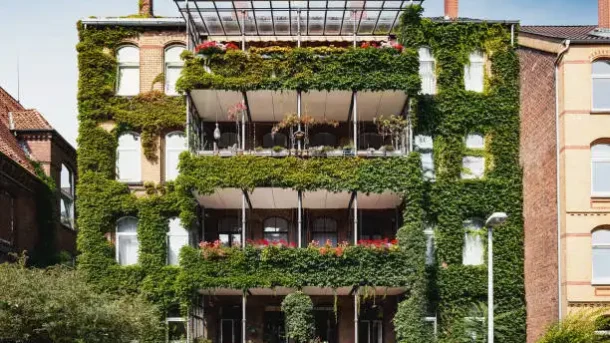
Due to its potential to make the most of limited space and grow food in a controlled environment, vertical farming is gaining popularity as a promising agricultural practice in urban areas. Here is how urban areas are embracing vertical farming.
Systems for vertical farming: Often indoors or in controlled circumstances, vertical farming involves growing crops in stacked layers or vertically inclined structures. These systems frequently employ soilless techniques like hydroponics, aquaponics, or aeroponics, in which plants are cultivated in water solutions or mist conditions rich in nutrients.
Warehouses and high-rise buildings: Urban vertical farms are frequently constructed in repurposed buildings like warehouses, high-rise buildings, or abandoned industrial locations. Multiple layers of crops can be planted vertically, greatly increasing the amount of food that can be produced per square metre of floor area.
LED lighting and climate control: LED lighting systems are used in vertical farms to deliver precise light spectrums that are optimised for plant growth and enable year-round production regardless of the availability of natural light. To establish the best growing circumstances, climate control technologies are used, including temperature, humidity, and CO2 management.