POSTEDITOR OFFICE

How are agricultural subsidies and support programs distributed globally?

subsidies

Global distribution of agricultural assistance and subsidy schemes is achieved through a confluence of national and international legislation. Depending on each nation’s agricultural interests, economic situation, and trade agreements, the distribution and types of subsidies vary widely. The following are some typical methods used to disseminate agricultural support and subsidy programs across the globe:

Domestic Subsidies: To boost their agricultural sectors, the majority of nations offer domestic subsidies. These subsidies may be designed to directly aid farmers financially, support a certain agricultural technique, increase production, or stabilize farm incomes. Direct payments, price support mechanisms, input subsidies (such as for fertilizer and seeds), and risk management programs (such as crop insurance) are all examples of domestic subsidie.

Export Subsidies: Some nations provide export subsidie to increase the competitiveness of their agricultural products on world markets. In order to lower the cost of exporting agricultural products, exporters may receive financial aid or incentives.

Market Price Support: To maintain the pricing of agricultural commodities, governments may employ market price support schemes. These schemes entail buying excess produce from farmers at set rates or becoming involved in the market to stabilize prices.

Input Subsidies: To help farmers afford the cost of agricultural inputs including fertilizer, seeds, herbicides, and machinery, several nations offer input subsidie. Input subsidie are intended to increase productivity and increase the economic viability of agricultural production.

Support for Rural Development and Infrastructure: Governments may make investments in rural development in addition to providing direct payments to farmers.

What are the latest advancements in agricultural biotechnology?

agricultural biotechnology

Agricultural biotechnology was still a developing field with ongoing research and improvements as of my most recent report in September 2021. There might have been new developments since then. The following are some of the most recent developments in agricultural biotechnology:

Gene Editing Technologies: The field of agricultural biotechnology has undergone a revolution thanks to improvements in gene editing methods like CRISPR-Cas9. Crop DNA can be precisely and specifically modified through gene editing, resulting in the creation of plants with better features including disease resistance, drought tolerance, and increased nutritional value.

Technology called RNA Interference (RNAi) has gained popularity as a possible method to manage pests and diseases in crops. RNAi can interfere with pests’ and pathogens’ biological functions and lessen crop damage by silencing particular genes in them.

Designing and building biological components and systems for particular agricultural purposes is known as synthetic biology. It has the capacity to either make completely new creatures or alter existing ones to add desired features.

Agriculture biotechnology has seen an upsurge in the creation and application of biologicals and biopesticides. These items provide safer alternatives to chemical pesticides that are sourced from natural sources.

Microbiome Research: A key area of focus in agricultural biotechnology is the understanding of the plant microbiome and how it interacts with crops.

How does the volatility of exchange rates impact agricultural trade?

agricultural trade

Big data analytics aids in the discovery of historical trends and patterns in agricultural trade data. This data aids in both short- and long-term forecasting by offering insights into seasonality, demand patterns, and cyclical market movements.

Big data analytics can forecast future price movements of agricultural trade commodities by examining historical and current pricing data. Farmers, dealers, and policymakers can use these price forecasts to inform their actions.

Crop Yield Estimation: Using big data analytics, crop yield estimates for various regions can be made by analyzing satellite imagery, weather data, and crop performance data. Estimating supply levels and market situations is made easier with accurate crop output estimates.

Risk evaluation: Big data analytics evaluates a range of potential hazards, including those connected to the weather, trade interruptions, and illness, that may have an effect on the agricultural market.

Exchange rate changes have an impact on the price of importing agricultural supplies including fertilizer, seeds, and equipment. An rise in import costs due to a depreciation of the home currency may result in an increase in farmers’ production costs.

Terms of Trade: The proportion between a country’s export prices and import prices, or terms of trade, can be impacted by exchange rate volatility. A country’s terms of trade may benefit agricultural exporters if the domestic currency appreciates.

Profitability for Farmers: Exchange rate variations can have a direct effect on the profitability of farmers who depend on exports but earn their revenue in their home currency. When converted to the domestic currency, export earnings are worth less when the local currency is stronger.

The demand for agricultural products may be impacted by exchange rate volatility.

What is the role of big data analytics in agricultural market forecasting?

big data analytics

In order to gather insightful knowledge and develop more precise predictions about market trends and dynamics, big data analytics plays a critical role in agricultural market forecasting. The agricultural industry produces enormous volumes of data, including data on the weather, satellite images, soil, crop performance, market prices, and other things. In order to give useful information for decision-making in the agricultural market forecasting process, big data analytic processes and analyzes this data. The following are some crucial functions of big data analytic in predicting the agriculture market:

Data Gathering and Integration: Big data analytics gathers and combines information from a variety of sources, including Internet of Things (IoT) devices, remote sensing technologies, market databases, and governmental organizations. Using this extensive data gathering, a full understanding of the agricultural economy.

Big data analytics aids in the discovery of historical trends and patterns in agricultural market data. This data aids in both short- and long-term forecasting by offering insights into seasonality, demand patterns, and cyclical market movements.

Big data analytic can forecast future price movements of agricultural commodities by examining historical and current pricing data. Farmers, dealers, and policymakers can use these price forecasts to inform their actions.

Crop Yield Estimation: Using big data analytics, crop yield estimates for various regions can be made by analyzing satellite imagery, weather data, and crop performance data. Estimating supply levels and market situations is made easier with accurate crop output estimates.

Risk evaluation: Big data analytics evaluates a range of potential hazards, including those connected to the weather, trade interruptions, and illness, that may have an effect on the agricultural market.

How does the use of IoT (Internet of Things) technology benefit the agricultural market?

Internet of Things

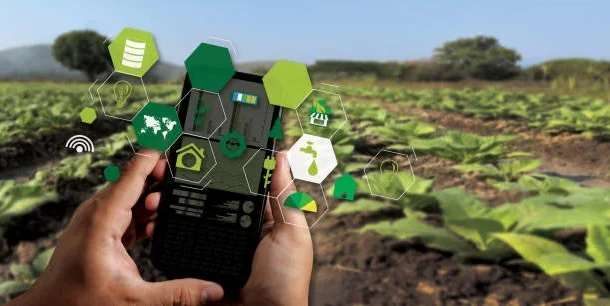
The utilization of IoT (Internet of Things) technology provides creative solutions to multiple difficulties faced by farmers and agribusinesses, which has a number of advantages for the agricultural industry. IoT technology comprises the internet-based integration of sensors, devices, and data analytics to track, gather, and analyze real-time data. IoT has the power to completely change the agricultural industry by increasing productivity, sustainability, and efficiency. IoT helps the agriculture market in the following ways:

Precision Agriculture: Using real-time data, farmers can customize inputs like water, fertilizer, and herbicides to their specific needs. It is possible to precisely and effectively regulate resource use by using sensors to track soil moisture, temperature, and nutrient levels.

Real-time Monitoring: Farmers can use IoT devices to remotely and continuously monitor their crops, livestock, and environmental factors. This aids in making quick decisions and acting quickly in situations like spotting early symptoms of sickness or pests.

Water management: IoT-based irrigation systems can reduce water waste and resource consumption by delivering the appropriate amount of water to crops depending on their individual demands.

Monitoring of livestock: IoT sensors can keep tabs on the condition, activity, and position of livestock, offering information about their well-being, enhancing feeding procedures, and enhancing general herd management.

IoT weather stations capture and communicate weather data, giving farmers precise and localized weather forecasts to help them properly plan their farming activities.

What are the major constraints in accessing agricultural credit and finance?

agricultural credit

For farmers and agribusinesses, obtaining agricultural credit and financing can be difficult, especially in developing nations and for small-scale farming operations. The following significant limitations exacerbate these difficulties:

Lack of Collateral: Because traditional lenders frequently require collateral as security for loans, many small-scale farmers might not have enough assets to provide as collateral. They struggle to obtain formal credit because they lack collateral.

High interest rates: Due to elements like weather-dependent production and price instability, agricultural lending is seen as having a high risk. Lenders may thus impose high interest rates, making lending more prohibitively expensive for farmers.

Information Asymmetry: Lenders could not have access to up-to-date, trustworthy information on farmers’ creditworthiness and possible hazards related to agricultural finance. Agricultural Credit can be reluctant to be extended as a result of this knowledge imbalance.

Agriculture is frequently seasonal, with money generated at particular times of the year. Farmers with erratic cash flows can find it difficult to repay loans on time.

Limited Financial Literacy: Some farmers may not completely comprehend the terms and circumstances of credit due to a lack of financial literacy, which makes it difficult for them to obtain and handle loans.

How does the financialization of agricultural commodities influence market dynamics?

financialization

The term “financialization of agricultural commodities” refers to the rising trading and investment in agricultural commodity markets by financial actors such investors, hedge funds, and speculators. Over the last few decades, this trend has intensified as financial markets have become increasingly important in the pricing and selling of agricultural commodities. In various different ways, the financialization of agricultural commodities can affect the dynamics of the market:

Increased Price Volatility: Speculative trading by financial investors looking for quick gains based on price changes is possible. Their arrival into the market may increase price volatility, causing agricultural commodities to experience greater price fluctuations.

Decoupling from Fundamentals: Trading decisions made by financial investors may not necessarily be closely related to the physical fundamentals of supply and demand for agricultural commodities. Because of this, prices may differ from what would be predicted based only on market fundamentals.

Financial investors may display herding behavior, in which they crowd into particular positions and follow trends. As a result, price bubbles may form or market movements based on emotions rather than fundamentals may be exacerbated.

Increased financial investor engagement may have an impact on how prices are determined in markets for agricultural commodities. Prices may not accurately represent underlying physical market circumstances; instead, they may be influenced by financial flows and investor opinion.

What are the implications of trade wars on the agricultural market?

trade wars

Due to the tariffs imposed, the retaliatory actions taken, and the disruption of global trade flows, trade wars have a considerable impact on the agriculture market. Due to their strategic importance for food security, economic interests, and political power, agricultural products are frequently the main targets in trade conflicts. The following are some effects of trade disputes on the agriculture market:

Reduced Market Access: Trade wars conflicts may result in tariffs and non-tariff obstacles being placed on agricultural products, restricting exporters’ access to the market. Increasing import taxes can increase the cost of agricultural products for consumers in importing nations, hence decreasing demand and impacting export earnings for nations that produce the goods.

Price Volatility: As exporters and importers react to shifting trade policy, trade conflicts cause uncertainty and price volatility in agricultural markets. Price variations in commodities might result from abrupt changes in tariffs and import restrictions.

Supply Chain Disruptions: Global connections exist amongst agricultural supply chains. Trade conflicts can sabotage supply chains, causing delays in the flow of commodities and higher logistics expenses.

Impact on Farmers: Farmers in trade-war-affected nations may see a decline in export opportunities, a decline in commodity prices, and a decline in farm incomes. Finding alternate markets may be difficult for farmers that focus on exports.

Disruptions in agricultural trade may have an impact on food security, particularly in nations that depend significantly on imports for a variety of food items. During trade disputes, import-dependent countries may experience higher food costs and supply shortages.

Trade Pattern Shift: Trade conflicts can cause trade patterns to shift as nations look for new trading partners to lessen the impact of tariffs. The flow of international agricultural trade may change as a result.

How are agricultural commodity prices affected by geopolitical events?

agricultural commodity

Due to their impact on market fundamentals, trade dynamics, and investor sentiment, geopolitical events can have a substantial impact on agricultural commodity prices. Events involving international relations, politics, conflicts, and trade agreements that take place between or inside nations are referred to as geopolitical events. Here are a few ways that geopolitical events can influence the price of agricultural commodities:

Supply interruptions: In major agricultural commodity producing regions, geopolitical events like conflicts, natural catastrophes, or trade disruptions can cause supply disruptions. As demand exceeds supply, a reduced supply may result in price increases.

Trade Policies and Tariffs: Modifications to trade policies, such as new tariffs and export limitations, may have an impact on the movement of agricultural goods between nations. Price volatility and trade concerns can be caused by trade disputes or the introduction of tariffs on agricultural goods.

Currency changes can have an impact on the competitiveness of agricultural exports and imports due to geopolitical events. Export competitiveness may increase with a weaker currency while it may decrease with a stronger currency.

Embargoes and Sanctions: Due to geopolitical circumstances, agricultural products may be subject to embargoes or sanctions that restrict access to certain markets and alter the balance of supply and demand globally.

What are the prospects for agricultural market development in Africa?

agricultural market

There are considerable chances for growth and change in the agricultural industry, which bodes well for the future of the African agricultural market. A large amount of arable land, a variety of climates, and a young, expanding population all contribute to Africa’s enormous agricultural potential. There are a number of variables that support the optimistic outlook for the future of the African agricultural market despite the continent’s numerous difficulties and quick changes, including:

Rising Demand for Food: It is anticipated that Africa’s population will continue to expand quickly, driving up demand for food and agricultural goods. Opportunities for increasing agricultural production and market expansion arise from meeting this growing need.

Urbanization and Changing Diets: As Africa’s population gets more urbanized, there is a rising demand for higher-value and processed agricultural products, which is changing dietary preferences. This change in consumption habits may encourage the diversification of the agriculturals market.

Foreign Investment and Partnerships: To expand their agricultural industries, African nations are enticing more foreign investment and establishing global partnerships. Advanced technologies, money, and knowledge can be introduced through foreign direct investment to increase agricultural output.

Government policies that are encouraging: A lot of African nations understand the value of agriculture for both economic growth and food security. Supportive measures including funding for rural infrastructure, agricultural extension services, and R&D can promote the expansion of the agricultural market.