Seed

How does the lack of access to quality seeds and breeds affect farmers’ productivity and resilience?

seeds and breeds

Reduced output potential: To increase crop and livestock productivity, high-quality seeds and breeds are crucial. They have attractive qualities such a high potential for yield, resilience to disease, tolerance for environmental stress, and enhanced nutritional value. Farmers can be forced to use conventional varieties or local breeds that may have lesser production potential and be more vulnerable to pests, illnesses, and unfavorable climatic conditions if they lack access to high-quality seeds and breeds. Lower crop or livestock yields and decreased agricultural production may follow from this.

Exposure to pests and diseases: High-quality seeds and breeds frequently have tolerance for or resistance to the typical pests and diseases that are widespread in a given area. Farmers who don’t have access to these seeds and breeds may be more susceptible to disease outbreaks and insect infestations. This

Limited ability to adjust to changing climatic conditions: Agriculture is being challenged by changes in temperature and precipitation patterns brought on by climate change. For farmers to retain production and resilience, it is essential to use high-quality seed and breeds that are specifically bred or selected for their capacity to adapt to changing climatic circumstances. Farmers may find it difficult to modify their agricultural operations to the changing climate without access to these seeds and breeds, rendering them more vulnerable to crop failures and decreased animal productivity.

Limited genetic diversity: High-quality seeds and breed help agricultural systems maintain their genetic diversity. Because it offers a larger pool of genetic features that can help crops and livestock adapt to shifting environmental conditions and new threats, genetic diversity is crucial for the resilience of agricultural systems.
How does the limited availability of credit and financial services affect farmers’ ability to invest in their operations?

invest

Lack of Investment Capital: Farmers must have access to loans in order to make necessary improvements to their enterprises. Purchases of top-notch seeds, fertilizers, insecticides, and cutting-edge agricultural technology and equipment may be included in these invest. Without enough money, farmers could be unable to implement new techniques or modernize their methods, which would result in poorer production and output.

Limited Expansion and Diversification: A lack of credit may prevent farmers from diversifying their livestock and crops or growing their agricultural enterprises. Increased income potential and economies of scale might result from expanding enterprises. Farmers who diversify their operations can better manage risk and capitalize on changing market demands. However, without finance, farmers could only be able to plant low-value crops or be forced to practice subsistence farming.

Climate Resilience: Agriculture now faces greater uncertainty due to climate change. In order to implement climate-resilient measures like irrigation systems, rainwater gathering, and drought-resistant crop varieties, farmers need financial resources. Their capacity to adjust to changing climatic conditions and lessen the effects of catastrophic weather events may be hampered by a lack of credit.

Limited Technology Adoption: Farmers must have access to funding in order to invest in cutting-edge agricultural innovations and technology. This covers remote sensing technology, data-driven decision-making systems, and precision agricultural equipment. These innovations can increase production, consume fewer resources, and reduce waste in agriculture. However, farmers might not be able to buy these technology without financial assistance.

How does the fluctuating prices of agricultural commodities affect farmers’ income and livelihoods?

income

Income Unpredictability: Varying prices have a direct impact on farmers’ income levels and can cause income unpredictability. Farmers’ livelihoods may benefit when commodity prices are high because they can generate larger earnings and profits. In contrast, when prices fall, farmers may have less revenue, making it difficult to pay for production costs, settle debt, and cover living expenditures.

Profit Margin: Price changes have an impact on farmers’ profit margins. Increased profit margins from higher commodity prices can encourage farmers to spend more on farm supplies, technology, and infrastructure improvements. On the other hand, lower prices may reduce farmers’ capacity to reinvest in their operations or make the necessary upgrades.

Market Risks: Varying pricing expose farmers to market risks. Rapid price changes can jeopardize the stability of the market and make it more difficult for farmers to forecast and manage their future income. Farmers may experience difficulties negotiating lucrative contracts, hedging against price risks, or timing their sales.

Cost of Inputs: Changes in the price of agricultural commodities can also affect the price of inputs like seeds, fertilizer, and equipment. Input costs typically increase along with rising commodity prices. Due to the need to spend more on inputs while receiving lower prices for their products, this might further reduce farmers’ profit margins.

How is the lack of access to affordable and reliable agricultural inputs hindering farmers’ productivity?

lack of access

Limited Access to High-Quality Seeds: High agricultural yields and crop resilience depend on the use of high-quality seeds. However, a lot of small-scale farmers, especially in developing nations, find it difficult to get hold of high-quality seeds that are tailored to their regional requirements. The ability of farmers to increase agricultural yield and adjust to shifting environmental conditions is constrained by a lack of access to superior varieties and dependable seed sources.

Insufficient access to nutrients and fertilizers: Fertilizers are crucial for improving soil fertility and restoring missing nutrients. However, farmers find it challenging to access and use fertilizers efficiently due to their high cost and restricted availability in far-off locations. nitrogen deficits, soil deterioration, and decreased crop yields can result from inadequate access to fertilizers and nitrogen inputs.

Limited Access to High-Quality Seeds: High agricultural yields and crop resilience depend on the use of high-quality seeds. However, a lot of small-scale farmers, especially in developing nations, find it difficult to get hold of high-quality seeds that are tailored to their regional requirements. The ability of farmers to increase agricultural yield and adjust to shifting environmental conditions is constrained by a lack of access to superior varieties and dependable seed sources.

Insufficient access to nutrients and fertilizers: Fertilizers are crucial for improving soil fertility and restoring missing nutrients. However, farmers find it challenging to access and use fertilizers efficiently due to their high cost and restricted availability in far-off locations. nitrogen deficits, soil deterioration, and decreased crop yields can result from inadequate access to fertilizers and nitrogen inputs.

How are agricultural robots being used for precision seeding?

robots

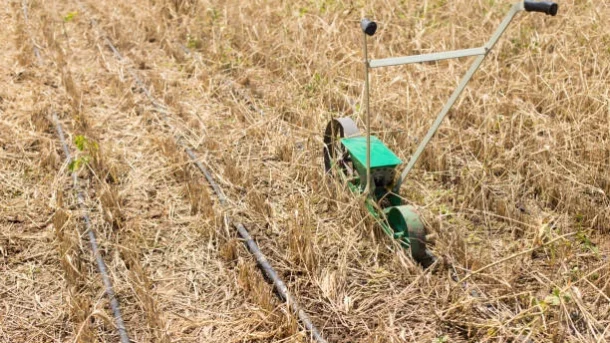
Precision seeding is a growing use for agricultural robotics, which has a number of advantages in terms of accuracy, production, and efficiency. Here’s how using agricultural robots for precise seeding works.

Accurate Seed Planting: Agricultural robots using cutting-edge sensors, GPS, and computer vision technology can plant seeds with accuracy at the right depths and distances. With their ability to roam around fields autonomously or under remote supervision, these robots can guarantee constant and precise seeding. This accuracy aids in maximising crop yield, plant growth, and seed germination.

Variable Rate sowing: Depending on the crop requirements and the field conditions, agricultural robots can execute variable rate sowing techniques by varying the seed population density. The robot may modify the seeding rate for certain fields by analysing data from soil maps, yield maps, or other sources. This makes it possible to strategically plant seeds, maximising the utilisation of both seeds and resources while allowing for geographical heterogeneity.

Agricultural robots have the ability to monitor and make adjustments to seeding operations in real time. They can evaluate soil conditions, track seed dispersal, and spot any problems or anomalies throughout the seeding process thanks to onboard sensors and imaging equipment. This real-time observation enables quick.

Which are Vegetable oil yielding plants ?

Vegetable oil

There are many different vegetable oil yielding plants, but some of the most common include:

  • Soybean: This is one of the most widely grown oilseed crops, producing a high-quality vegetable oil that is used in cooking, frying, and for making biodiesel.
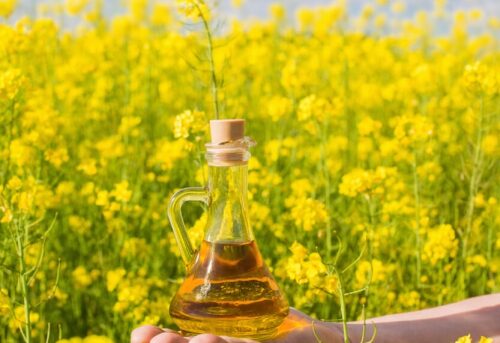
  • Rapeseed (Canola): This is another important oilseed crop, which produces a light-colored oil that is used for cooking and in the food industry.
  • Sunflower: Sunflower seeds are the source of sunflower oil, which is used for cooking and in the food industry.
  • Peanut: Peanut oil is a popular cooking oil that is high in monounsaturated and polyunsaturated fats.
  • Palm: Palm oil is extracted from the fruit of the oil palm tree and is used for cooking and in the food industry.
  • Safflower: Safflower seeds are the source of safflower oil, which is used for cooking and in the food industry.
  • Olive: Olive oil is a popular cooking oil that is high in monounsaturated fats and is also used in cosmetics and pharmaceuticals.
  • Coconut: Coconut oil is extracted from the meat of the coconut and is used for cooking and in the food industry.

What are seed rate required for Lady’s Finger (Bhindi)?

Lady’s Finger

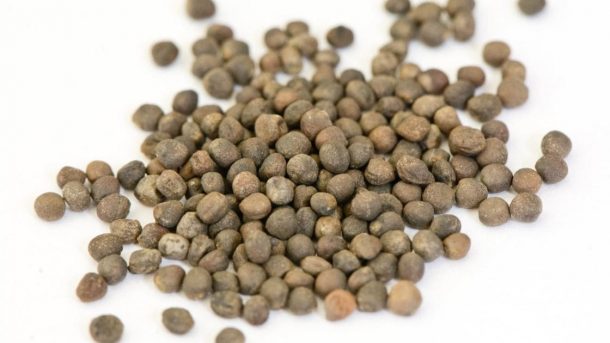
The precise seed rate will always vary depending on soil type, climate, and desired plant population in any crop. The seed rate required for Lady’s Finger (Bhindi) is approximately 4 to 5 kg of seeds per hectare

As per season, the seed rate is 3.5-5.5 kg seeds/ha during summer and 8-10 kg seeds/ha for rainy season crop. Before sowing the seeds are soaked in a solution of Bavistin (0.2%) for 6 hours. The seeds are then dried in shade.

How Nursery Raising of Seedlings is done for Tulsi Farming?

Nursery

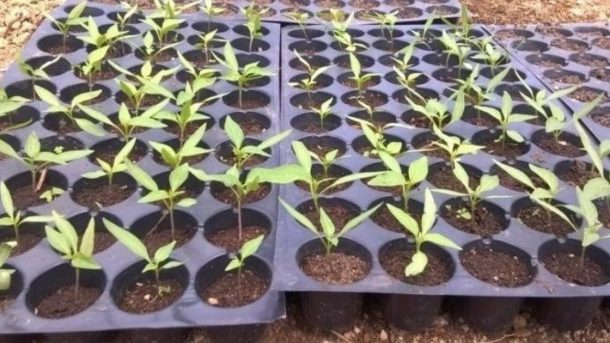
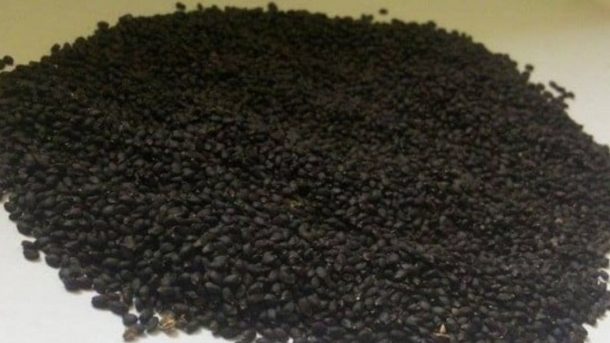
Prepare the nursery bed size of 4.5 m x 1.0 m x 0.2 m and apply Farm Yard Manure of 2 kg/square meter. Make sure the nursery bed/soil is covered with partial shade. Soil should be prepared to a fine tilth and worked up to 25 cm to 30 cm depth. As the basil seeds are very small in size, mix the seeds with sand in the ratio of 1:4. Then seeds should be sown in beds 8 weeks in advance of the monsoon. Generally, these seeds germinate in 1 week to 2 weeks and seedlings become ready for transplanting in the main field in about 6 to 7 weeks time @ 3 to 5 leaf stage.