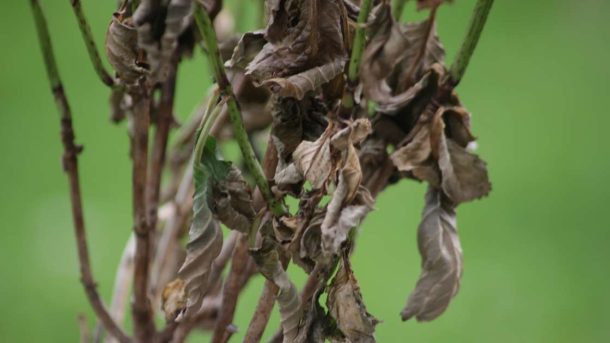
Necrosis are death of plant tissues, particularly leaf tissue is caused by deficiency of K, Ca, Mg. Necrosis usually occurs in a specific area, like leaves, roots or stems. Often associated with bacteria, viruses, fungi or parasitic insects, necrosis can also be caused by watering plants too much or too little, lack of nutrients or improper amounts of sunlight. Conditions leading to necrosis depend on the plant species, as tolerances to diseases and requirements for sunlight, water and nutrients vary widely across the plant kingdom. Resulting from the death of plant cells, usually turns the dying plant parts brown or black. Often beginning at the tips of leaves, ends of roots or stems, necrosis spreads from those points if the cause of the tissue death is not addressed. Necrosis can also affect plant flowers and fruits, which may result in the complete loss of the crop if the issue is not solved.
Plant diseases
How primary infection and secondary infection occurs ?
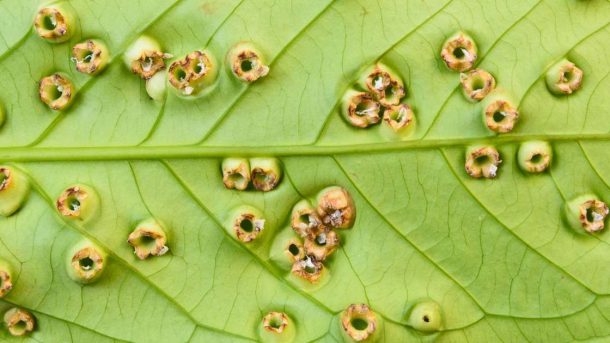
Primary infection occurs when the pathogen comes into contact with a susceptible host under favourable environmental conditions. Pathogens penetrate the surface of a plant directly or enter through wounds or natural openings. Growth and development of a pathogen usually occurs on or within infected plant tissue. Secondary infection results from spores or cells produced following primary infection or from other secondary infections. The secondary infection cycle can be repeated many times during the growing season.
The number of cycles is dependent on the biology of the pathogen and its host and the duration of environmental conditions needed for infection.
How to manage tomato early blight?
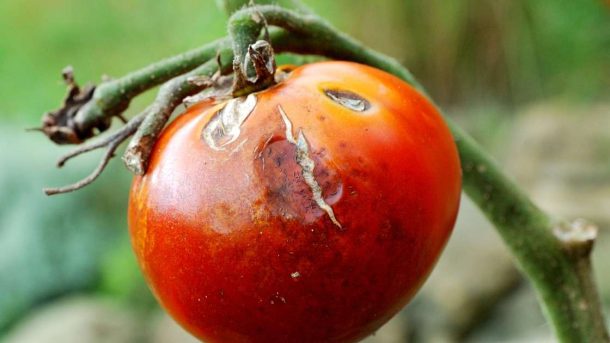
Early blight in tomato can be managed by using disease free seeds for sowing and by practicing field sanitation. Crop rotation with non-solanaceous crop and optimum irrigation that helps in avoiding stress condition are another method to prevent tomato blight. Seed treatment using thiram at the rate of 2g/kg and 3 sprays with difolatan 0.2 % at fortnightly interval also helps in controlling tomato blight.
What are the symptoms of Fusarium Wilt in cotton ?
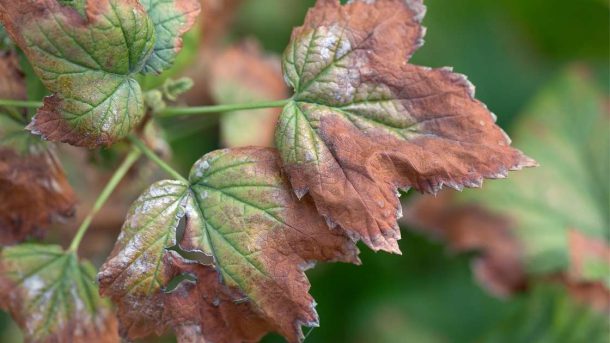
Fusarium wilt results in stunted plant growth , yellowing of plants and defoliation. Yellowing starts in the edges of leaves and then move inwards. Brown discoloration occurs in stems which is more intense in outer layer of tissues. Infected plants fruit earlier and produce smaller boll. In seedlings and young plants, cotyledons and leaves wilt, may turn necrotic, and even fall off the plant, resulting in bare stems. In mildly affected plants, lower leaves develop symptoms but plants survive, but with reduced vigor and noticeable stunting.
What are the symptoms of sigatoka leaf spot disease?
Symptoms of sigatoka include appearance of small light yellow or brownish green narrow streaks on leaves. They enlarge in size becomes linear, oblong, brown to black spots with dark brown brand and yellow halo. Rapid drying and defoliation of the leaves can be observed. Black specks of fungal fructification appear in the affected leaves.
What is chlorosis and what causes it?
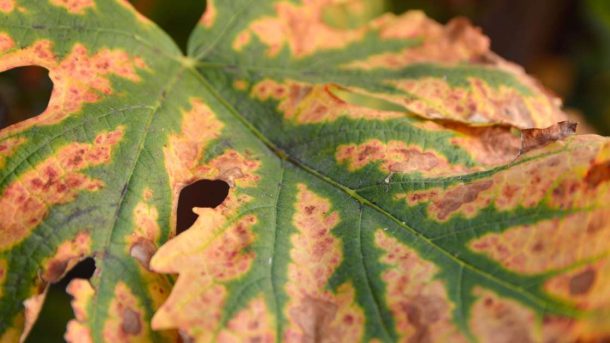
Chlorosis is the loss of chlorophyll leading to yellowing in leaves. It is caused by the deficiency of elements like K, Mg, N, S, Fe, Mn, Zn and Mo. Plants affected with chlorosis will lose their ability to synthesize carbohydrates and will die unless the cause of its chlorophyll insufficiency is treated and might lead to plant disease called rust. Chlorosis occur due to many reasons namely mineral deficiency , poor drainage , root damage , exposure to Sulphur dioxide and soil pH that makes minerals unavailable to roots for absorption etc.
What is bunchy top disease of banana?
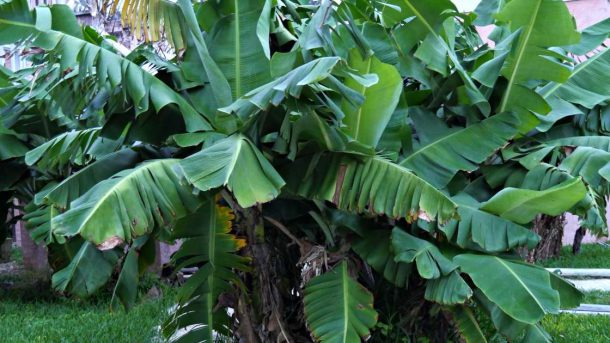
Stunted plant growth in banana plants is an indication of bunchy top disease. Dark broken bands of green tissues on veins, petioles and leaves can be observed. Marginal chlorosis and curling can be observed in leaves with reduced size. Leaves become upright and brittle. Many leaves are crowded at the top. Branches size will very small. If infected earlier no bunch will be produced. The disease is transmitted primarily by infected suckers. Secondary spread is through the aphid vector.