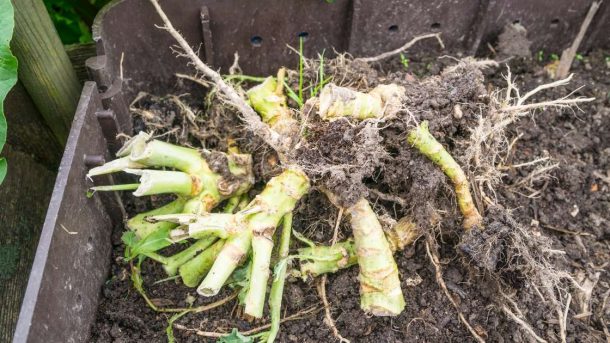
Drench nursery with 1 lit of Formaldehyde in 50 lit water for 3 sq.m. before sowing. Prophylactic drench with 0.25% Mancozeb or 1% Bordeaux mixture immediately after germination to control Pythium and 0.05% Carbendazim after 15 days to control Rhizoctonia.
Plant diseases
What causes blackening of rose petals?
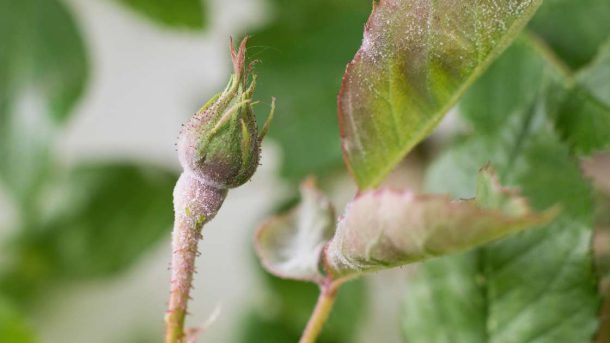
Low temperature and high anthocyanin content causes blackening of rose petals. Anthocyanin buildup in Baccara rose petals is caused by GA3 treatment. At low temperatures (20°C during the day and 4°C at night), this effect was more evident than at higher temperatures (30°C during the day and 20°C at night).
What is blind wood of rose ?
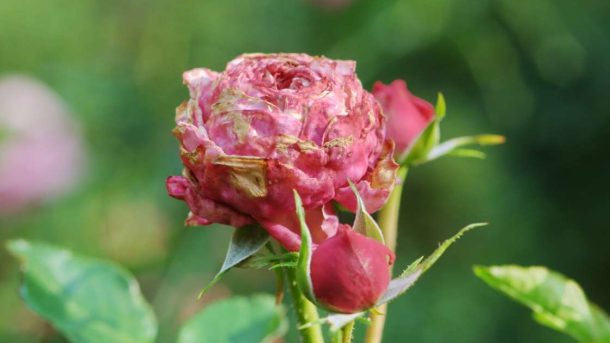
A greenhouse rose’s regular flowering stalk has fully grown sepals, petals, and reproductive organs. The apical end of the stem failing to form a flower is a regular occurrence. Blind wood refers to these types of shoots. The reproductive components are absent or aborted, while the sepals and petals are there. Blind wood is usually short and thin, but when it grows at the top of the plant, it can grow to be rather long and thick. Low temperatures, insufficient light, chemical residues, insects, pests, fungal infections, and other factors can all contribute to this.
What are the symptoms of vascular wilt in carnation ?
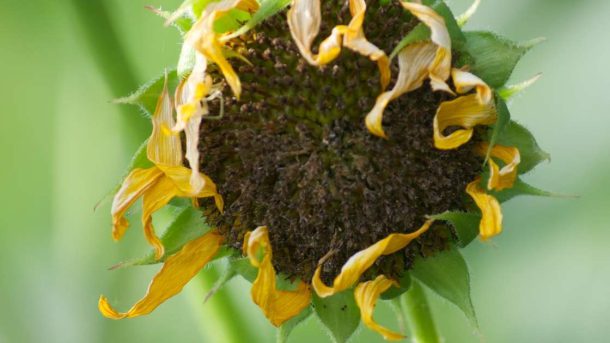
Plants may be attacked at any stage; young plants can suddenly dry up or older plants might develop a pale green color accompanied by wilting of lower leaves. Infected plants first develop a dull green color, eventually wilt and turn straw-color. Symptoms often appear on one section of the plant. This is typically followed by broad wilting and the death of the entire plant. Plants may wilt in the middle of the day when the temperature is high in the early stages of infection and appear to recover at night. Some plants may not display symptoms of infection until they reach flowering, at which point they collapse. When the stem is severed, the vascular tissues may develop a brown tint or streaking.
What is mosaic virus disease of watermelon ?
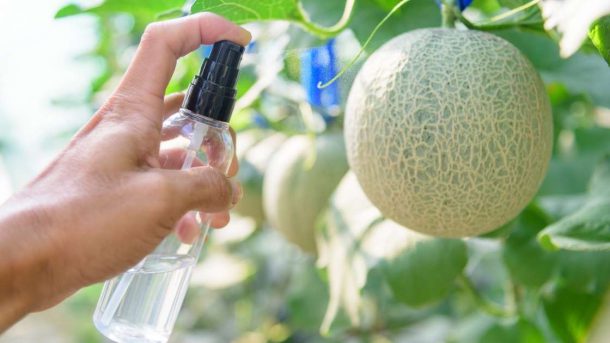
Aphids are the carriers of this virus. Mosaic like symptoms emerge on leaves as a result of this virus. Vein bending, reduced leaf size, leaf deformation, and blisters are also seen on the leaves. This virus may have a negative impact on plant growth and fruit yield. Manage the aphid population effectively to prevent the virus from spreading. Spray Metarhizium, a fungus-based powder, at a rate of 40 g per ten litres of water to control aphids.
What are the symptoms of late blight of potato and how to control it ?
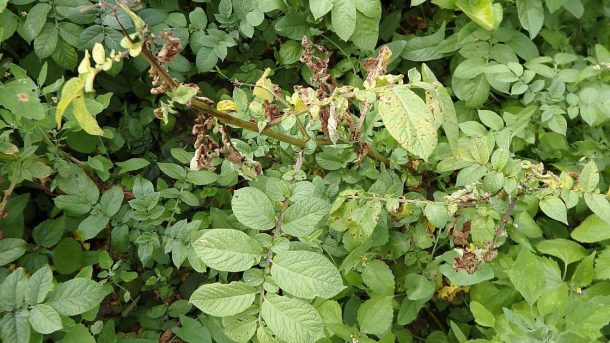
Purple black patches occur on the top leaves and branches of the stem when the illness first appears. White fungus can be observed growing under such dots. Under more severe disease, the crop seems to be burned. This sickness has an impact on tuber settings as well. Spray azoxystrobin 23 SC @ 10 ml or mancozeb 75 WP @ 20 g or metiram 70 WG @ 20 g or metalaxyl M 4 percent + mancozeb 64 percent WP @ 20 g per 10 lit of water at the start of the treatment.
What are the symptoms of citrus decline ?
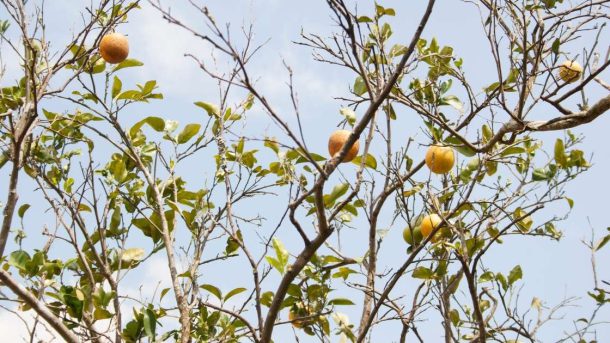
The affected trees do not always die completely, but remain in a state for decandance and unproductive for a number of years. Some-times they may suddenly wilt and die in a day or two. In early stages, symptoms are restricted to a few limbs, but eventually the whole tree is involved. Trees show sparse mottling leaves, stunted growth, sickly appearance.
Midrib and lateral veins of old, mature leaves turn yellow with interveinal areas along the veins showing diffuse yellowing. Leaves may turn yellow and are shed with the onset of summer or autumn and the die-back of twigs starts. Dead shoots stand out prominently and may be found dead right down to the main trunk. The entire tree bears short
twigs carrying narrow small leaves on their lower portion.
What are the symptoms of verticillium wilt in cotton ?
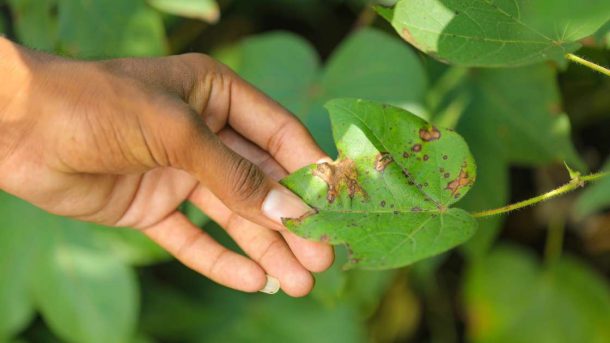
Seedlings infected with verticillium wilt becomes infected and turn yellow, dry out and die. Plants that become infected later in the season are stunted and exhibit a yellow condition along leaf margins and between the major vein.
Severely affected plants will shed their leaves. A brown discoloration of the interior of the stem can usually be found later in the season. This discoloration is distributed evenly across the inside of the stem.
What are the symptoms of mango malformation?
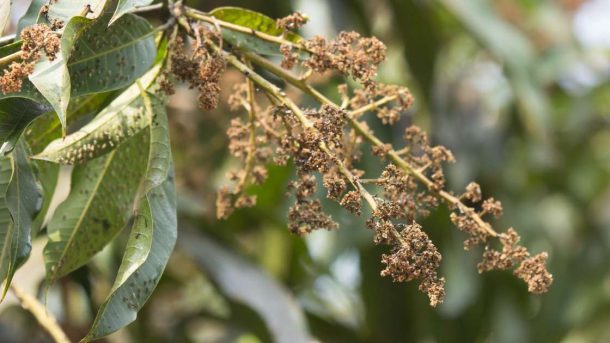
Mango malformation illness is characterised by abnormal, compact growth of shoots and flowers. Misshapen shoots with short internodes and brittle leaves result from growing points such as leaf and stem buds. The leaves are much smaller than those on healthy plants, and they recurve towards the stem, giving the plant a squat, bunchy appearance. Shoot damage affects adult trees, but young plants suffer the most severe consequences, becoming severely stunted. The flowers are bloated, infertile, and fruitless. When compared to ideal flowers, there are generally a lot of male flowers. Panicles can also produce leaves that are dwarfed and deformed.
What is the cause of red rot of sugarcane ?
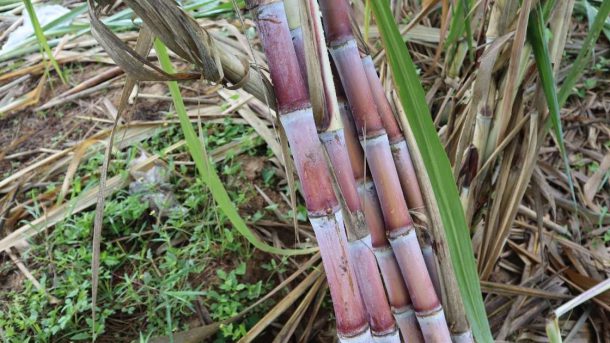
Red rot disease is caused by the fungus Glomerella tucumanensis. Pathogen present on leaf sheaths and blades, solitary or aggregated, often forming short lines between vascular bundles .There has been considerable difference in opinion as to the nature of the fungus that causes this disease. Some insisted that this fungus is more strictly saprophytic than parasitic, and that it cannot attack healthy canes. Others said that it cannot attack mature canes except through wounds, but that it can attack young plants. However, the young canes are usually protected by the leaf sheaths. In some places the fungus has been reported to grow on the dead canes only and the disease is not known.