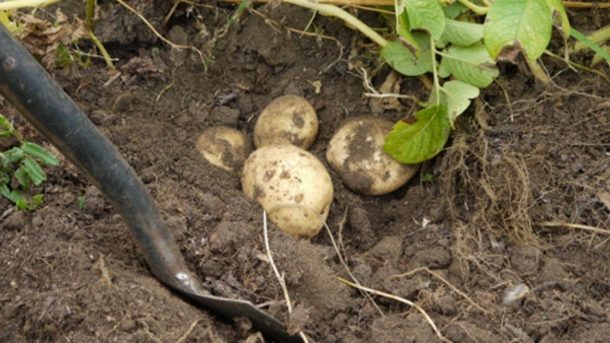
Generally, farmers wait until the foliage of the plants wither by themselves, indicating complete maturity of the crops. The potatoes from withered plants are removed by ploughing or digging and the skin of the potato is scrapped with fingers so as to understand if they are mature. If the skin doesn’t come off easily while rubbing then it’s the right time to harvest.
farming practices
What would be the spacing between potato plants?
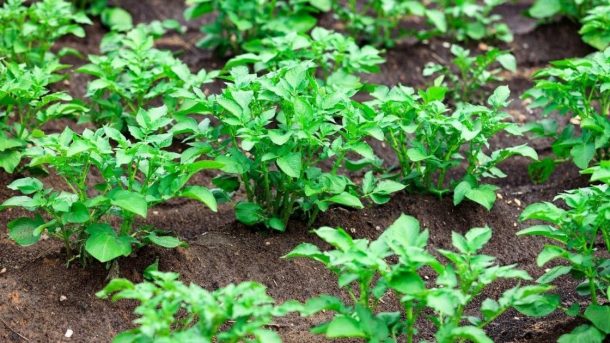
The planting distance used during potato farming is 50 ×20 or 60×25 cm such that the planting density or seed rate is 1.40 kg for 10 sq. meter area. The spacing is not specifically recommended for potatoes but it is advisable to plant tubers or seed potatoes so that there is enough space for them to grow. The general recommendation is made on the seed rate, which is expected to be around 2 tonnes per hectare.
Why is earthing up required in potato farms and how many times it should be done?
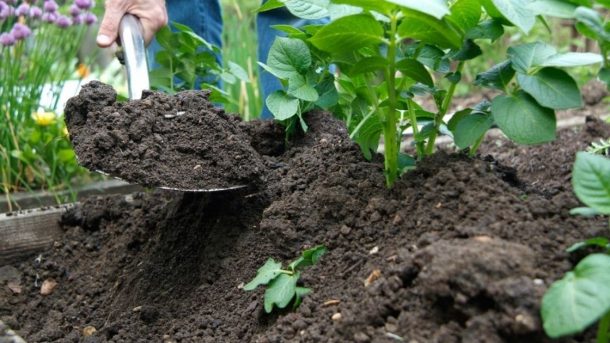
The main objective of earthing up is to aerate the soil, destroy weeds and keep the soil loose for the potatoes to grow. During the entire potato farming cycle, at least two or three earthing up should be done at an interval of 15-20 days. As soon as the plants grow to a height of 15-25 cm, first earthing up is done and the second one is done when the tubers grow as emerge out of the soil. Generally, the second earthing up is done to cover the tubers from being exposed to the outer atmosphere. Earthing up in the potato farm area is done using double mould plough ridger or by a tractor drawn culti ridger.
How seed production occurs in brinjal?
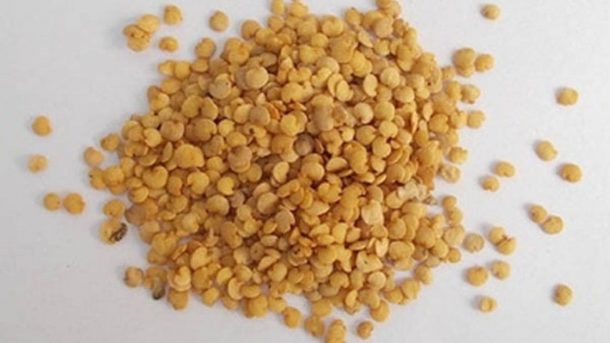
Fully Ripe fruits are harvested for seed extraction. The outer covering is peeled off and the flesh with the seed is cut into thin slices. These are then softened by soaking till the seed is separated from the pulp to which water is added gradually. Keep the material to stand overnight which make the separation of seed from the pulp easier. After separation, dip the seed into the water and reject those seeds which float on the water. Seeds should be dried in partial shade before storing. The isolation distance is 50-100 m. The seed yield is 100-120kg/ha.
How damping off diseases cause damage in tomato and how it can be controlled?
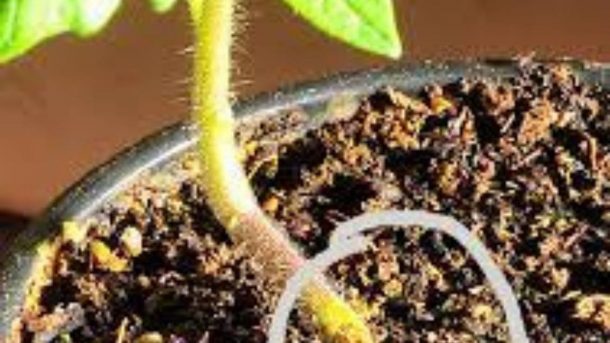
The fungus attack usually starts on the germinating seed, and further spread to the hypocotyl, basal stem, and developing tap-root. It can be controlled by drenching the nursery bed with 5 litre formalin dissolved in 100 litres of water 15 days before sowing. Before sowing, hot water treatment of seed at 52°C for 30 minutes should be done. Spray mancozeb (2.5g /L), carbendazim (1g /L) on nursery seedlings.
How birds damage can be controlled in orange orchard?
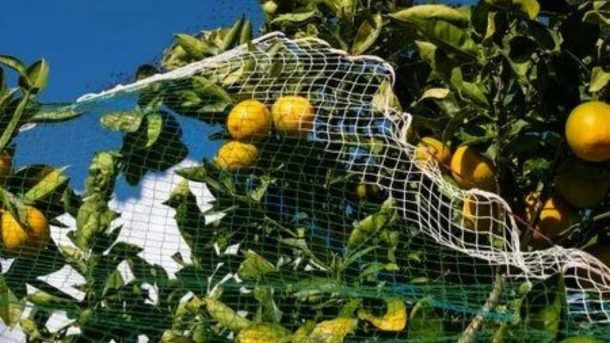
Birds are by far the greatest pests in many fruit trees. Covering the trees with wire cages, plastic netting is perhaps the best method of control. Smaller trees can be wrapped in nets. Use a fine mesh netting to reduce the possibility of birds becoming caught in the net. Individual fruits can also be bagged using butter paper or cloth bags to prevent bird damage, insect and disease attack. Aluminium pie tins suspended by a string or wire above the bushes will twist and turn in the breeze and keep the birds away.
What is fruit thinning in orange cultivation?
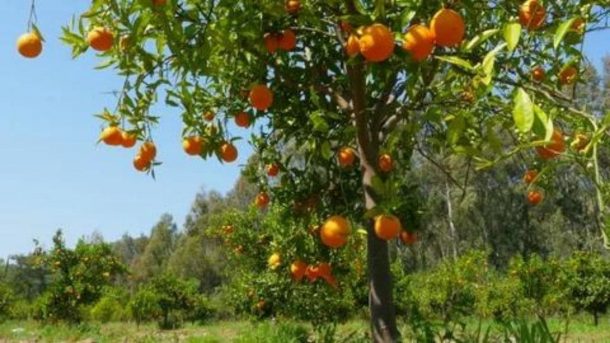
It is usual for a number of young fruits to drop off during the spring and early summer. This natural thinning is often referred to as the “June drop”. With most cultivars, too many fruits will likely still remain on the tree. It is often necessary to remove the excess fruit by hand when it is still very small. Fruit thinning reduces limb breakage; increases fruit size, improves colour and quality of remaining fruit, prevents depletion of the tree and stimulates flower initiation for next year’s crop.
How training is done in orange cultivation?
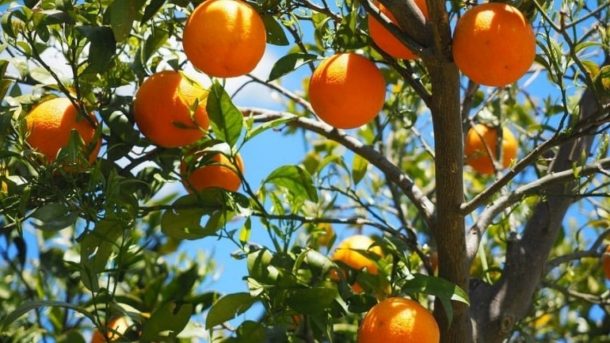
Training is a relatively new practice in which tree growth is directed into a desired shape and form. To be most productive, fruit plants must be trained to a definite system. There are several training systems. Some fruit trees are trained on single trunk, while some others on Kniffin, vertical trellis, overhead arbour, central-leader or an open centre, etc. Improperly trained fruit trees generally have very upright branch angles, which result in serious limb breakage under a heavy fruit load. This significantly reduces the productivity of the tree and may greatly reduce tree life. Proper tree training also opens up the tree canopy to maximize light penetration. For most deciduous tree fruit, flower buds for the current season’s crop are formed the previous summer. Light penetration is essential for flower bud development and optimal fruit set, flavour, and quality. Although a mature tree may be growing in full sun, a very dense canopy may not allow enough light to reach 12 to 18 inches inside the canopy. Opening the tree canopy also permits adequate air movement through the tree, which promotes rapid drying to minimize disease infection and allows thorough pesticide penetration.
How pruning is done in orange cultivation?
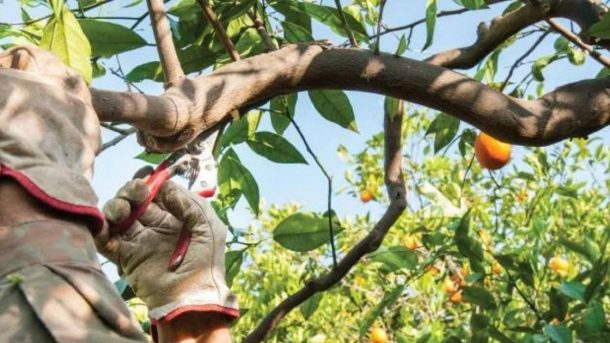
Pruning is judicious removal of plant parts to establish balance between vegetative and productive growth. It has strong influence on fruitfulness of plants. In Deciduous fruits, pruning is important to maintain rhythm of fruiting e.g., no pruning in peach means little or no fruiting; in Ber, annual pruning is essential; in grapes, annual pruning in north India; two pruning’s in Maharashtra and three pruning’s in Tamil Nadu. In Evergreen fruits, pruning is rarely practiced though it is beneficial in some crops like mango and guava. Allowing trees to grow too tall is another mistake. Pruning trees to manageable size keeps them healthy and is necessary for optimal fruit production and longevity of the tree. While pruning, maintain an adequate number of good leaves for quality fruit production. About 30 to 40 good-sized healthy leaves are needed to produce one good-quality fruit. The safest time to prune most trees is after picking the crop in summer to restrict growth. Winter pruning should be restricted to removal of suckers, dead wood and broken or crossing over branches to sufficiently open up the canopy of the tree. Pruning cuts should be at an angle so that moisture does not collect and allow for rot and disease to settle. All pruning cuts should be painted with Bordeaux paste to prevent entry of pathogens.
What is sod mulch in orange cultivation?
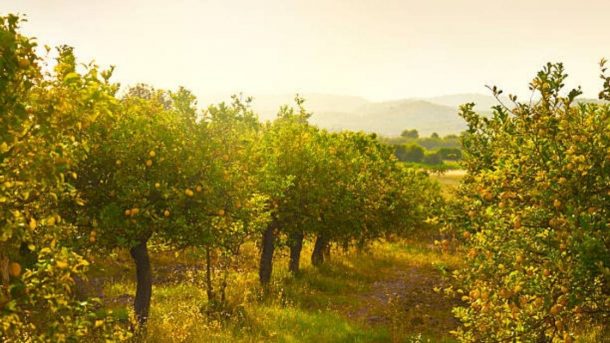
This is similar to sod with the only difference is that the vegetation is cut frequently and the cut material is allowed to remain on the ground. This is slightly better than the sod, as the moisture loss is not great as in sod. In both sod and sod mulch, more nitrogen should be applied to the fruit trees than usual application because the vegetation utilizes more soil nitrogen.