Advanced agriculture

How can I increase crop yield and quality?

crop yield

Agricultural productivity depends on the quality of seeds with which farmers sow their fields. Therefore, in order to increase crop yield on their farmlands, agrarians are recommended to sow only certified seeds that have passed all the necessary quality controls.

Certified seeds may cost higher than those that do not have certification, but the result will be worth it, because the proper quality of seeds is one of the main factors that affect crop yield. Besides that, planting only high-quality seeds represents one of the eco friendly methods to increase crop yield. If needed, a farmer can check the quality of particular seeds by referring to a relevant seed company and requesting it to conduct special trials on a given land plot.


The seed multiplication ratio is the ratio between the investment in seed versus the yield. For example, if three grains are harvested for each grain seeded, the resulting multiplication ratio is 1:3, which is considered by some agronomists as the minimum required to sustain human life. One of the three seeds must be set aside for the next planting season, the remaining two either consumed by the grower, or for livestock feed.
What are the optimal soil conditions and nutrient requirements for a specific crop?

nutrient

The plant takes up nutrients in the soil through its roots and in particular its root hairs. To be taken up by a plant, a nutrient element must be located near the root surface; however, the supply of nutrients in contact with the root is rapidly depleted within a distance of ca. 2 mm.

There are three primary mechanisms whereby nutrient ions dissolved in the soil solution are brought into contact with plant roots.

  1. Mass flow of water
  2. Diffusion within water
  3. Interception by root growth

All three mechanisms operate simultaneously, but one mechanism or another may be most important for a particular nutrient. For example, in the case of calcium, which is generally plentiful in the soil solution, except when aluminum over-competes for calcium on cation exchange sites in very acid soils.

What is an aeroponics farming system?

aeroponics

Aeroponics is a type of hydroponic farming system that involves growing plants in an air or mist environment without the use of soil. The roots of the plants are suspended in the air, and they are misted with a nutrient-rich solution at regular intervals. The misting provides the roots with the water and nutrients they need to grow, while the roots themselves are exposed to a high level of oxygen.

An aeroponic system typically consists of a growing chamber where the plants are suspended, a system for misting the roots, a water and nutrient delivery system, and a lighting system for photosynthesis. Aeroponic systems are known for their high efficiency and high yields, as well as for their ability to grow plants in a variety of environments.

The main advantages of aeroponics include:

  • High water efficiency: Aeroponic systems use less water than traditional soil-based farming systems.
  • High oxygen levels: The roots are exposed to a high level of oxygen, which can lead to faster growth and higher yields.
  • Space-saving: Aeroponic systems can be used to grow plants in a vertical orientation, which saves space.
  • Pest and disease resistance: Because plants are grown in a controlled environment, they are less susceptible to pests and diseases.
  • Flexibility: Aeroponics can be used to grow a wide variety of plants, including vegetables, herbs, fruits, and flowers.

Aeroponic systems are used to grow a variety of plants including vegetables, herbs, fruits, and flowers, and are also used in research, and space farming. They are more complex and require more technical knowledge than other hydroponic systems.

How hydroponic system works?

hydroponic system

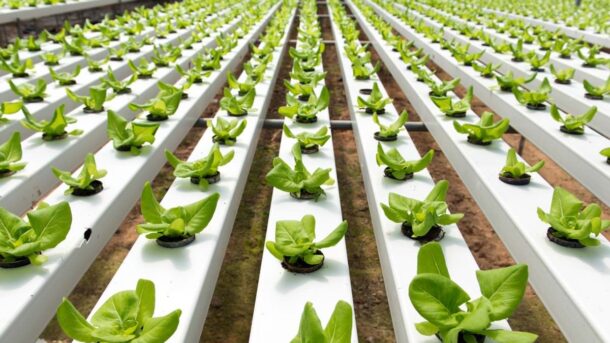
A hydroponic system is a method of growing plants without the use of soil. Instead, plants are grown in a nutrient-rich solution, typically water, which is delivered directly to the roots. There are several different types of hydroponic system, but they all share the basic principle of providing plants with the nutrients they need to grow without the use of soil.

The most common types of hydroponic systems include:

  • Deep water culture: In this system, plants are grown in a container of nutrient-rich water, and their roots are suspended directly in the water. An air pump is used to provide oxygen to the roots.
  • Flood and drain: Also known as ebb and flow, this system uses a container of nutrient solution that is periodically flooded and drained. The plants are grown in a growing medium, such as clay pellets or rockwool, which is used to support the roots.
  • Drip irrigation: This system uses a network of tubing and emitters to deliver nutrient solution to the plants. The solution is dripped directly onto the roots, and any excess is collected and recirculated.
  • Aeroponic: This system uses a mist of nutrient solution to deliver nutrients to the roots. The plants are grown in a growing medium, such as clay pellets or rockwool, and their roots are suspended in the air.

All hydroponic systems require a specific combination of light, temperature, humidity, and nutrients to be successful. They are used to grow a variety of plants including vegetables, herbs, fruits, and flowers. The main advantage of hydroponics is the ability to control the growing environment, which leads to higher yields and faster growth than traditional soil-based gardening.

how to do Saffron farming in an Air-conditioner setup?

Saffron farming

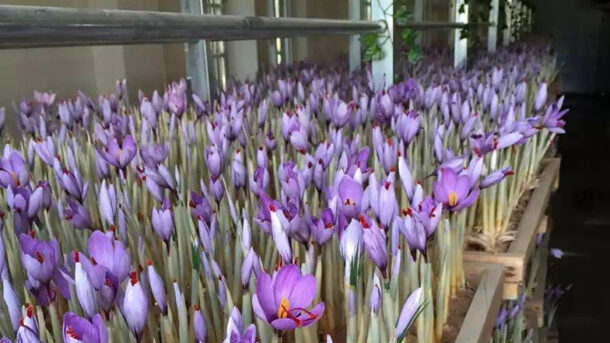
Saffron is a delicate crop that requires specific Saffron farming for growing conditions, including cool temperatures and well-drained soil. It is typically grown in regions with Mediterranean climates, such as Spain, Italy, and Iran.

Growing saffron in an air-conditioned setup would involve controlling the temperature, humidity, light and other environmental factors inside a controlled environment, such as a greenhouse or indoor facility. Here are the general steps for saffron farming in an air-conditioned setup:

  1. Preparing the soil: Make sure that the soil is well-drained and has a pH between 6 and 7.5. Incorporate organic matter such as well-decomposed farm yard manure, compost, or vermi-compost to improve soil fertility.
  2. Planting saffron bulbs: Saffron bulbs should be planted in late summer or early fall, at a depth of around 6 inches. The bulbs should be planted with the pointed end facing up.
  3. Temperature and humidity control: Maintain a temperature range between 50-60°F and a humidity range between 60-70% inside the air-conditioned setup.
  4. Lighting: Saffron plants need a lot of sunlight, so make sure the air-conditioned setup receives at least 6 hours of direct sunlight per day. If natural light is not sufficient, you can use artificial lighting.
  5. Irrigation: Saffron plants need a consistent supply of water, but too much water can lead to disease, so proper drainage is important.
  6. Fertilization: Apply a balanced fertilizer to the saffron plants every 4-6 weeks.
  7. Harvesting: Saffron plants will flower in fall, and the flowers should be harvested as soon as they open. The stigmas, which are used to make saffron spice, should be dried and stored properly.

It’s important to note that saffron farming in an air-conditioned setup requires a significant investment in terms of equipment and energy costs, and the plants require a lot of attention and maintenance. Also, saffron farming is a labour-intensive process, so labour costs should be taken into consideration.

How pheromone traps works in agriculture?

pheromone traps

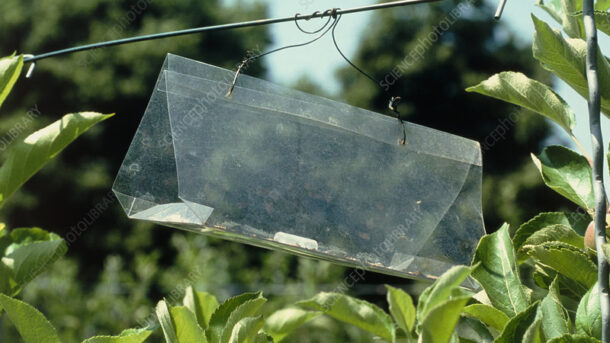
Pheromone traps are a type of trap used in agriculture to monitor and control pest populations. These traps use a synthetic version of a specific pheromone, which is a chemical substance that insects use to communicate with each other. The pheromone used in the trap mimics the natural pheromone of the target pest, attracting the males of the species to the trap.

The traps typically consist of a sticky surface or a container with a liquid attractant. Once the males are attracted to the trap, they become trapped on the sticky surface or in the liquid, preventing them from mating with females and reproducing. The traps can be used to monitor pest populations, as the number of trapped insects can indicate the severity of an infestation.

Pheromone traps are most commonly used for monitoring and controlling moths and beetles, including pests such as the codling moth, the diamondback moth, and the gypsy moth. They can be used alone or in conjunction with other pest control methods, such as chemical insecticides or biological control, to reduce pest populations and minimize crop damage.

It is important to keep in mind that pheromone traps are not a standalone solution and may need to be paired with other control methods to effectively manage pests.

What is the Cost of drone pesticide spray across different countries?

different countries

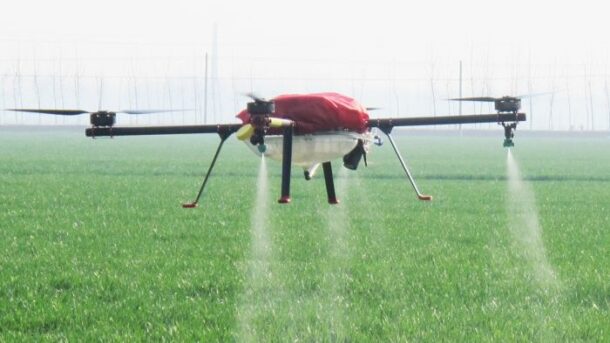
The cost of drone pesticide spraying can vary significantly across different countries, depending on factors such as the cost of labor, the cost of the equipment, and local regulations. In developed countries like the United States, the cost of drone pesticide spraying can range from $10 to $15 per acre, depending on the location and the type of crop. In developing countries, the cost may be lower due to lower labor costs. For example, in India, the cost of drone pesticide spraying ranges from $3 to $5 per acre. In Africa, the cost can be even lower, with some estimates ranging from $1 to $3 per acre. However, these costs may vary depending on the specific location, crop, and company providing the service. It is also important to note that these cost estimates may not include the cost of the pesticides themselves.

What are the Challenges of using robotics in horticulture?

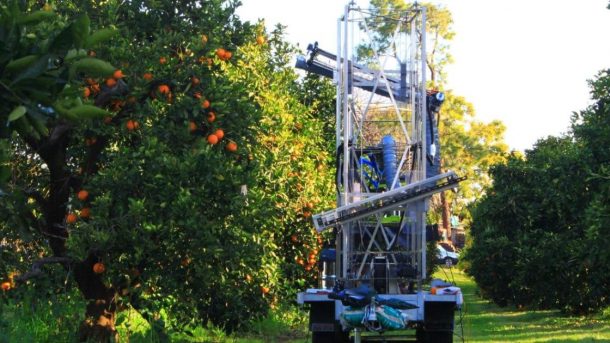
Designers of robots for fields and orchards face a daunting task. Robots have to ‘see’ the paths between the produce and they need to ‘know’ which areas have already been harvested. They need eyes to see the trunk of a tree and to separately identify fruit, flowers and leaves. Their arms need to be able to pluck, prune, spray and pollinate. They have to be strong enough to handle rough terrain, sloping ground and mud. They must also be able to handle fragile fruits and berries which bruise easily. After avoiding all the people, poles, wires, stumps and rocks, robots need to be able to work near other robots without getting in their way. Their economic use poses a number of problems. Some horticultural tasks such as fruit picking last for only a few months of the year. It simply is not profitable to use a robot for such a short period. Robots may have to be multifunctional and be able to pick, count buds, prune, and pollinate to ensure a reasonable return on their cost.

What is Grafting robots?

Grafting robots

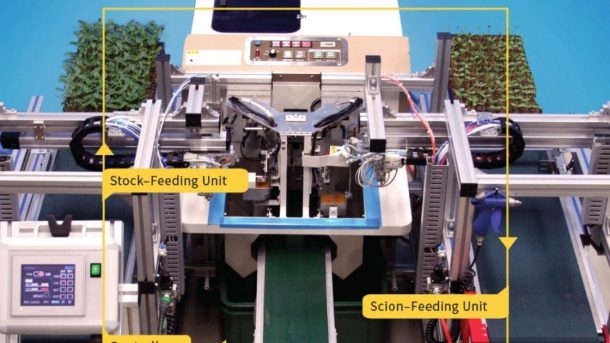
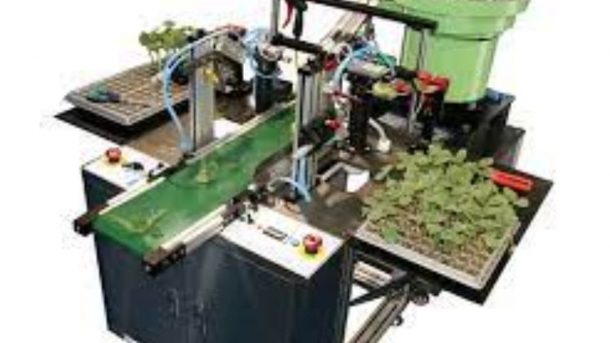
The first commercial model of a grafting robot (GR800 series, Iseki & Co. Ltd., Matsuyama, Japan) became available for cucurbits back in 1993. Since then, semi- or fully-automated grafting robots were invented by several agricultural machine industries and several commercial models are available in East Asia, Europe, and more recently in the U.S. Semi-automated grafting robots generally graft at a speed of 600-800 grafts per hour (speed equivalent of 5-6 skilled workers for cucurbit, and 2-3 skilled workers for tomato), but require a minimum of two workers and one trained worker to inspect the grafting quality. 

How Robotics is used in Vegetable Grafting?

Vegetable

Vegetable production with grafted seedlings was originated in Japan and Korea to avoid the serious crop loss caused by infection of soil-borne diseases aggravated by successive cropping. This practice is now rapidly spreading and expanding over the world. Vegetable grafting has been safely adapted for the production of organic as well as environmentally friendly produce and minimizes uptake of undesirable agrochemical residues. The number and size of commercial vegetable seedling producers has increased markedly reflecting the increase in farmers’ preferences for grafted seedlings of high-quality and better performance.