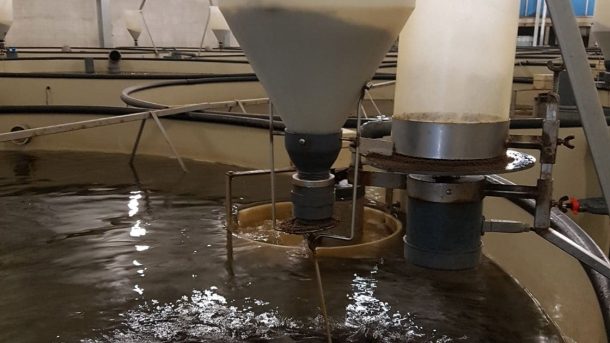
A practical way of removing the waste from the fish tank is possible through mechanical filtration. Modern recirculating system have an outlet with a filter called the microscreen of mesh size 40 to 100 microns. The presence of the micro screen has some advantage such as it reduced the load on biofilter, removes the organic impurities, improves and facilitates the biofiltration process. The type of micro screen used is called a drum filter and has the following functions: Filters the elements present in the water. The elements are pushed to the backwash area by the rotation of the drum. The solid waste is removed into the sludge tray by spraying water on the filter. The sludge is removed with water from the tank and is sent to external waste treatment.
ScientificFarmingWeb
How Pumps and flow of water occurs in RAS fish farming?
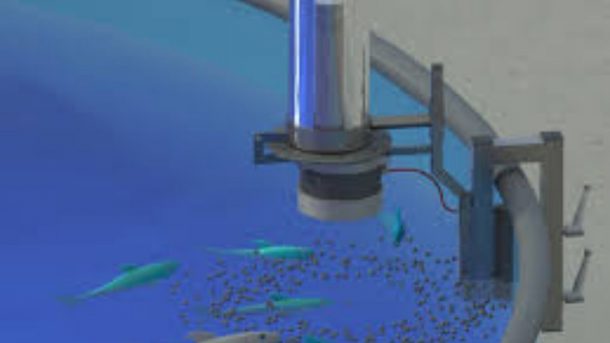
In recirculating aquaculture systems, there should be a constant flow of water and there should be a possibility to alter the speed, pressure, and direction depending on one’s requirement. The movement of water is controlled through gravitation and before it is used in the system, it is generally pumped to an elevation from where it begins to flow.
The most common types of pumps used in RAS is a centrifugal pump which operates from the thrust generated by the spinning of water at a high speed in the pump head. The pump is usually placed outside the tank and operates at high pressure. A pump with high flow, and low lift capacity is chosen to minimize energy consumption. Earlier centrifugal pumps had a recirculating pressure of 25 ft, but now the pressure is about 10ft. two other types of pumping arrangements are axial and airlifts pumps.
How Fish tank are constructed for RAS fish farming?
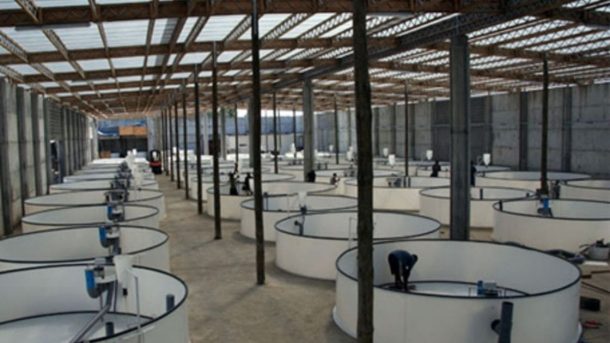
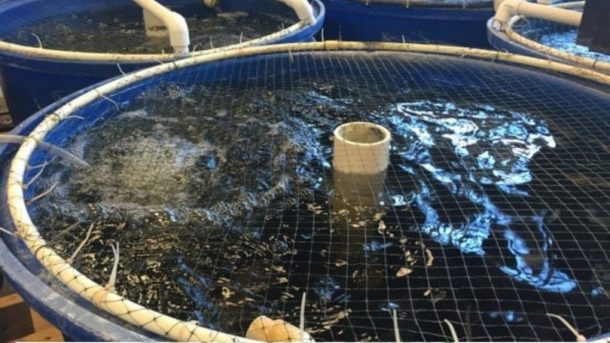
Tank for aquaculture or fish farming in these systems can be of many shapes and size like rectangular, circular, oval, etc. Mostly circular and oval tanks are preferred because they are easier to clean and facilitate easy water circulation when compared to rectangular tanks. Rectangular tanks are generally used on inclined areas. The size of a fish rearing tank may range from 500 to 500k gallons capacity and this depends on the factors like the type of fish, stock rate, water requirement, and quality. The tank should be built such that it is compatible with the other components of the systems. The materials required to built the tank can be metal, wood, glass, rubber, concrete, or plastic. Any material which is non-toxic and doesn’t corrode can be used constructing the tank. The inner surface of tank should be clean and smooth. Each and every material used for this purpose has its own advantages and disadvantages. The inclination of the fish tank can help to drain easier but has little or no affect of self-cleaning ability.
Most modern tanks are being constructed with outlets that have optimal waste removal capacity and are fitted with suitable mesh screens. These outlets should also make removal of dead fish easy. Some tanks are also fitted with sensors to detect the water level, oxygen content, temperature, etc. so that they can be controlled automatically. Tanks should also have diffusers for a sufficient supply of oxygen.
Other than circular and rectangular tank, there is one more variety called the raceway tank which is a blend of circular and rectangular shapes. These tanks have a wall in the center to facilitate circulation.
How to design Recirculating aquaculture system for RAS fish farming?
The basic system has a simple design and consists of fish tanks, mechanical filter, biofilter, trickling filter or degasser, oxygen enrichment unit, UV disinfector, some extra facilities like the Ph regulator, heat unit exchange unit, denitrification unit can be added to the design depending on the requirements.
The basic operating principle of these systems is that the water from the fish tank moves through the mechanical filter and then through the biological filter; the water is stripped of carbon dioxide before getting aerated and is returned back to the fish tanks.
How thrips cause damage in pomegranate and how it can be controlled?
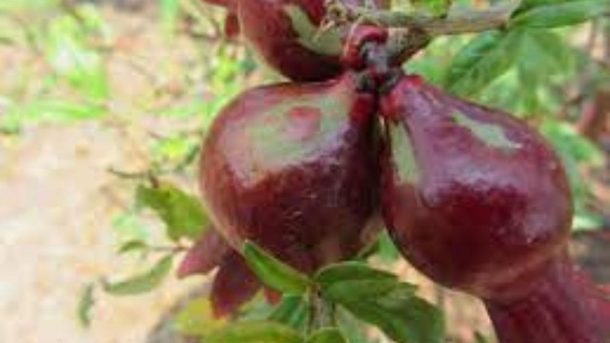
Thrips can be seen by tapping the tender shoots on white background. It always prefers feeding on new growth of plants. Nymphs and adults lacerate and suck the sap from buds, flowers, leaves and fruits. Affected leaves curl upwards and downwards. The tip of the tender shoots becomes dried. Scrapping marks on buds and fruits can be noticed easily. Collect and destroy affected plant parts and dried tender shoots regularly. Do not grow intercrops which act as alternate hosts like chilli, onion, garlic, brinjal and tomato in pomegranate. Spray imidacloprid @ 0.4 ml/l or acephate 75 SP @ 1ml/l on observing the symptoms.
How mites cause damage in pomegranate and how it can be controlled?
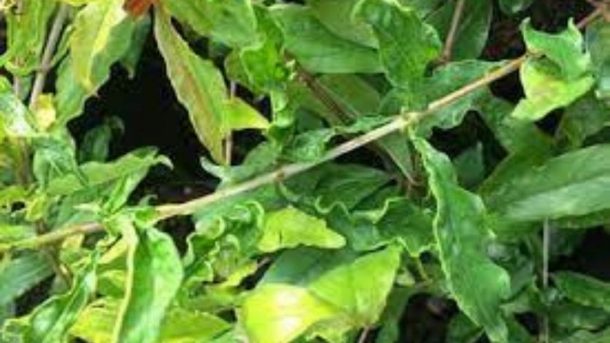
Mites are red or brown in colour and remain most active during dry spell from April to October. Shiny white or brown patches can be seen on the under surface of affected leaves which may further curl and fall. Adult and nymphs feed on the lower leaf surface by sucking sap. Leaf shows reddish look on severe infestation and pressing of infested leaves with thumb give red colour. For mite management, spray of propargite 57% @ 1ml/l, spiromesifen 240 SC @ 0.5 ml/l or dicofol 18.5 EC @ 2.0 ml/l in rotation for effective management and provide irrigation regularly.
When and how birds cause damage in pomegranate crop?
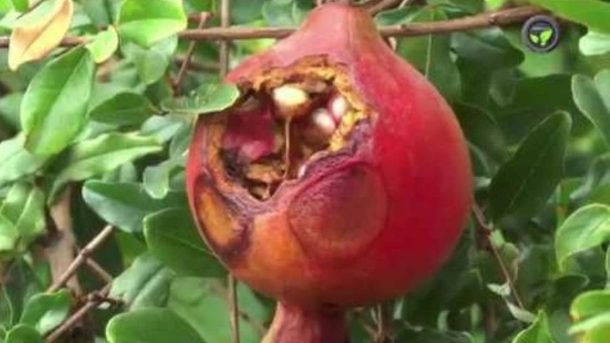
Birds particularly parrot and sparrow cause heavy losses to pomegranate fruits after 2-3 month of fruit set when aril start developing. The type of control method will depend on a number of factors like crop stage, damage patterns and species behaviour etc. For small orchard and isolated trees, netting with anti-bird net is the most effective way to reduce bird damage. In most cases, netting is spread directly over the plants through support by iron frame. It has a high initial cost, but effective in pomegranate due to high cost of produce. Bird scaring ribbon and noise makers also used to keep birds away from crops. Noise making devices such as cannons, exploders, sirens are also available. These devices work best when the sound is presented at irregular intervals and the sound source is moved frequently. Covering of fruit with bags is also found effective against bird damage.
What is rest period in pomegranate?
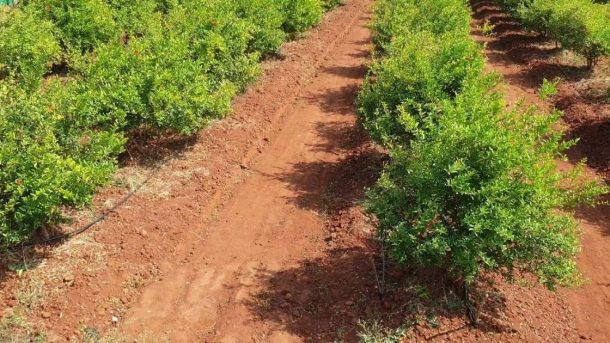
A rest period of three-four months is suggested for healthier plant growth, development and reduction of insect and pathogen inoculums load if any. Sprays of Bordeaux mixture 1% alternated with COC (2.5g/l) are required at 15-20 days interval after winter pruning in December -January. Apply 1/3 dose FYM and minimum irrigation should be given during rest period. Remove the water shoots on a regular basis.
Why aril browning occurs in pomegranate?
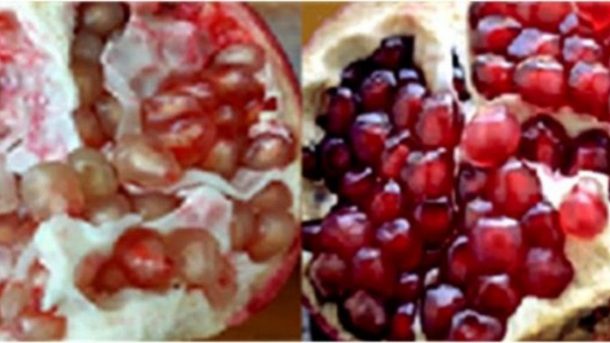
It is due to delayed harvesting in which arils become brown and start rotting. The harvesting should not be delayed beyond maturity period. The pomegranate fruits should be harvested as soon as they mature viz. between 140-150 days after blooming in Jalore Seedless and 170-180 days in Bhagwa.
Why sunscald occurs in Pomegranate?
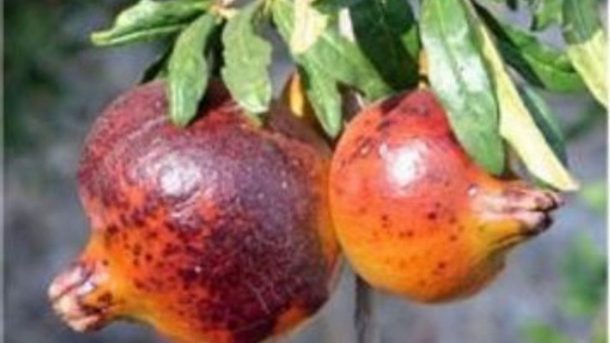
In hot arid region, sun scald is also serious disorder particularly in ambe bahar crop and improper canopy managed orchard. Surface of fruits which is towards sun light turns brownish black due to intensive scorching heat during hot months particularly during May to July. Proper canopy management is required to avoid the direct exposure of fruits to sunlight. Kaolin 5% spray during May to July months is useful in reducing the sunscald. Shading with 35% shade net is helpful in reducing sunburn on pomegranate fruit. Bagging of fruits with cover bags is also useful in minimizing sun sunscald problem. White colour bags are more efficient in reflecting sunlight.