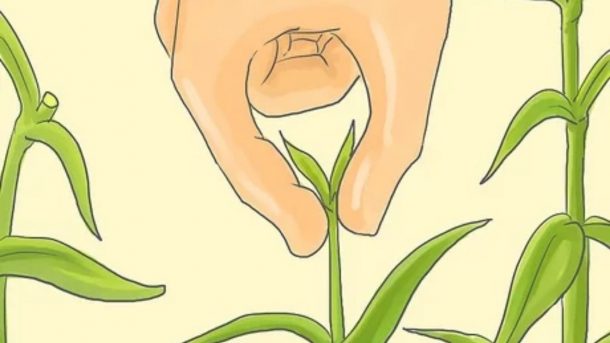
Pinching is the process of removing the growing tip of the main shoot to encourage the growth of side shoots. Carry single, one, and a half, and double pinching depending on market demand. The pinching should be carried out in the morning. Usually, the first pinching should be given when the plant attains 6 to 7 nodes which are considered as “single pinch”. This single pinching can result in six laterals, in a ‘one and a half pinch’, 2 to 3 of these lateral shoots should be pinched again. All the lateral shoots should be pinched off during “double pinching”.
ScientificFarmingWeb
How staking is done in carnation?
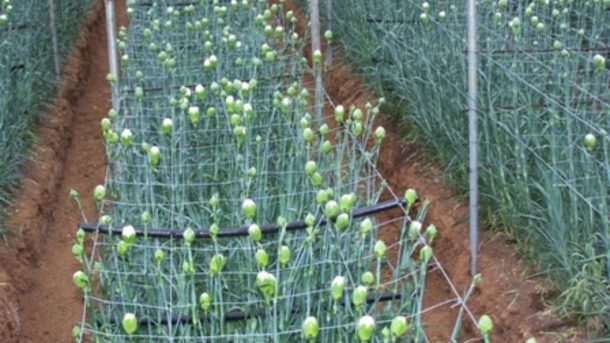
Carnation plants can bend as they grow. Hence, they require proper support for vertical growth. Supporting material like is metallic wire woven with nylon mesh can be considered.
What is the Polyhouse Requirement for Carnation Flower Growing?
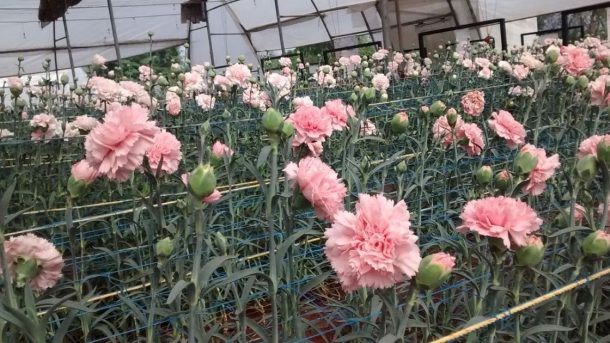
If you are growing carnations under a protected environment a for good quality, the Polyhouse/greenhouse construction should be kept as simple as possible by meeting required conditions for the right climate. The plastic greenhouse should be constructed to have 3 to 4 m3 of airspace per m2 of the floor surface. This should be equal to a gutter height of 2.5 meters to 3.5 meters as a minimum. Avoid too low greenhouse constructions as there will be high air humidity and high temperature. Don’t construct too large Polyhouse/greenhouse under one roof as this crop requires good sunlight (ventilation) and climate control. The roofing material could be Low-Density Polyethylene and should be replaced once in 3 years.
What are the damage symptoms of wilt and stem rot in marigold and how it can be controlled?
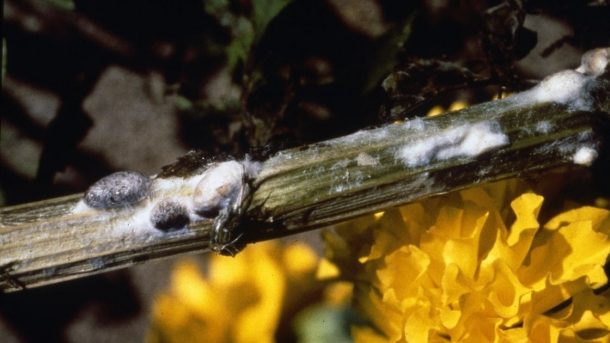
The fungus affects the collar portions of their plants. In the nursery, the infection results in damping-off and is characterized by soil moisture. In the field, the infected plants show wilting. French marigold and dwarf varieties are less susceptible whereas the African Kinds are highly susceptible to the disease. It can be controlled by soil treatment with Captan, Mancozeb, Metalaxyl, and Fosetyl-Al to control this disease.
What are the damage symptoms of Collar rot in marigold?
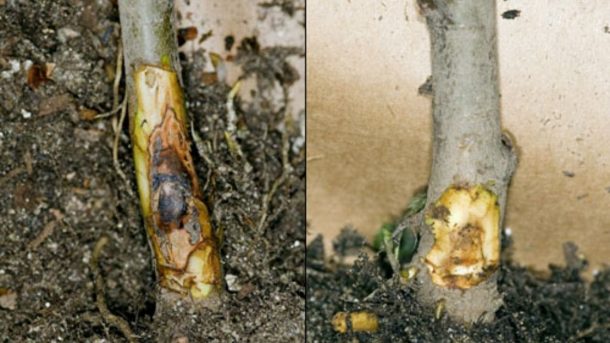
The symptoms are in the form of black lesions developed on the main stem. Rotting in the collar regions causes the death of the plant. It can be controlled by soil sterilization and controlled release of watering.
What are the damage symptoms of leaf spot and blight in marigold?
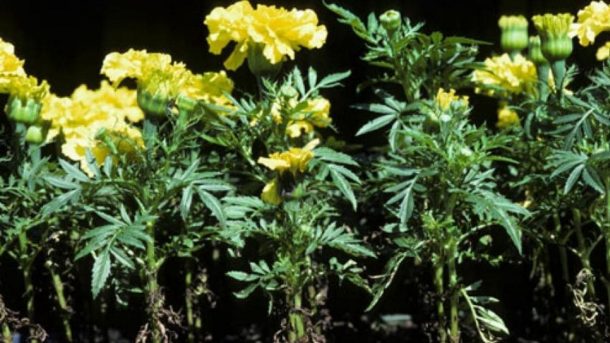
The symptoms of this disease include brown necrotic spots develop on leaves, which have enlarged in the next stage of infection. The entire Foliage becomes damaged and results in poor vegetative growth. It can be controlled by spraying fungicides for controlling this disease.
What are the damage symptoms of powdery mildew in marigold and how it can be controlled?
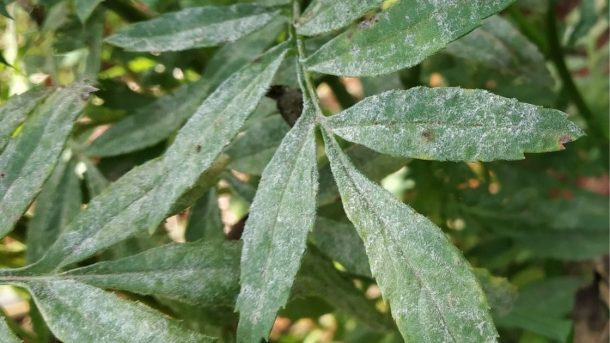
The symptoms of this disease are in the form of whitish powdery growth on the aerial parts of the plant. It can be controlled by spraying Sulfex of 3grams/liter of water to control this effect.
What are the damage symptoms of flower bud rot in marigold and how it can be controlled?
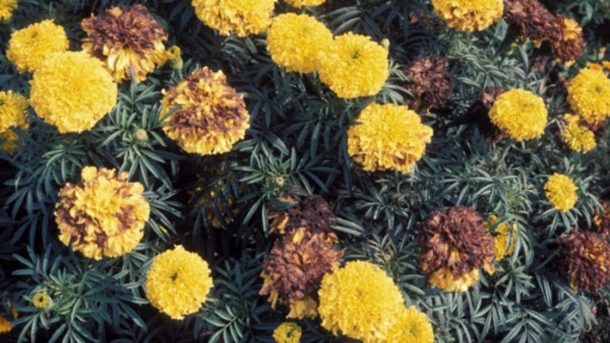
The fungus infects the blossom buds. The infected buds shrivel and become dark brown in colour. The pathogen also infects leaves causing blight. The infection is visible in the kind of brown necrotic spots on margins and tips of older leaves. It can be controlled by spray of Mancozeb @ 2 grams/liter of water to control effectively this disease.
What are the damage symptoms of Damping Off in marigold and how it can be controlled?
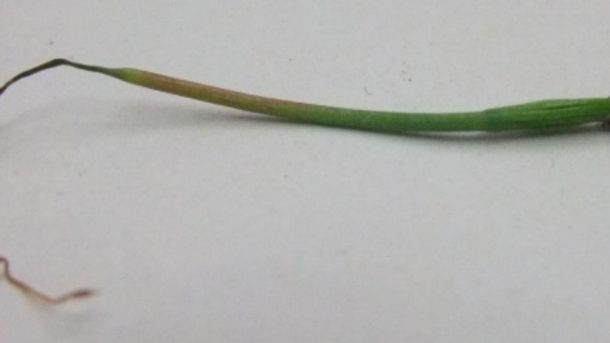
The disease is most prevalent in the seedling phase. Necrotic spots and rings develop on the young seedlings causing a collapse of the seedlings. A considerable loss is sustained if seedlings are not properly cared for. It can be controlled by Soil sterilization by Formalin @ 2% before sowing the seeds and spraying of Dithane Z-78 @ 2 grams/liter of water are effective in controlling this disease.
When Harvesting of Sesame Seeds should be done?
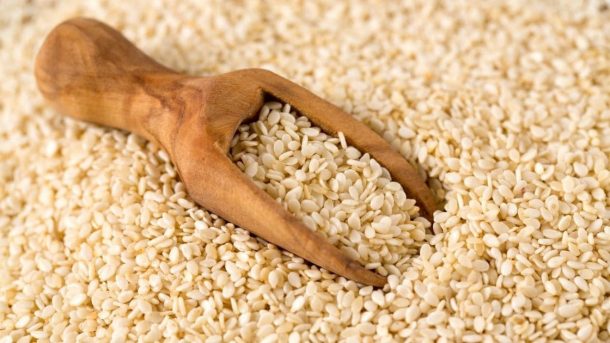
Depending on the variety, this crop comes to maturity in 3 to 5 months. Harvesting can be started when the leaves, stems and capsules begin to turn yellow and the lower leaves of the plant start shedding. Don’t wait until the crop becomes dead ripe which will cause the shedding of seed. The ripe sesame plants should be cut at the ground level and should be stacked for 7 to 10 days in sun to make them ready for threshing.