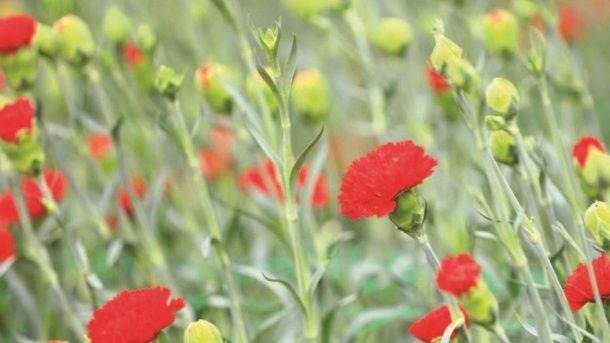
The typical symptom of magnesium deficiency is interveinal discoloration in older carnation leaves. The leaf area between the veins turns pale yellowish-green, while the veins remain deep green. When potassium is applied in excess to some soils, magnesium deficiency may be accentuated.
ScientificFarmingWeb
How Boron deficiency causes damage in carnation?
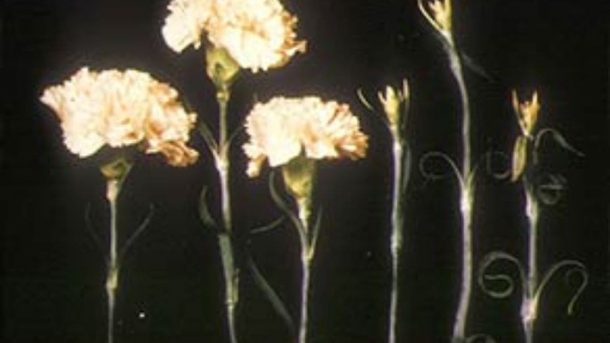
Boron deficiency symptoms on carnation show on the youngest foliage. Leaves are yellow and twisted, and the terminal bud sometimes is dead. Axillary shoot proliferation at upper nodes is common, resembling the witch’s broom effect caused by virus infections in other crops. Flower buds are abnormal and die before opening. The new foliage turns pale brown with a reddish-purple band and partial yellowing of the leaf base.
How root knot disease causes damage in carnation?
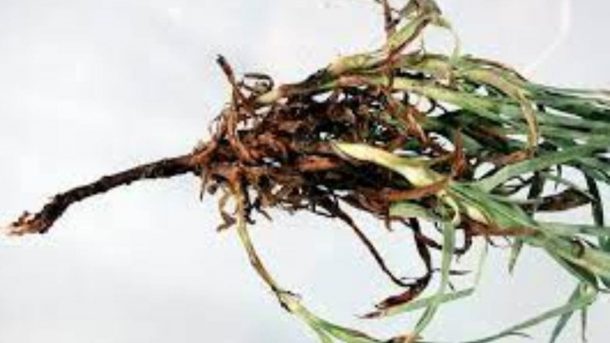
Root galls on carnation are caused by parasitic root nematodes, Meloidogyne spp. The most characteristic symptom of this disease is the profuse root swellings that assume innumerable shapes. The microscopic eel-shaped larvae of the nematode infect roots at the tip, where the tissue is soft and cell division is occurring. Symptoms of nematode-infected plants are lack of Vigour, stunting, and pale green to yellow leaves that tend to wilt in warm weather.
How Phytophthora blight disease causes damage in carnation?
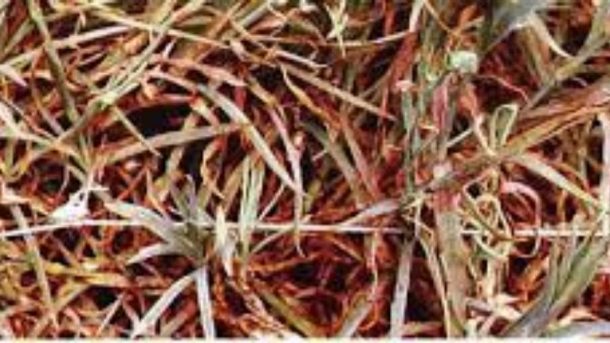
Phytophthora blight is caused by the soilborne fungus. On carnations, symptom expression depends on infection site. Infections occurring on the basal portion of the stem cause a typical Wilting and collapse of the stem or plant. The fungus may also invade the stem at any point on the plant, causing stem collapse and eventual death of the branch. If the infection is on the upper leaves and stem, blighting occurs. The most common symptom of this disease, however, is a Wilting, collapse, and bleaching of the tips of healthy shoots, which resembles bromide toxicity symptoms. This is a common disease of carnations grown in areas where soil temperatures rise above 25°C in the daytime.
How Rhizoctonia stem rot disease causes damage in carnation?

Rhizoctonia stem rot is caused by the soilborne fungus and the symptoms on rooted cuttings is a moist greyish-black rot at the soil line, which causes the top of the plant to wilt and die. On older plants the rot may extend a couple of inches above the soil line, inducing bark decay, which is easily rubbed off. Occasionally brown mycelial strands may be seen on the surface of diseased tissue. The fungus causing this disease in Kula, Maui, has been found to belong to a genetically distinct stock, known as anastomosis grouping AG2-2 (15).
How Septoria leaf spot disease causes damage in carnation?
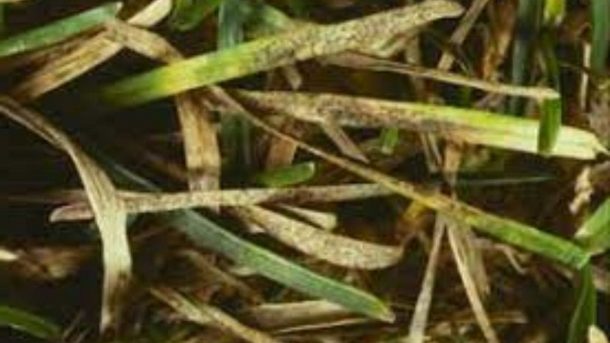
Septoria leaf spot is caused by the fungus and the symptoms on leaves and stems appear as light brown spots with purple margins. Small black specks are present at the centre of the spots. These are the spore producing structures of the fungus. Individual lesions may enlarge and coalesce with adjacent lesions to cause death of the leaf.
How flower blight disease causes damage in carnation?
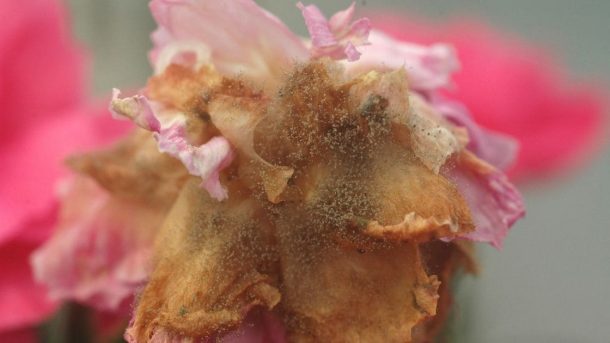
This fungal disease appears as tan to light brown soft rots on the petals of flower buds and opened flowers. Affected petals soon become covered with the greyish growth of the fungus filaments, which later are covered by a powdery mass of greyish spores. The disease usually occurs when the environment is cool and damp at night, and warm with high relative humidity in the daytime.
How Alternaria blight disease causes damage in carnation?
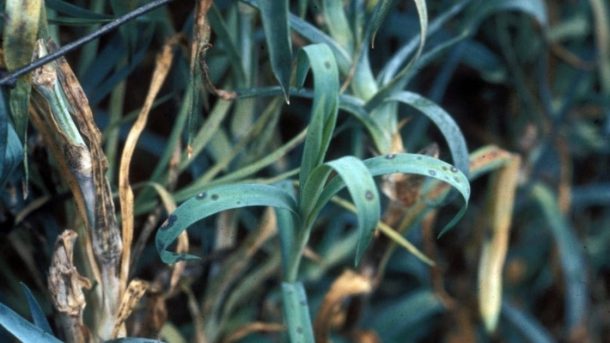
Initial leaf symptoms of Alternaria blight of carnation, caused by the fungus are tiny purple dots. When moist weather prevails, the spots enlarge, developing into large lesions with a purple margin and a yellow-green border surrounding a grey-brown centre covered with black spores. Several lesions may expand and coalesce to form large, irregular necrotic areas that eventually kill the entire leaf. The branches are most frequently infected at the nodes and branch base. These infection centres enlarge to form cankers, which eventually girdle the stem, causing the branch to wilt and the girdled portion turn to yellow and die.
How rust disease causes damage in carnation?
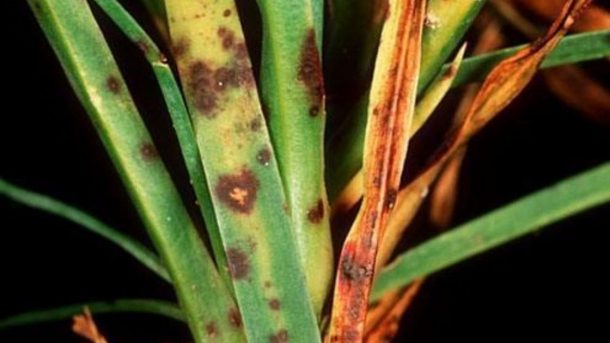
Rust, caused by the fungus and is the most common foliar disease of carnation in Hawaii. The first symptoms on leaves, stems, or flower buds are small, slightly raised blisters that eventually rupture, forming pustules filled with powdery reddish-brown spores. A yellow margin surrounds the pustules and, when infections are severe, entire leaves turn yellow and die. Stems may be girdled when several pustules develop around the shoot, resulting in decreased flower production and quality. Plants may be attacked at any stage of development. Disease is favoured by cool nights alternating with warm humid days. This induces dew at night and the formation of a film of water on the leaf surface. Because rust spores require free water for nine to 12 hours on the plant surfaces to germinate and infect, this disease is most severe in open air culture and in plastic film greenhouses, where dew formation is common.
How Pruning is done in Hibiscus Cultivation?
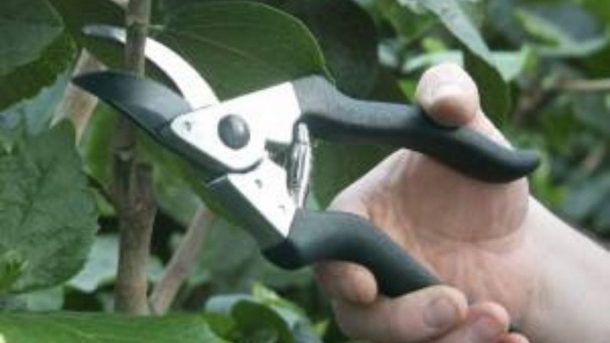
August to October is the best time for pruning hibiscus plants. Pruning should be carried out to stimulate or encourage the new growth of shoots and buds. To bring out the good shaped plant, remove all the weak and sideways growing branches and try to keep 3 to 4 main upright growing branches. One third of main branches should be cut back. In order to stop a hibiscus plant from getting too big, cut it back in early spring.