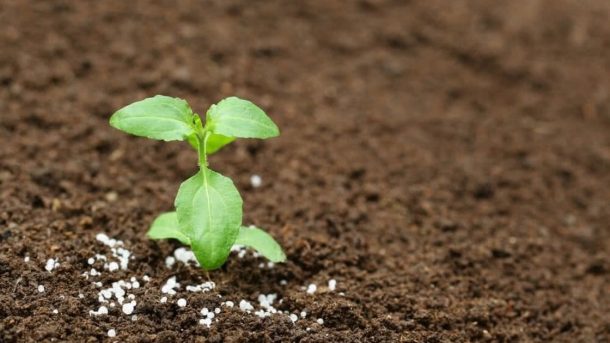
Basil plants are good feeders of manures and fertilizers. Timely application of fertilizers ensures the highest yields and quality oil. Avoid any pesticides and chemicals to control abnormal conditions o the plants. If it is required, use only organic certified fertilizers. Apart from FYM used during land preparation, the recommended inorganic fertilizer application for growing basil crop is 120:60:60 kg/ha of N:P: K or Nitrogen: Phosphorus: Potash (N: P: K): 48:24:24 kg per acre should be applied.
ScientificFarmingWeb
How Weeds are Controlled in Holy basil?
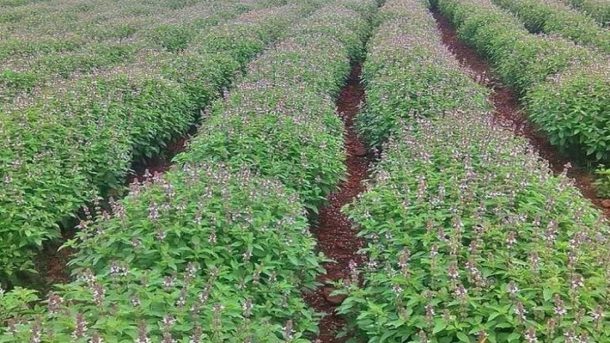
Interspaces of Tulsi Garden needs to be maintained weeds free. The first weeding and hoeing should be carried out 30 days after transplanting and the second weeding after 1 month from the first weeding time. At this point in time, usually, the tulsi plant become bushy and cover the soil, hence there is no need of carrying any weeding operations. However, weeding operations should be continued after every harvest.
What is the irrigation requirement for growing Holy basil?
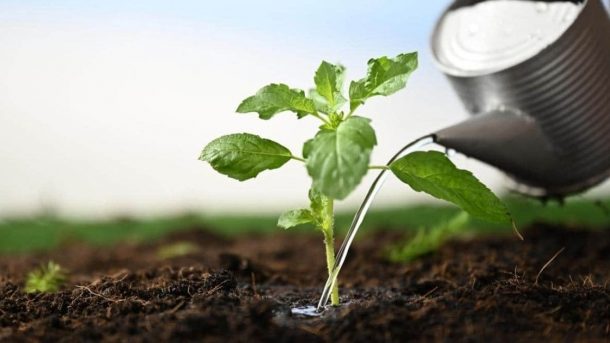
Dry and hot summer months need frequent irrigation. Usually, it takes about 3 to 4 irrigations per month in summer. The life irrigation should be given immediately after transplanting in the field and subsequently during seedling establishment in the soil. On an average Basil crop requires, 14 to 15 irrigations per year depending on climate and season.
How much space is required for growing holy basil?
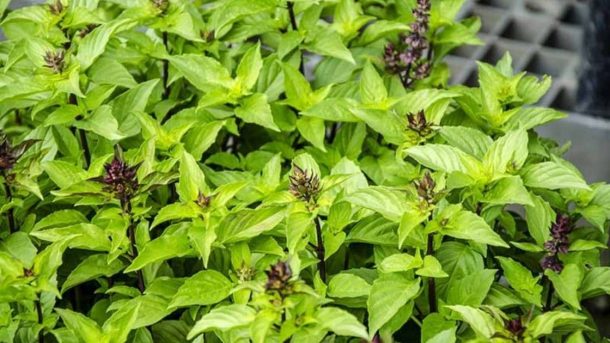
Seedbeds with measurements of 4.5 meters x 1.0 meters x 0.2 meters size should be prepared. As tulsi seeds are small in size, they should be mixed with sand in 1: 4 ratio and sown in nursery beds. Ensure the sowing distance of 60 cm× 60 cm. Usually basil seeds are sown at a depth of 2 cm. Tulsi seeds starts germinating after 10 days of sowing on nursery beds. These seedlings will be ready after 6 to 8 weeks when they attain 4 to 5 leaf stage.
In which Season, Sowing and Planting is done for Growing Holy Basil?
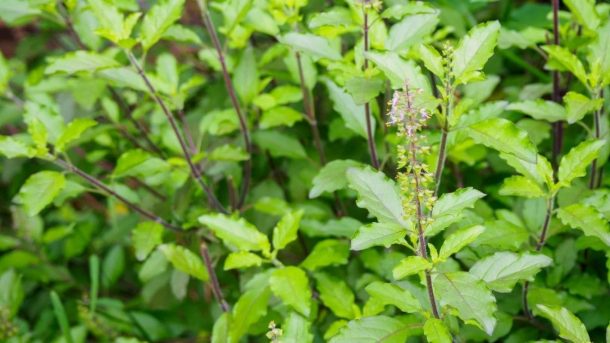
Usually, in commercial cultivation of holy basil, the nursery raising is carried out in the 3rd week of February and transplanting is done in the middle of April month.
Basil seeds should be sown in the nursery beds and the nursery ought to be located with irrigation facilities in shade conditions. Soil is worked to a depth of 30 cm. Well decomposed farm yard manure (two kg/sq. meter) should be applied to the soil before making seedbeds.
How seed treatment is done for growing Holy basil and what is the seed rate required?
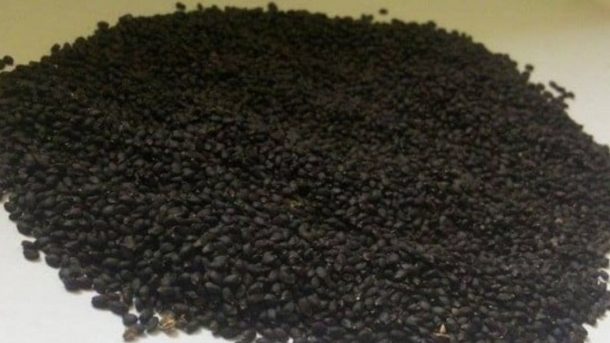
There are many seed borne diseases and pests attack the crop. To prevent this, it is essential to treat the Basil seeds with Mancozeb at the rate of 5 grams/kg seeds. This should be done before sowing on nursery beds.
Approximately a seed rate of 125 grams per acre is required.
How land preparation is done for growing Holy Basil?
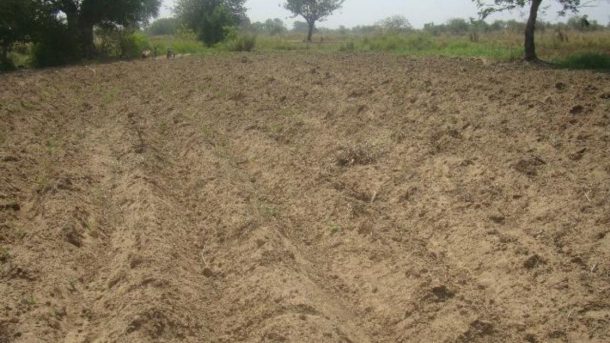
The main planting field should be prepared with drainage channels between rows. The soil should be given couple of ploughings and harrowings till it attains the fine tilth stage. Level the field and mix well decomposed farm yard manure of 15 to 20 tons/ha (basal dose) like cow dung at the time of last plough. Once the fine seedbeds are prepared in the field, land will be ready for Tulsi transplantation.
How propagation is done in Holy Basil?
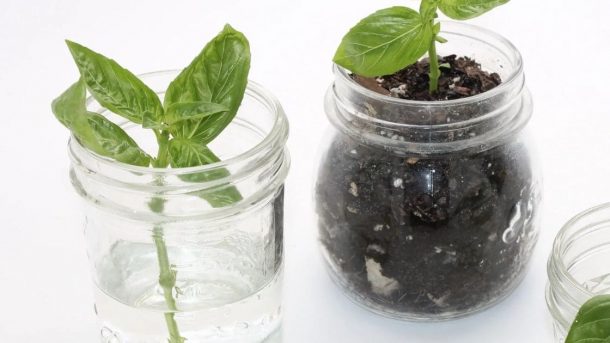
The propagation is done by Seed and also through vegetative methods. Propagation of basil is done by fresh seeds. Avoid using old stock as they will not germinate. Vegetative propagation of Holy Basil is propagated by means of terminal cuttings. This method of propagation is successful when the crop is planted during October to December. In this method, select terminal cuttings of 12 to 15 cm length with 9 to 10 nodes on them. Except for the first 2 to 3 pairs of leaves, the rest should be trimmed off. Later, these cuttings should be planted in prepared nursery beds. You can even plant in polythene bags filled with top soil mix. You can expect rooting of the cuttings after 5 to 6 weeks and they will be ready for transplantation in the main field. In the main field, use a spacing of 40 cm between rows.
What is the Climatic Requirement for Growing Holy Basil?
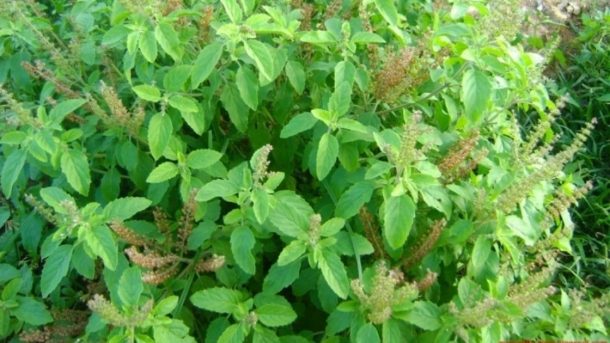
Holy basil plants prefer long day times with high temperatures and humid conditions for healthy plant growth and high yield of Tulsi essential oil. Tulsi can be cultivated both in tropical and sub-tropical climatic conditions. The Basil crop requires an average annual rainfall of 90 to 120 cm. Basil can be grown up to an altitude of 900 meters (mean sea level). Basil can tolerate drought and frost to a certain extent. Even Tulsi can be grown under partial shade conditions, but expect lower oil yields.
What is Arka Kanchan and it belongs to which cultivar?
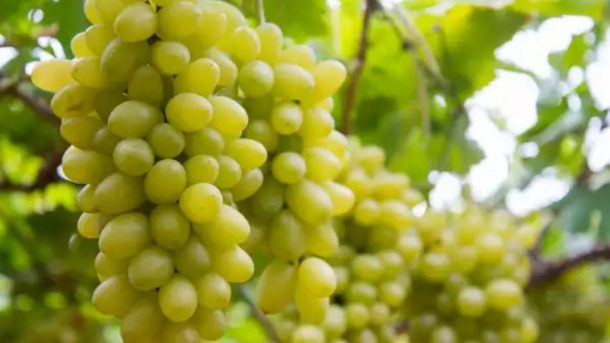
Arka Kanchan is the cultivar of Grapes. Arka Kanchan is a cross between Anab-e-Shahi and. Queen of the Vineyard. Vine is of medium vigour, seeded, medium yielder, bunch medium large, loose, berries, golden yellow, medium oval, pulp meaty; good quality, muscat flavour, very late maturity.