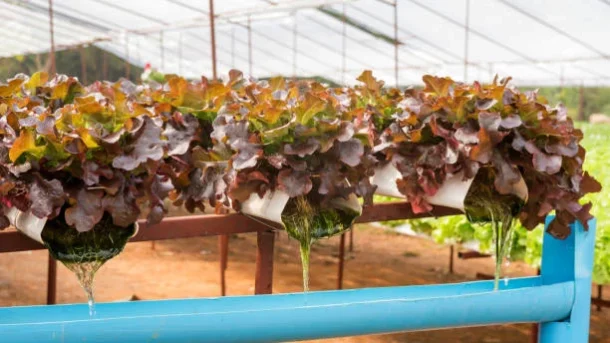
In numerous ways, indoor farming, commonly referred to as vertical farming or controlled-environment agriculture, lessens reliance on arable land:
Vertical stacking: By cultivating crops in stacked tiers or shelves, indoor farming effectively makes use of vertical space. Multiple crop levels can be grown in a very short space thanks to this vertical layout. Indoor farming may produce a sizable amount of crops without requiring a lot of land by making the most of vertical space.
Utilizing non-arable places: Indoor farming can be set up in unconventional locations like buildings, warehouses, or renovated urban spaces. Due to restrictions like a lack of soil, contamination, or urban expansion, certain areas might not be appropriate for conventional farming operations. Indoor farming creates new opportunities by making use of these unusable spaces.
Production all year round: Regardless of seasonal and climatic restrictions, indoor farming allows for year-round agricultural production. Regardless of the weather outside, farmers can provide the best growing conditions for crops by constructing controlled environments. Higher crop yields are possible thanks to this steady and ongoing production, which also lessens the demand for the vast tracts of land needed for traditional seasonal farming.
Reduced land degradation and ecosystem preservation: Due to intense tillage, monocultures, and chemical inputs, traditional agricultural practices can cause erosion, land degradation, and the loss of important arable land. These methods are reduced or eliminated in indoor farming, which prevents soil erosion and protects precious land resources. Indoor farming also prevents the conversion of natural habitats and ecosystems into agricultural land by adopting controlled settings.