Organic Farming

How are digital platforms and e-commerce transforming agricultural markets?

e-commerce

In order to interact, transact, and obtain information, farmers, buyers, and consumers now have new opportunities thanks to digital platforms and e-commerce, which is altering agricultural markets. Here are some ways that e-commerce and digital platforms are changing the world.

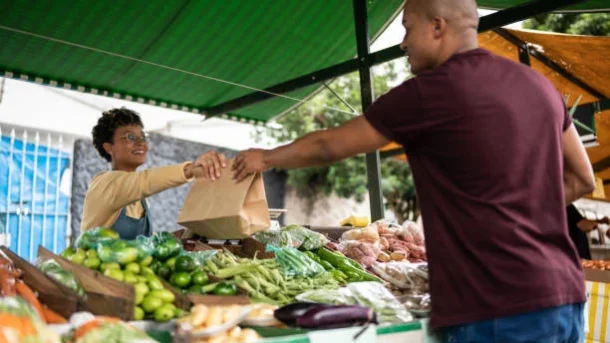
Market accessibility and transparency: E-commerce and digital platforms give farmers access to a wider range of markets outside of their immediate geographic area. They offer online markets that allow farmers and buyers to communicate directly, cutting out middlemen and facilitating transparent pricing. This enables producers to access a larger pool of potential clients and achieve higher rates for their produce.

Better market information is available because to digital platforms, which offer real-time data on prices, demand patterns, and supply chain dynamics. Farmers can use this information to make educated decisions about what to produce, when to sell, and where to sell it.

Streamlined logistics and distribution: By connecting farmers with transporters and logistics providers, e-commerce platforms enable effective logistics and distribution. As a result, post-harvest losses are decreased, the efficiency of the supply chain is increased, and timely delivery of agricultural products to consumers is ensured.

Financial services accessibility: Financial services including mobile banking, electronic payments, and credit facilities are frequently integrated into digital platforms. Farmers now have easy access to financial services, allowing them to better manage their finances and receive payments and working capital.
How are agricultural subsidies and support programs changing globally?

Global interests, trade agreements, and the requirement to address numerous issues in the agricultural sector are driving changes in agricultural subsidies and support programmes. Here are some noteworthy developments and trends in agricultural assistance and subsidy schemes.

Focus shifting to sustainability: Through incentives and support initiatives, sustainable agriculture practices are being promoted more and more. The adoption of ecologically friendly farming techniques like organic farming, agroecology, conservation agriculture, and the utilisation of renewable energy sources is increasingly being encouraged by governments. Subsidies are frequently associated with particular sustainability results, including lowering greenhouse gas emissions or enhancing soil health.

Direct payments and income support: Several nations have moved away from production-based subsidies and towards more direct payments and income support initiatives. Governments are implementing programmes that offer financial aid to farmers based on variables like farm size, historical income, or environmental stewardship rather than offering subsidies connected to particular crops or production levels. With less production distortion and more support for diversification, this change intends to give farmers stability and financial support.

Governments are putting more emphasis on risk management and insurance programmes to assist farmers in reducing the effects of unforeseen catastrophes like natural disasters, market volatility, or crop failures. These initiatives offer monetary security and stability, enabling farmers to control risks and bounce back from setbacks.

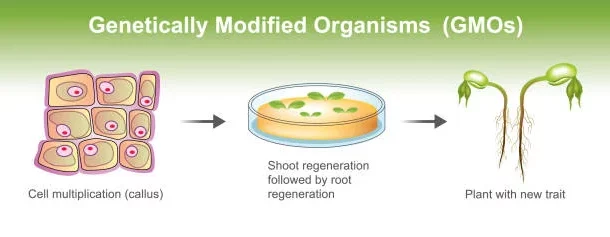
What are the current issues surrounding genetically modified organisms (GMOs) in agriculture?

modified organisms

Safety and health: The possible effects of genetically modified organisms GMOs on human and environmental health are among the key issues surrounding them. Genetically modified crops, according to their detractors, may introduce allergies or have unforeseen consequences on human health. Concerns exist over the long-term ecological effects of releasing GMOs into the ecosystem as well.

Consumer choice and labelling: The debate over GMO labelling has been heated. Many customers support the requirement for plain labelling of goods made with genetically modified organisms GMO components, highlighting their right to know what they are buying and ingesting. Transparency in the food supply chain and labelling laws have been discussed and enacted in a number of nations.

Environmental impact: Ecosystems and biodiversity may be impacted by GMOs. Concerns include the spread of altered genes to wild relatives, the emergence of pest and weed resistance, and the decline in crop genetic diversity. GMOs‘ effects on non-target creatures including beneficial insects and soil microbes are a growing area of research and concern.

Intellectual property and control: The ownership of the intellectual property rights in genetically modified seeds is a crucial genetically modified organisms GMO-related concern. Critics claim that the patenting of GMOs and the concentration of seed firms can restrict farmers’ access to seeds, prevent them from saving and replanting seeds, and drive up the price of seeds. The disputes about farmer autonomy and the consolidation of power are intertwined with this problem.

How are farmers adopting technology to improve agricultural practices?

technology

Technology is being adopted by farmers more frequently to promote production, efficiency, and sustainability in agriculture. Precision agriculture, farm management, data analytics, and automation are just a few of the farming practices that are changing as a result of technological breakthroughs. Here are a few examples of how farmers are using technology.

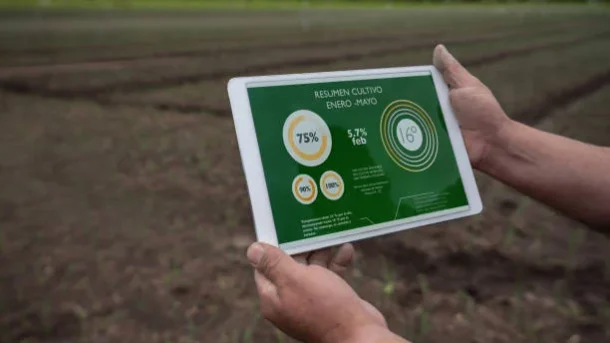
By adjusting inputs and management techniques to individual field conditions, precision agriculture uses technology to maximise crop production. Farmers get information on soil moisture, nutrient levels, and crop health using instruments including global positioning systems (GPS), satellite photography, and remote sensing. They may decide on fertilisation, irrigation, and pest management with more knowledge thanks to this information, which leads to more efficient resource usage and higher yields.

Farm management software: Mobile applications and farm management software help farmers manage tasks, maintain inventories, and streamline their business operations. These technological aids support financial management, operational planning, and record-keeping. Farmers can optimise productivity, cut costs, and enhance overall farm performance by analysing data and generating insights for better decision-making.

Sensor and Internet of Things (IoT) technology are being utilised more and more in agriculture to track a variety of variables. Real-time information on environmental conditions is provided by soil moisture sensors, weather stations, and livestock tracking systems, enabling farmers to make informed decisions about irrigation, planting, and animal health. Farm activities may be remotely monitored and managed thanks to IoT technology, which improves productivity and resource management.

What are the key policy changes and regulations affecting farmers worldwide?

policy changes

Governments all around the world run various types of support and subsidy schemes for agriculture in an effort to help farmers. These initiatives work to promote rural development, stabilise farm incomes, assure food security, and solve environmental issues. Modifications to eligibility requirements, subsidy levels, and the addition of new support systems are examples of possible policy changes.

Environmental regulations: In order to address issues like climate change, soil erosion, water pollution, and biodiversity loss, more and more environmental rules and sustainability efforts are being put into place. These laws could have an impact on agricultural practices such the application of pesticides and fertilisers, the management of water resources, and limitations on land usage. Policies concerning agroecology, conservation agriculture, and organic farming have also become more popular.

Standards for food safety and quality: To guarantee food safety and quality, governments have set rules and benchmarks. These requirements could include things like packaging, labelling, and traceability and policy changes. Farmers must follow particular rules and procedures in order to comply with these regulations, which may have an impact on their practices and procedures.

Property rights and land tenure: Farmers may be significantly impacted by changes to land tenure laws. The ability of farmers to access and manage land can be impacted by policies relating to land ownership, lease arrangements, land redistribution, and land-use planning. Stability and incentives for agricultural output can be provided by programmes and policies that support stable land tenure.

What are the latest developments in agricultural trade and tariffs?

tariffs

I can give you some general information on the most recent changes in agricultural trade and tariffs up to my knowledge cutoff in September 2021. Please keep in mind that the environment for agricultural commerce and tariffs is dynamic, so it’s best to check recent news sources or official government websites for the most latest details. Here are some current events and trends that were significant during the time.

Trade disagreements between the main agricultural trading partners were still present. For instance, a trade war between the United States and China resulted in tariffs being placed on a variety of goods, including agricultural supplies. Uncertainty and disruption of agricultural trade flows between the parties were caused by these disputes.

Tariff reductions and exemptions: In order to promote commerce, certain nations have implemented tariff reductions or exemptions. These actions attempted to increase agricultural exports and lessen the COVID-19 pandemic’s negative economic effects. To lower barriers and encourage agricultural commerce, governments were also establishing and upgrading preferential trade agreements.

What are the recent trends in organic farming and sustainable agriculture?

sustainable

Growing Consumer Demand for Organic Products: Demand for sustainable agriculture, organic food and goods has been rising consistently. The demand for organic vegetables, dairy, meat, and other products is rising as more people become aware of the environmental and health benefits of organic farming methods.

Regenerative agriculture is becoming more popular as an agricultural strategy that goes beyond organic farming methods. It focuses on promoting ecosystem services, biodiversity, carbon sequestration, and soil health. Cover crops, crop rotation, and low tillage are examples of regenerative practices that work to regenerate the soil while fostering resilient and sustainable agricultural systems.

Organic farmers promote and manage biodiversity, increased populations of natural enemies (helps control pests and diseases without chemicals), improved natural resources such as soil, water, air, and wildlife, and support pollinators, which are essential to maintaining a healthy environment as well as producing.

What exactly is sustainable agriculture? It is farming that meets the needs of existing and future generations, while also ensuring profitability, environmental health and social and economic equity. It favours techniques that emulate nature–to preserve soil fertility, prevent water pollution and protect biodiversity.

How has climate change impacted agricultural productivity and food security?

impacted

The productivity of agriculture and the availability of food have been significantly impacted by climate change, creating difficulties for the world’s food chain. Here are a few ways that agriculture has been impacted by climate change.

Temperature and precipitation changes: Increasing temperatures and shifting precipitation patterns have a direct impact on the growth and development of crops. Crop yields can be affected by heat stress, and it can also affect pollination and raise water usage. Schedules for planting, irrigation, and harvesting can be affected by droughts or floods brought on by changes in rainfall patterns.

Changes to Phenological Cycles and Traditional Growing Seasons: Planting, flowering, and harvesting times may all be impacted by climate change. Agricultural practices may be difficult for farmers to modify in response to the changing environment, which could result in lower crop yields and unstable production.

Water Scarcity and Unpredictability: Climate change may make it more difficult to get enough water for irrigation systems, crops, and cattle in many areas. Water shortages may result from altered rainfall patterns and higher rates of evaporation, which may have an impact on agricultural productivity and food production.

Pest and disease spread: Changes in the climate can have an impact on the distribution and prevalence of pests and diseases, increasing the risks and difficulties in managing crops and livestock. Warmer weather can encourage the spread of illnesses and pests, necessitating more resources and pest control techniques.

How is blockchain technology being used for provenance tracking in agriculture?

blockchain technology

To ensure openness, traceability, and confidence in the supply chain, provenance monitoring in agriculture is increasingly being done using blockchain technology. Using blockchain in this situation looks like this.

Immutable Record-Keeping: Blockchain enables the creation of a decentralised, impenetrable ledger where all data and transactions pertaining to the agricultural supply chain may be stored. This includes details regarding where agricultural products were grown, how they were produced, how they were certified, and how they were handled. A record of the product’s path from farm to consumer is created that cannot be changed or removed once it has been recorded.

Supply Chain Transparency: Blockchain promotes transparency by enabling access to and verification of data stored on the blockchain by all stakeholders, including producers, suppliers, processors, distributors, and buyers. Each participant may offer their information, such as production information or quality

Blockchain technology has the ability to record and preserve data on numerous quality metrics, including soil characteristics, farming techniques, and post-harvest treatment. Consumers who have access to this information are better equipped to judge the value and security of the agricultural products they buy.

How are agricultural robots being used for precision seeding?

robots

Precision seeding is a growing use for agricultural robotics, which has a number of advantages in terms of accuracy, production, and efficiency. Here’s how using agricultural robots for precise seeding works.

Accurate Seed Planting: Agricultural robots using cutting-edge sensors, GPS, and computer vision technology can plant seeds with accuracy at the right depths and distances. With their ability to roam around fields autonomously or under remote supervision, these robots can guarantee constant and precise seeding. This accuracy aids in maximising crop yield, plant growth, and seed germination.

Variable Rate sowing: Depending on the crop requirements and the field conditions, agricultural robots can execute variable rate sowing techniques by varying the seed population density. The robot may modify the seeding rate for certain fields by analysing data from soil maps, yield maps, or other sources. This makes it possible to strategically plant seeds, maximising the utilisation of both seeds and resources while allowing for geographical heterogeneity.

Agricultural robots have the ability to monitor and make adjustments to seeding operations in real time. They can evaluate soil conditions, track seed dispersal, and spot any problems or anomalies throughout the seeding process thanks to onboard sensors and imaging equipment. This real-time observation enables quick.