Farm equipments

What are the problems caused by inadequate access to credit and financial services for agricultural investments?

financial services

Farmers and the agricultural industry as a whole may face serious difficulties as a result of inadequate access to financing and financial services for agricultural investments. The following are some issues that may result from this problem.

Limited Investment Capacity: Farmers’ capacity to invest in contemporary agricultural practices, machinery, equipment, and technology may be constrained by a lack of access to financing and financial services. Because of this, they are less productive and efficient, which results in lower yields, lower profits, and less chances for expansion and diversification.

Limited Expansion and Innovation: Farmers may encounter difficulties implementing new farming methods or expanding their enterprises without access to credit. Farmers may be unable to adapt to shifting market demands and environmental issues if they are unable to embrace sustainable and climate-smart practices.

Limited Working Capital: Seasonal financial flows and erratic income trends are features of the agricultural industry. Farmers may struggle to buy supplies like seeds, fertilizer, and insecticides or to find workers to work during crucial production seasons if they have insufficient access to financing. This may cause crop quality to decline, output to be delayed, and market opportunities to be lost.

Lack of access to financing and financial services makes farmers more susceptible to hazards like pest infestations, diseases, and natural disasters. Farmers may find it difficult to recover from such shocks and to reestablish their businesses in the absence of financial safety nets. Farmers’ communities may experience a rise in poverty and food insecurity as a result of this.
What are the challenges faced by farmers in accessing and utilizing modern agricultural machinery and equipment?

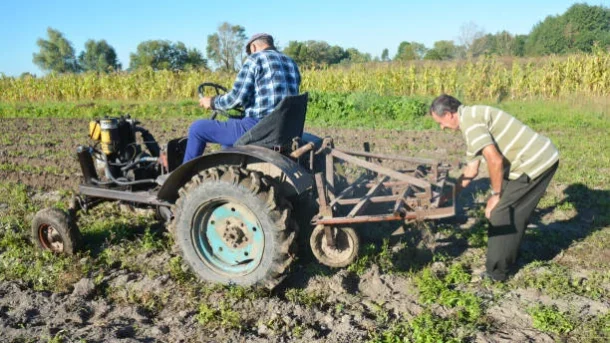
Accessing and utilizing contemporary agricultural gear and equipment presents a number of difficulties for farmers:

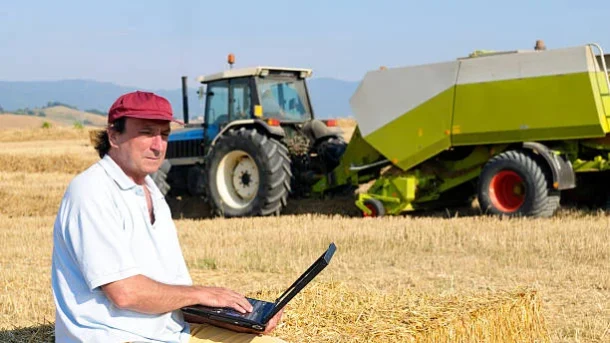
High Costs: The cost of purchasing, using, and maintaining modern agricultural gear and equipment can be high. For small-scale and resource-constrained farmers, the upfront investment cost frequently represents a considerable obstacle. The price of fuel, replacement parts, repairs, and maintenance can also increase the financial strain.

Limited Financial Resources: Many farmers, particularly smallholders, do not have easy access to credit or financing options that would allow them to purchase the latest in agricultural gear and equipment. They are unable to purchase the essential equipment due to their limited financial means, which forces them to rely on labor-intensive, conventional farming techniques.

Infrastructure and Connectivity: In order to function properly, modern agricultural machinery frequently needs infrastructure assistance, such as a dependable power source, enough roads and transit infrastructure, and facilities for storage or repair. Lack of infrastructure in rural areas, especially in outlying or off-grid places, can restrict the usage of machinery. Additionally, poor internet connectivity might make it difficult to use cutting-edge precision agriculture equipment and make data-driven decisions.

Adaptation to Local Farming Conditions: Modern agricultural machinery may not be ideal for local farming conditions, including soil types, crop kinds, and topography, as it is frequently developed based on standardized requirements. Farmers may find it difficult to customize or modify machinery to suit their unique demands, and doing so may not be feasible or inexpensive.

How does the limited availability of agricultural labor and skilled workforce affect farm operations?

farm operations

Farm operations may be hampered by a manpower shortage in the agricultural industry, especially during times of high labor demand like planting, harvesting, and post-harvest activities. Farmers might find it difficult to quickly fill open positions with enough people. Delays in planting or harvesting, decreased effectiveness, and significant production losses can result from this.

Increasing labor prices: When there is a shortage of agricultural workers, demand for labor sometimes outpaces supply, driving up labor expenses. To recruit and keep employees, farmers might need to give greater compensation or other benefits. Profit margins may be squeezed as a result of these higher labor costs, particularly for small-scale farmers who may already be operating on a tight budget.

Dependence on migrant labor: Farmers may extensively rely on migrant labor in areas with a shortage of local workers, which might present new difficulties. When it comes to accommodation, transportation, and compliance with labor laws and regulations, migrant labor frequently necessitates specific measures. Farm operations can be disrupted and farmers who depend on migrant labor may experience uncertainty due to changes in immigration laws or the availability of this workforce.

Lack of skilled workers: For some farming operations, in addition to general agricultural labor, the availability of skilled and specialized workers is also crucial. Professionals like agricultural engineers, agronomists, veterinarians, and equipment technicians are examples of skilled labor. The adoption of cutting-edge technologies, precision farming methods, and effective farm management strategies, which call for specific knowledge and skills, may be constrained by the lack of skilled workers.

How does the lack of investment in agricultural research and innovation hinder sectoral growth?

agricultural research

Gains in productivity and efficiency are limited. New technology, methods, and inputs that increase productivity and efficiency in agriculture are developed in large part because to agricultural research and innovation. Modern farming methods are not widely used, and technological improvements are not made as a result of inadequate research funding. Because of this, agricultural output may stagnate or expand slowly, which will hinder the industry’s capacity to fulfill the rising demand for food, feed, fiber, and fuel.

Failure to address new problems: Agriculture is always dealing with problems including climate change, pests and diseases, degrading soil, a lack of water, and shifting consumer tastes. The creation of answers to these problems is made possible by sufficient investment in research and innovation. Without such investment, the industry may find it difficult to mitigate risks, adapt to changing conditions, and
Limited diversification and value addition: The sector’s ability to diversify and add value is facilitated by investments in agricultural research and innovation. Research paves the way for the creation of novel crop varieties, enhanced livestock breeds, and value-added goods that satisfy shifting consumer preferences and needs. Lack of funding makes it difficult to create and implement these innovations, which restricts the sector’s ability to add value, grow its market, and generate income.

Reduced competitiveness: Domestic and foreign producers compete with agriculture in a globalized market. As other nations or areas may have access to cutting-edge technologies, better farming techniques, and superior agricultural inputs, a lack of investment in research and innovation can lead to a reduction in competitiveness. The ability of farmers and the agriculture sector to embrace contemporary technology is hampered by inadequate investment.

What are the challenges faced by farmers in accessing and utilizing climate information for decision-making?

climate information

Data availability and accessibility: Farmers, particularly those in isolated or rural locations, may not have easy access to climate information, including weather predictions, historical climate data, and long-term climate projections. Farmers may find it difficult to get precise and localized climatic information since there aren’t enough meteorological stations or other data collection equipment.

Understanding and interpreting climate information: Farmers may find it challenging to understand and interpret climate info. since it frequently comprises sophisticated scientific terminology, technical jargon, and statistical statistics. Farmers’ capacity to make wise decisions based on climate data may be hampered by a lack of scientific literacy.

Relevance and dependability of climate information: Farmers need to have confidence in and be able to use climatic information successfully. Microclimates, terrain, and seasonal fluctuations should all be taken into consideration in the local climate data and forecasts. Crop failures, financial losses, or missed opportunities might occur from making poor decisions based on inaccurate or imprecise climate information.

Integration of traditional knowledge: Due to their extensive farming experience, farmers frequently have important traditional information and observations. The relevance and use of climatic information for farmers can be improved by combining it with local knowledge. However, bridging the gap between traditional knowledge and scientific climate info. and figuring out how to combine them in a meaningful and complimentary way can be difficult.

What are the problems caused by inadequate access to credit and financial services for agricultural investments?

inadequate

Limited capacity for investment: Farmers’ ability to invest in their agricultural enterprises is constrained by a lack of access to finance and financial services. Farmers might find it difficult to afford basic inputs like seeds, fertilizer, equipment, and irrigation systems. They could also encounter challenges while implementing new technology, enhancing infrastructure, growing their business, or diversifying their crop production. Farmers’ ability to boost production, improve efficiency, and take advantage of market possibilities is hampered by inadequate investment capacity.

Low productivity and stagnation may result from farmers’ inability to finance the improvements they need to make to their operations. They might only be able to use outmoded farming techniques, poor-quality inputs, or inadequate machinery. This may lead to poorer agricultural yields, decreased profitability, and constrained future expansion. Farmers are hampered by inadequate financial resources.

Agriculture is intrinsically exposed to a range of risks, including those related to the weather, pests, diseases, and market volatility. Farmers are ill-equipped to deal with and recover from such shocks because they have little access to credit and financial services. They might not have the money to invest in risk reduction measures, buy crop insurance, or employ alternative techniques in trying times. Due to this sensitivity, there may be more financial strain, crop failures, and challenges with rebounding from setbacks.

Limited use of technology and innovation: Access to financing and financial services is essential for promoting the use of new agricultural technologies and innovations.

Inequality and exclusion: Small-scale and marginalized farmers frequently suffer disproportionately from inadequate access to credit and financial services because they may have insufficient collateral, poorer creditworthiness, or inadequate financial literacy. As a result, the agricultural industry becomes even more unequal as larger farmers or agribusinesses with better access to credit gain a competitive advantage and small-scale farmers struggle to get the resources they require. Rural-urban inequities are made worse and poverty is perpetuated by denying vulnerable farmers access to banking services.

How does the limited availability of affordable and efficient energy sources impact agricultural operations?

energy sources

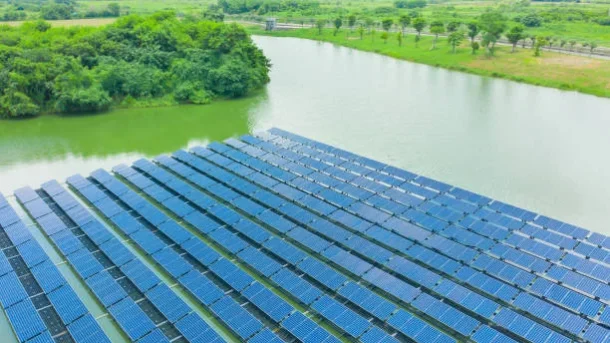
Irrigation: In locations with little rainfall or unstable water sources, irrigation is a crucial part of agriculture. Pumps and distribution systems are frequently powered by energy sources including electricity, fuel, or gasoline in irrigation systems. Farmers’ capacity to access and run irrigation systems efficiently may be hampered by the restricted supply of affordable energy source, which could result in a shortage of water and lower agricultural output.

Mechanization: Energy sources are frequently needed for the operation of agricultural machinery and equipment, such as tractors, harvesters, and threshers. Farmers may find it difficult to purchase or use machinery due to a lack of affordable energy, which increases their reliance on labor that can be physically taxing, time-consuming, and inefficient.

Energy sources are necessary for processes like processing, drying, and storing agricultural products after harvest. The operation of machinery, refrigeration systems, and ventilation all require energy in processing facilities like mills or cold storage facilities. Farmers may be unable to effectively process and store their food due to inadequate access to inexpensive electricity, which can lead to post-harvest losses and decreased marketability of their goods.

Energy is required for value-added agricultural processes such food processing, packaging, and preservation. The formation and effective operation of the food processing industries can be hampered by a lack of readily accessible, reasonably priced energy sources, which limits farmers’ potential to add value to their products and access higher-value markets.

What are the challenges faced by farmers in accessing and utilizing agricultural technologies?

technologies

Affordability: Many farmers, especially small-scale farmers with limited financial resources, may find agricultural technologies, especially advanced ones, to be expensive. It may be difficult for farmers to acquire and implement new technology because the initial cost of acquisition, together with continuing maintenance and operational costs, may exceed their budget.

Farmers may not be well-informed about the agricultural technology that are available and their potential advantages. They might not be knowledgeable about the most recent advancements, their capabilities, or how they can solve particular farming problems. Farmers may have difficulty understanding and using new technologies if they have limited access to information and extension services.

Technical Skills and Knowledge: For operation, maintenance, and troubleshooting, many agricultural technologies call for particular technical skills and knowledge. Farmers might not have the technical expertise needed to use the technology properly or they could need training and capacity-building initiatives to fully comprehend its operations and make the best use of it.

Agriculture technologies frequently depend on reliable infrastructure and connection, such as availability to electricity, internet connectivity, and appropriate communication networks. Farmers may have trouble utilizing technology to its full capacity in remote or rural places where such infrastructure is inadequate or unreliable.

What are the challenges and opportunities in agricultural education and training?

training

In order to guarantee a trained and knowledgeable workforce in the agricultural industry, agricultural education and training face both problems and opportunities. The following are some major difficulties and chances:

Industry Changes: The agricultural sector is changing quickly as a result of advancing technology, climatic changes, and changed consumer preferences. It might be difficult to keep agricultural education and training programmes current with these changes. There is a need to incorporate cutting-edge subjects like precision agriculture, sustainable farming methods, and digital technology into curriculum while also regularly updating them.

Resources are scarce: Many areas, particularly those in developing nations, face shortages of funds, infrastructure, and competent teachers. The effectiveness and accessibility of agricultural education and training are hampered by a lack of resources.

bridging the gap between urban and rural areas: There is frequently a mismatch between metropolitan residents, who might not completely understand or appreciate the value of agriculture, and rural communities, where agriculture plays a key role. It is difficult to bridge this gap and advance agricultural education in both contexts.

What are the recent advancements in aquaculture and fish farming?

fish farming

Enhancing sustainability, production, and the wellbeing of farmed fish have been the main goals of recent breakthroughs in aquaculture and fish farming. Here are a few noteworthy developments.

Recirculating Aquaculture Systems (RAS): A closed-loop system, RAS circulates and filters water inside fish tanks to save water and have a less negative impact on the environment. Fish health and growth are recent improved thanks to RAS since it enables better control of water quality, disease prevention, and waste management.

The goal of integrated multitrophic aquaculture (IMTA) is to cultivate various species in the same aquatic ecosystem while minimising the effects on the environment. fish farming waste, for instance, can be used in conjunction with the growing of seaweed or shellfish to create a symbiotic connection where one species benefits from the nutrients provided by the other.

Genetic improvement programmes concentrate on breeding fish with desirable qualities, such as disease resistance, quicker growth, and increased feed conversion efficiency. These fish are referred to as genetically enhanced farmed species (GIFS). These initiatives seek to lessen dependency on wild fish sources while improving the performance and production of farmed fish.