Crop varieties

What are the major challenges facing the global agriculture sector today?

facing

To ensure food security, sustainability, and equitable agricultural practices, the global agriculture sector faces a number of pressing issues that must be resolved. The following are some of the main issues that the world’s agriculture sector is currently facing.

Need for Food and Population Growth: As the world’s population continues to rise, so does the need for food. Population growth is anticipated to reach 9.7 billion people by 2050, necessitating a substantial increase in agricultural output to feed everyone well.

Climate Change and Extreme Weather: Agriculture is seriously threatened by climate change. Increased frequency of extreme weather events including droughts, floods, and storms, as well as rising temperatures, can disrupt agricultural systems, lower crop yields, and lower livestock output.

Environmental Impact: Agriculture, facing a significant role in environmental problems such soil erosion, water pollution, greenhouse gas emissions, and biodiversity loss. To reduce its negative environmental effects and maintain ecosystems, the sector must embrace sustainable practises.

Labour Shortages in Rural Areas as a Result of Rural-Urban Migration: Rural-to-urban migration has caused a reduction in agricultural labour, resulting in labour shortages in rural areas. This problem is made worse by an ageing farming population and a lack of interest in agriculture among younger generations.
What are the advancements in precision agriculture and its impact on productivity?

precision agriculture

Precision farming, also known as site-specific crop management or precision agriculture, has made tremendous strides in recent years. These developments have improved agricultural productivity and were made possible by technology, data analytics, and automation. The following are some significant developments in precision agriculture and their results.

Remote sensing and images: High-resolution imagery and data on crop health, nutrient levels, and water stress are provided by remote sensing technology, such as satellites, drones, and aircraft. Farmers can use these data to find variability in their fields and implement focused interventions. Early crop stress or nutrient deficiency detection allows farmers to provide inputs precisely where they are needed, maximising the utilisation of available resources and raising crop output.

With variable rate technology (VRT), inputs like irrigation, herbicides, and fertilisers are applied at different rates throughout a field. For the purpose of creating prescription maps that direct the application of inputs, VRT uses data from yield monitoring, soil sampling, and remote sensing. Farmers can maximise resource use, cut expenses, and increase crop yields by customising inputs to match the distinct needs of various locations within a field.

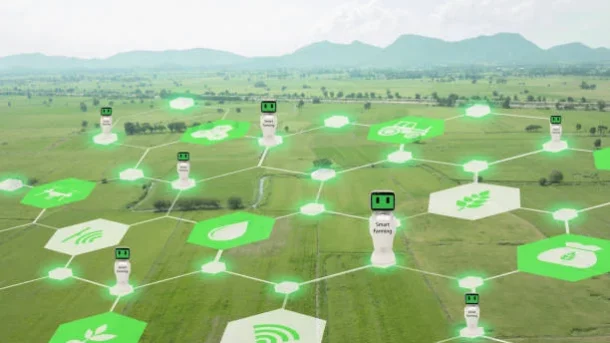
Sensors and the Internet of Things (IoT): Real-time information on environmental conditions and crop status is provided by sensors, including soil moisture sensors, weather stations, and crop health sensors. These sensors are connected via IoT devices, which enable real-time data collecting, analysis, and decision-making. Farmers can make prompt and educated judgements about crop health by keeping an eye on soil moisture, weather patterns.

How has climate change impacted agricultural productivity and food security?

agricultural productivity

The impacts of climate change on agricultural productivity have created challenges for the global food chain. Here are a few ways that agriculture has been impacted by climate change.

Temperature and precipitation changes: Increasing temperatures and shifting precipitation patterns have a direct impact on the growth and development of crops. Crop yields can be affected by heat stress, and it can also affect pollination and raise water usage. Schedules for planting, irrigation, and harvesting can be affected by droughts or floods brought on by changes in rainfall patterns.

Changes to Phenological Cycles and Traditional Growing Seasons: Planting, flowering, and harvesting times may all be impacted by climate change. Agricultural practises may be difficult for farmers to modify in response to the changing environment, which could result in lower crop yields and unstable production.

Water Scarcity and Unpredictability: Climate change may make it more difficult to get enough water for irrigation systems, crops, and cattle in many areas. Water shortages may result from altered rainfall patterns and higher rates of evaporation, which may have an impact on agricultural productivity and food production.

Pest and disease spread: Changes in the climate can have an impact on the distribution and prevalence of pests and diseases, increasing the risks and difficulties in managing crops and livestock. Warmer weather can encourage the spread of illnesses and pests, necessitating more resources and pest control techniques.

What are the advancements in automated harvesting systems for fruits and vegetables?

harvesting

To alleviate labour shortages, boost productivity, and cut costs in the agriculture sector, automated harvesting methods for fruits and vegetables are continuously improved. Here are a few of the noteworthy developments.

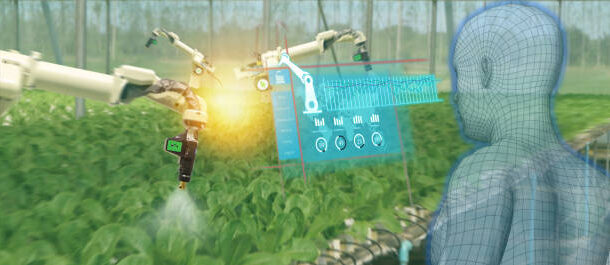
Robotic devices are being developed to carry out harvesting activities that were formerly handled manually. These robots have sensors, cameras, and robotic arms that allow them to recognise ripe fruits and vegetables, gently grip them, and pick them without inflicting any harm. With the use of GPS or computer vision technologies, they can move throughout fields.

Advancements in soft gripping technology have been designed to handle delicate fruits and vegetables without breaking them. Harvesting may be done gently and precisely thanks to the use of soft grippers that resemble the human hand’s delicate touch and conform to the shape and texture of the product.

Robotic Harvesting Systems: Specialised harvesting systems are being created for several kinds of crops. For instance, specialised robots have been developed to gather high-value crops like strawberries, tomatoes, lettuce, and other. These robots are built to manoeuvre through hazardous settings, deal with the unique traits of each crop, and adjust the procedure as necessary.

What are the benefits of using precision spraying systems in agriculture?

precision spraying

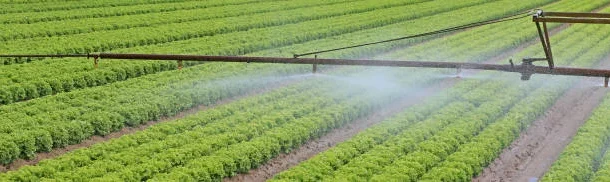
Reduced Chemical Use: Precision spraying systems precisely identify and target certain plants or problem areas using technologies including sensor-based identification, computer vision, and machine learning algorithms. These systems reduce the use of chemicals by precisely spraying herbicides, insecticides, or fertilisers only where necessary, hence lowering overall chemical usage and minimising environmental effect.

Greater Efficiency: Precision spraying systems allow for accurate and focused application, eliminating overspray and cutting down on waste. As the appropriate amount of chemical is delivered directly to the target plants or locations, this results in better chemical usage efficiency. Farmers can save money by using resources more effectively, including labour, chemicals, and water.

Environmental Protection: Precision spraying technologies assist save the environment, nearby crops, and natural habitats by reducing chemical drift and runoff. The impact on beneficial creatures, water bodies, and unwanted plants is minimised due to the targeted application’s lower probability of chemicals reaching undesired locations. This encourages ecological sustainability and lowers the risk of ecological harm.

Crop health and quality are enhanced by the timely and precise administration of treatments made possible by precision spraying systems. These systems aid in the management and control of crop stresses by efficiently focusing on pests, diseases, or nutritional deficits. The timely delivery of remedies thanks to precise application lowers the possibility of production loss and raises crop quality overall.

How are smart greenhouse systems improving crop production?

smart greenhouse

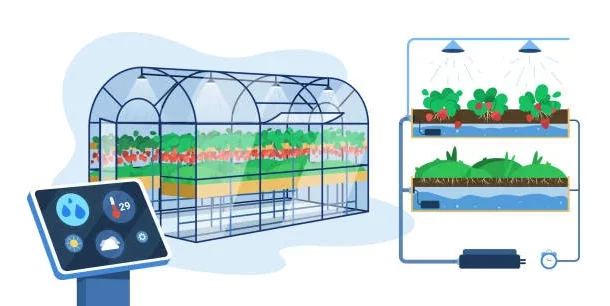
By offering precise environmental control and enhancing plant development conditions, smart greenhouse systems are revolutionising crop production. Here are some ways that crop output is being enhanced through smart greenhouse systems.

Climate Control: Sensors, actuators, and automation technologies are used by smart greenhouse systems to track and manage environmental variables like temperature, humidity, light levels, and CO2 concentration. Independent of the weather outside, gardeners can produce the ideal growth conditions for particular crops with this fine control. It makes it possible to produce all year long, lengthens the growing season, and improves crop quality and productivity.

Irrigation Management: Advanced irrigation technologies are incorporated into smart greenhouse systems to accurately provide water to plants based on their requirements. Automated irrigation systems deliver water in a targeted manner while sensors measure soil moisture levels, minimising water waste and increasing water usage effectiveness. This reduces the possibility of overwatering or underwatering and encourages healthy growth by ensuring that plants receive the proper amount of water.

Nutrient Management: Intelligent nutrient delivery systems are included into smart greenhouse systems to give plants the nutrients they need in a regulated way. These systems keep an eye on the concentrations of nutrients in the soil or nutrient solutions and change the composition and concentration of nutrients as necessary. Plants acquire the right balance of nutrients for optimum development and productivity thanks to this exact nutrition control.

What are the benefits of using digital agriculture platforms?

digital agriculture

Platforms for digital agriculture have many advantages for farmers, agronomists, and the agricultural sector as a whole. Among the principal benefits.

Data-Driven Decision Making: Digital agriculture systems gather, process, and analyse voluminous agricultural data from a variety of sources, such as sensors, satellites, and farm machinery. Farmers are able to make well-informed decisions thanks to these data-driven insights, which also aid in the resource allocation and optimisation of crop management techniques.

Precision farming: Using digital platforms for agriculture, farmers can apply precision farming practises including the variable rate application of water, pesticides, and fertilisers. Precision farming maximises resource efficiency and minimises waste, resulting in cost savings and a smaller negative impact on the environment. This is done by customising inputs to the distinct demands of various sections within a field.

Crop Monitoring and Management: Digital systems provide real-time crop monitoring using drones, satellite imagery, and remote sensing technologies. This ongoing observation assists in spotting early indications of stress, ailments, or pests, allowing for prompt intervention and averting potential output losses.

Yield Optimisation: Digital agricultural platforms can assist farmers in maximising crop yields by integrating data on soil health, weather patterns, and previous yield records. Better crop planning, ensuring the proper crops are planted in the right places, and implementing practises that increase yield are all made possible by analysing this data.

What is the role of remote-controlled drones in crop pollination?

crop

The application of AI (Artificial Intelligence) and machine learning techniques for crop disease prediction is growing. Here is how this situation applies AI and machine learning.

Large volumes of data, such as past disease records, meteorological information, soil conditions, crop traits, and management techniques, must be gathered in order to anticipate crop diseases. AI and machine learning algorithms can help with data collection and integration from a variety of sources, including sensor networks, remote sensing, weather stations, and agricultural databases.

Recognition of Disease Patterns: AI and machine learning algorithms can locate patterns and connections related to diseases in the obtained data. These algorithms can find hidden patterns and associations that might not be immediately obvious to humans by examining historical sickness records and related circumstances. This aids in comprehending the variables affecting the development and spread of disease.

Disease Prediction Models: Based on the gathered and preprocessed data, machine learning algorithms can create predictive models for diseases. Based on input factors including meteorological conditions, crop health indicators, and management techniques, these models can be taught to recognise trends and predict the risk of disease development or severity. These prediction models are typically constructed using supervised learning methods such as decision trees, random forests, support vector machines, and neural networks.

How are AI-driven decision support systems used in agricultural planning?

AI-driven

AI-driven decision support systems are being used more and more in agricultural planning to boost productivity and decision-making. The following are some applications of AI-driven decision support systems in agricultural planning:

Yield Prediction and Optimisation: To anticipate agricultural yields, AI systems examine a variety of data sources, including historical yield data, weather patterns, soil conditions, and crop management techniques. These systems can continuously learn and improve their predictions over time by using machine learning techniques. These yield forecasts can help farmers make the best planting choices, choose the right crop kinds, allocate resources wisely, and manage crop rotations.

Crop Planning and Selection: AI-driven decision support systems help farmers choose the best crops for their unique conditions and objectives. To suggest the ideal crops, these algorithms take into account variables including soil type, climate, market demand, and profitability analyses. These systems assist farmers in making well-informed decisions about crop selection and planning by analysing enormous amounts of data and taking into account many aspects.

Irrigation Management: AI-based decision support systems that analyse data from a variety of sources, such as weather forecasts, soil moisture sensors, and crop water requirements, aid in the optimisation of irrigation practises. To guarantee that crops receive the proper amount of water at the proper time, these devices can offer real-time advice for irrigation scheduling. This raises crop output, reduces water waste, and increases water usage efficiency.

What are the advancements in farm robotics for weed control?

weed

In order to lessen the need for herbicides and labor-intensive physical labour, farm robotics for weed control have made major strides in recent years. Here are a few noteworthy developments in this area:

Automated weed identification systems are being created using cutting-edge image technology including computer vision and machine learning algorithms. These systems examine crop photos and recognise weeds based on their visual traits, enabling focused and accurate weed management.

Robotic weed removal: To automatically find and get rid of weeds in agricultural fields, robotic technologies are being developed. These robots physically remove or destroy weeds using a variety of techniques, including mechanical arms or instruments. Some robots use artificial intelligence to distinguish between crops and weeds, allowing for the selective and accurate removal of the latter.

Robotic sprayers that are equipped with precision spraying technology are utilised to apply herbicides precisely where they are needed. These devices use imaging and sensor technology to instantly find and locate weeds. Herbicides are then only applied by sprayers to the specific weeds that need them, minimising chemical use and harm to the environment.