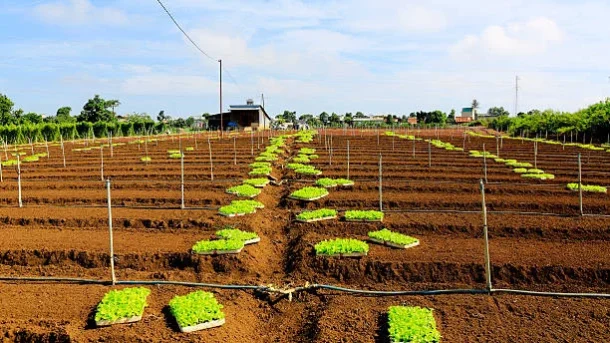
Agricultural schemes

What is the purpose of the National Mission on Agricultural Export Policy (NMAEP)?

Agricultural Export Policy

Increasing Agricultural Exports: Agricultural export policy-related initiatives seek to increase the export of agricultural goods from India. Enhancing market access, finding and promoting high-potential agricultural products for export, and enabling trade agreements and collaborations with other nations are all priorities.

Market Diversification: In order to lessen reliance on a small number of destinations, the programs encourage the diversification of agricultural export Policy. They research and develop new markets, increase the appeal of Indian agricultural products in already-established countries, and develop tools for addressing trade restrictions and problems with market access.

Initiatives for agricultural exports place a strong emphasis on adhering to international quality standards and certifications. In order to guarantee the safety, quality, and traceability of agricultural goods, they encourage farmers, exporters, and other stakeholders to establish and maintain the essential quality management systems and certifications.

The initiatives’ main goals are to build the infrastructure and logistics systems needed to facilitate agricultural exports. To enable the effective and prompt export of agricultural products, improvements must be made to ports, cold storage facilities, transportation networks, packaging and labeling infrastructure, and other relevant facilities.


Name a scheme that aims to promote the cultivation of cashew and provide support for cashew processing units.

cashew processing

The “Mission for Integrated Development of Horticulture” (MIDH) is one program that attempts to support cashew processing facilities in India and encourage cashew processing farming. The Ministry of Agriculture and Farmers Welfare, Government of India, is responsible for carrying out the Mission for Integrated Development of Horticulture.

The Cashew Development Program’s main goals and initiatives typically consist of:

Promotion of Cashew Cultivation: The program’s main objective is to increase cashew production by giving farmers financial help, technical aid, and training. It involves assistance with the creation of fresh cashew orchards, the restoration of aged and underutilized orchards, the use of superior planting materials, and the adoption of best agricultural practices.

Training and Capacity Building: The initiative places a strong emphasis on training and capacity building programs for farmers growing cashews. It offers instruction on a variety of elements of cashew production, such as post-harvest management, irrigation management, planting methods, and pest and disease control.

Research and Development: The program funds initiatives for the production and processing of cashews. In order to create and spread better cashew varieties, crop management strategies, and processing methods, it encourages partnerships with research facilities, agricultural universities, and technology providers.

What is the main objective of the National Mission on Sustainable Forest Management (NMSFM)?

Sustainable Forest Management

Initiatives for sustainable forest management have as their goal the preservation and protection of forests, including natural forests, regions with a high biodiversity, and forest ecosystems. They place a strong emphasis on protecting the ecological stability, biological richness, and carbon stores of forests as well as the wildlife habitats found there.

The sustainable use of forest resources, such as timber, non-timber forest products, and ecosystem services, is encouraged by these programs. They place a strong emphasis on ethical harvesting methods, forest regeneration, and the preservation of natural harmony while assuring the socioeconomic progress of nearby people that depend on the forest’s resources.

Programs for forest restoration, afforestation, and reforestation are components of initiatives for sustainable forest management. To achieve environmental, economic, and social goals, they seek to increase the amount of forest cover, improve the productivity and health of damaged forests, and establish new forested regions.

Support for Community Participation and Livelihoods: These programs work to integrate local knowledge, customs, and traditional rights into forest governance while also fostering community involvement in forest management. They encourage sustainable livelihood options based on forestry resources, support community-based forest management strategies, and help communities that depend on forests for their way of life.

Which scheme provides financial assistance for the establishment of organic farming clusters?

organic farming clusters

The “Paramparagat Krishi Vikas Yojana” (PKVY) is one program that offers financial aid for the construction of organic farming clusters in India. The Ministry of Agriculture and Farmers Welfare, Government of India, is in charge of carrying out the Paramparagat Krishi Vikas Yojana.

The Paramparagat Krishi Vikas Yojana’s primary goals and initiatives typically consist of:

Promotion of Organic Farming: The program seeks to encourage farmers to use organic farming practices and to make it easier for them to embrace organic practices. It encourages the use of conventional and organic alternatives while reducing or eliminating the use of synthetic inputs like chemical fertilizers and pesticides.

The PKVY focuses on the creation of organic farming clusters, when a number of farmers embrace organic farming methods in close proximity to one another. By bringing together a sufficient number of organic farmers, cluster development aids in information exchange, resource optimization, and joint marketing opportunities.

Financial Support: The program offers financial support to farmers and farmer organizations in order to build organic farming cluster. Financial assistance is provided for a number of things, including capacity building, education, certification, organic inputs, farm machinery, marketing infrastructure, and other initiatives required to advance organic farming within the clusters.

What is the primary goal of the Agricultural Credit Guarantee Scheme (ACGS)?

Agricultural Credit Guarantee Scheme

The Agricultural Credit Guarantee Scheme (ACGS)’s main objective is to offer credit guarantee coverage to Indian farmers and agricultural firms. The Department of Agriculture, Cooperation & Farmers Welfare, Ministry of Agriculture and Farmers Welfare, Government of India, is the government agency responsible for implementing the ACGS.

The Agricultural Credit Guarantee Scheme primary goals and duties typically consist of:

Credit Guarantee Coverage: The program’s goal is to give agricultural businesses and farmers credit guarantee coverage to make it easier for them to obtain institutional credit. It lowers the risk involved with agricultural financing by assuring lenders (such banks and financial organizations) of the repayment of loans in the event of default by the borrowers.

Increasing financing Access: The ACGS concentrates on expanding the affordability and accessibility of financing for farmers and agricultural entrepreneurs. By offering credit guarantee coverage, it encourages financial institutions to lend to the agricultural industry, particularly to small and marginal farmers who would have trouble getting credit due to a lack of collateral or other factors.

Promoting Institutional Lending: The plan encourages banks to lend to the agricultural industry. Through the credit guarantee coverage offered by the ACGS, it encourages banks and other financial institutions to raise the amount of money they lend to farmers by lowering the risk involved with agricultural loans. This aids in directing more formal financing into agriculture, lowering reliance on unofficial loan sources, and fostering financial inclusion.

Name a government initiative that focuses on the development of agri-export zones in India.

agri-export

The “Agri Export Policy” (AEP) is one government effort that concentrates on the growth of agri-export zones in India. The Ministry of Agriculture and Farmers Welfare, Government of India, is responsible for carrying out the Agri Export Policy.

The Agri Export Policy’s primary goals and initiatives typically consist of:

Creation of Agri Export Zones: The strategy intends to identify and create Agri-Export Zones (AEZs) in particular regions that have the ability to produce and export a particular type of agricultural commodity. AEZs are geographical areas that have been classified as having concentrated agricultural production, processing, storage, and logistics infrastructure with the goal of aiding exports.

Infrastructure Development: The policy places a strong emphasis on creating logistical facilities within AEZs. It encourages the development of facilities for cold storage, packing, processing, irradiation, and other relevant infrastructure needed for the effective handling and preparation of agricultural products for export.

Market Access and Promotion: The policy’s main goal is to make it easier for Indian agricultural products to find a market in foreign countries. It consists of programs aimed at enhancing market research, branding, and marketing assistance for Indian agricultural exports. In order to increase the exposure and market reach of Indian agricultural products, the strategy also promotes participation in international trade fairs, buyer-seller meetings, and promotional efforts.

What is the purpose of the National Mission on Sustainable Coastal Zone (NMSCZ)?

Coastal Zone

Initiatives for sustainable coastal zone place a strong emphasis on the management and conservation of coastal resources, such as fisheries, coastal ecosystems, biodiversity, and other natural resources. They seek to limit the negative effects of human activity on coastal habitats, protect and restore delicate coastal ecosystems, and assure sustainable resource usage.

Climate Change Adaptation: The efforts deal with issues brought on by coastal regions’ heightened sensitivity to extreme weather events, rising sea levels, and coastal erosion. They place a strong emphasis on the creation and application of methods to improve coastal resilience, mitigate the risks associated with climate change, and adapt to its effects.

Initiatives for Integrated Coastal Zone Management bring together a variety of stakeholders, such as government agencies, regional communities, academic institutions, and non-governmental organizations, to promote integrated approaches to coastal zone management. They want to encourage participation in decision-making, collaboration, and coordination for sustainable coastal development.

Economic Development and Sustainable Livelihoods: The projects are geared toward encouraging coastal communities to develop economically and sustainably. They promote sustainable fisheries, aquaculture, eco-tourism, coastal agriculture, and other sources of alternative income that are in line with the preservation and wise use of coastal resources.

Name a government program that aims to promote the cultivation of medicinal and aromatic plants in the North-East region of India.

medicinal and aromatic plants

The “National AYUSH Mission” (NAM) is one government initiative that seeks to encourage the production of medicinal and aromatic plants in India’s North-East. The Ministry of AYUSH (Ayurveda, Yoga & Naturopathy, Unani, Siddha, and Homoeopathy), Government of India, is responsible for carrying out the National AYUSH Mission.

The National AYUSH Mission’s medicinal plants component’s primary goals and initiatives typically consist of:

Cultivation and Conservation: Through funding for seed distribution, cultivation methods, land preparation, and other relevant interventions, the program encourages the production of medicinal and aromatic plants. The creation of nurseries, botanical gardens, and institutions for the conservation of genetic material also emphasizes the preservation of medicinal plant species that are in danger of extinction.

Processing and Value Addition: The strategy places a strong emphasis on the processing and value addition of medicinal and aromatic plants. It encourages the construction of processing units, drying and distillation facilities, laboratories for quality inspection, and other post-harvest processing and value-adding infrastructure. This raises the value and marketability of regional medicinal plant products.

Building Capacity and Training Programs: The strategy includes training and building capacity initiatives for farmers, business owners, and other parties involved in the production, processing, and selling of aromatic and medicinal plants. It offers instruction in ethical farming practices, environmentally friendly harvesting techniques, post-harvest management, value-adding approaches, and marketing tactics.

Market Promotion and Linkages: The plan makes it easier for medicinal and aromatic plant to receive market promotion and linkages. It backs activities to open up new markets, gather market intelligence, build marketing networks, and encourage product certification and branding. This makes it easier to access markets and ensures that medicinal plant products are priced fairly.

What is the main objective of the National Mission on Sustainable Urban Transport (NMSUT)?

Sustainable Urban Transport

Promoting environmentally friendly and sustainable urban transportation systems in India is the primary goal of the National Mission on Sustainable Urban Transport (NMSUT). The Ministry of Housing and Urban Affairs, Government of India, is in charge of carrying out the NMSUT.

The National Mission on Sustainable Urban Transport primary goals typically consist of:

Reduce Pollution and Greenhouse Gas Emissions: By encouraging sustainable modes of transportation like walking, bicycling, public transportation, and non-motorized transport options, the objective is to reduce pollution and greenhouse gas emissions from urban transportation. It highlights the switch from personal automobiles to environmentally friendly modes, which aids in enhancing air quality and reducing climate change.

Improve Urban Mobility: The NMSUT aims to increase the effectiveness and accessibility of urban transportation networks in order to improve urban mobility. It entails projects aimed at creating multimodal, integrated, and well-planned transportation networks as well as enhancing public transportation services and infrastructure.

Encourage Non-Motorized Transportation: The mission aims to promote non-motorized transportation alternatives like walking and bicycling by building specialized infrastructure for these modes of transportation, making secure and practical pathways, and putting in place laws that give preference to and promote them.

Which scheme provides financial assistance for the establishment of bio-fertilizer production units?

bio-fertilizer production units

The “National Mission on Sustainable Agriculture” (NMSA) is one program that offers financial help for the building of bio-fertilizer production units in India. The Department of Agriculture, Cooperation & Farmers Welfare, Ministry of Agriculture and Farmers Welfare, Government of India, is in charge of implementing the National Mission on Sustainable Agriculture.

The Sub-Mission on Seeds and Planting Material (SMSP)’s main goals and initiatives in relation to the manufacture of bio-fertilizers typically consist of the following:

Financial Support: The program offers financial support for the creation of bio-fertilizer production units to business owners, farmer producer organizations (FPOs), and other qualifying entities. A portion of the capital investment needed for infrastructure construction, equipment acquisition, and other costs associated with the manufacture of bio-fertilizer is covered by the financial support.

The SMSP places a strong emphasis on the standardization and quality control of bio-fertilizers. For bio-fertilizer production units, it encourages adherence to quality criteria, certification specifications, and good manufacturing practices. This guarantees the creation of high-quality bio-fertilizers that adhere to the required criteria and effectively feed crops with nutrients.

Training and Capacity Building Programs: The plan includes training and capacity building initiatives for biofertilizer manufacturers. It offers technical help, training on bio-fertilizer production methods, quality control, and best practices to improve the abilities and understanding of business owners and employees involved in the manufacture of these fertilizers.

Market Promotion and connections: For bio-fertilizers, the SMSP encourages market promotion and connections. It helps biofertilizer producers interact with farmers, agricultural input suppliers, and other stakeholders in the agricultural sector, facilitating market access, branding, and market intelligence. This encourages the use of bio-fertilizers and opens up markets for bio-fertilizer goods.