
The flowers are tagged just after bagging. They are attached to the inflorescence or to the flower with the help of a thread. After that , date of emasculation, date of pollination, parentage and no. of emasculated flowers are noted .
Scientific Farming
What is emasculation ?

Emasculation is the removal of stamens or anthers from a flower or killing of pollen without the female reproductive organ. Emasculation is required in bisexual flowers to prevent self-pollination. Male flowers are eliminated from monoecious plants. Hand emasculation is accurate and adequate in species with large blooms, such as cotton and pulses.
What were the ancient methods of pest management ?
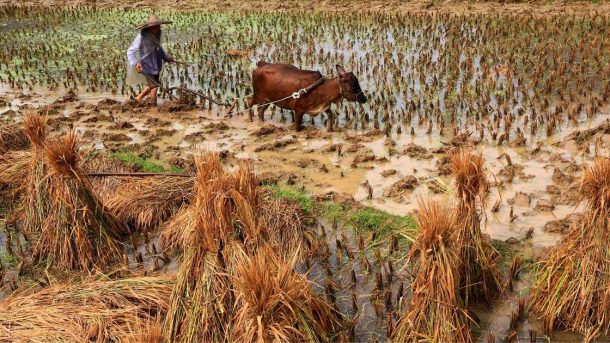
Botanical pesticides were used. During storage, neem leaves were often employed to keep storage insects and seed infection at control. There is also a belief that seed should be treated with coal ash before storage to minimise insect damage. Before storage, pigeon pea seeds were sun dried to minimise moisture content, which was a standard method in Ancient times for the control of insects and vermin. Resin application to roots has been recommended for preventing cracking of pomegranate is found in ancient literature.
What are the benefits of Bt cotton technology ?

Bt cotton hybrids had good control of the American Boll worm and used fewer insecticides, resulting in a more environmentally friendly environment. In comparison to insecticide-mediated control of bollworms, Bt cotton technology does not affect non-target beneficial insects; in addition, this revolutionary technique reduces production costs, increases profit, reduces farming risk, and improves the economic outlook for cotton. This technology also aids in the improvement of wild life populations, the reduction of insecticide run-off, the reduction of air pollution, and the increased safety of farm employees and the surrounding community.
What is PMAGY ?

PMAGY or Pradhanmantri Adarsh Gram Yojana is a new scheme launched by the government for the integrated development of scheduled castes dominated villages in the country. There are about 44,000 villages in which the population of scheduled castes is above 50 per cent. Shri Mukherjee said that the new scheme PMAGY will be launched this year on a pilot basis in 1000 such villages. An amount of Rs.100 crore has been allocated for this Scheme, he added. Under this Scheme, each village would be able to avail gap funding of Rs.10 lakh over and above the allocations under Rural Development and Poverty Alleviation Schemes. On successful implementation of the pilot phase, the PMAGY would be extended in coming years.
What is input optimization ?

Sustainable farming methods make the most of available resources on the farm. Family work, intensive grazing systems, recycled nutrients, legume nitrogen, crop rotations, use of renewable solar energy, enhanced insect control, soils, and woods are just a few examples of internally produced inputs. These adjustments can be made with preserving yields, according to studies, and often result in higher net farm earnings.
What’s the impact of acid rain ?

Acid rain results in acidification of soil and lakes , deterioration of buildings made of rocks ,and deterioration of trees and forests . Acid rain causes contamination of water sources due to seperation of poisonous minerals such as aluminum and mercury from the surrounding ground.
What is acid rain ?
Acid rain is the rain that contains larger amounts of acid than normal. Acid rain contains more pH than ordinary. This is caused by the presence of air pollutants, like sulfur dioxide and nitrogen oxides. Acid rain is considered as the wet deposits of air pollutants, where it’s combined with moisture before falling into the ground. Acid rain can occur naturally, from the volcanic eruptions.
What is the soil and climate requirement for tea?
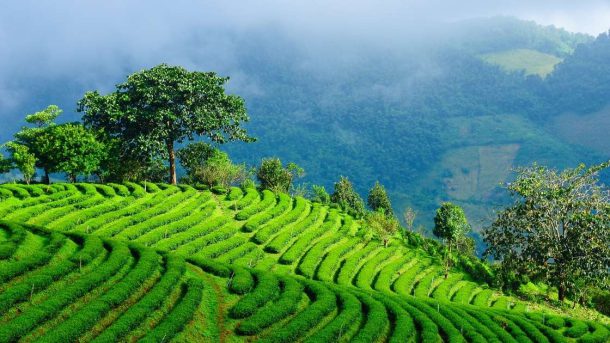
Tea requires well drained soil with high amount of organic matter and pH 4.5 to 5.5. The performance of tea is excellent at elevations ranging from 1000 – 2500 m.Optimum temperature: 20 – 270 C.
What is agri-silvicultural system ?

Agricultural crops are intercropped with tree crops in the area between the trees in this arrangement. Agricultural crops can be cultivated for up to two years under protected irrigated conditions and up to four years under rainfed farming under this technique. Grain crops can be profitably grown until the above-mentioned period, beyond which they are uneconomical to grow. Fodder crops, shade-loving crops, and shallow-rooted crops, on the other hand, can be profitably farmed. For easier cultural management and to obtain more sunlight to the intercrop, wider spacing is used without losing tree population. When compared to monoculture, the tree crops do better in this system.