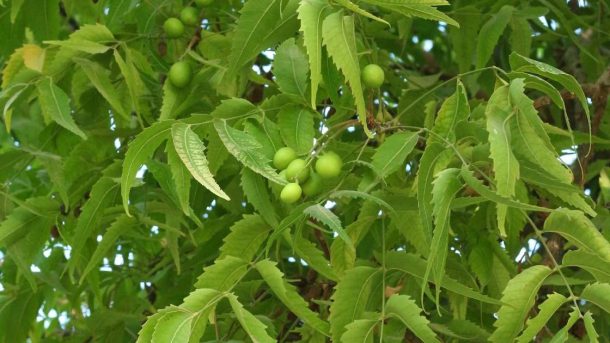
Neem is a member of the mahogany family, Meliaceae. Azadirachta indica is the botanical name for it today. It is a widely used medicinal herb in Indian home medicines. It is well-known for its natural ability to repel pests ranging from mosquitoes to termites, which is made possible in part by the presence of the chemical component Azadirachtin, a naturally occurring pest repellant. Neem oil is made by cold-pressing neem tree kernels in their finest form. The seeds and leaves generate the most oil, although any part of the plant can be used. After the oil from Neem kernels is extracted, the residue that is devoid of oil is known as Neem Cake. NPK (or nitrogen-phosphorus-potassium), as well as nortriterpenoids and isoprenoids, are found in this seed kernel and these nutrients are nematicidal in nature.
Scientific Farming
How to control pink bollworm in cotton ?
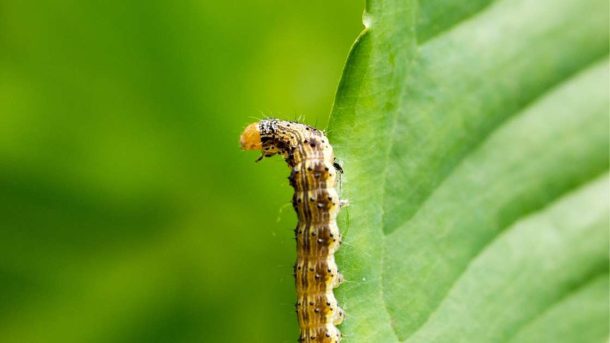
The pink bollworm has developed resistance to first-generation transgenic Bt cotton (Bollgard cotton) that expresses a single Bt gene in portions of India (Cry1Ac). In portions of Gujarat, India, Monsanto has conceded that this cultivar is inefficient against the pink bollworm pest. Insecticides are used to control infestations on vulnerable cotton. Once a crop has been harvested, the field is ploughed under as soon as possible to break the bollworm’s life cycle. The larvae are found in unharvested bolls, thus they are eliminated. To drown out any lingering bugs, the plants are ploughed into the ground and the fields are liberally irrigated. After harvest, some farmers burn the stubble. Bollworms that survive the winter in the field will re-infest the following season. Mating disruption, pesticides, and the release of sterile males that mate with females but do not fertilise their eggs are also used to manage bollworm populations.
How pink bollworm causes damage in cotton ?
The pink bollworm (Pectinophora gossypiella) is a pest in the cotton industry. The adult is a little grey moth with fringed wings that is small and slender. The larva is a dull white caterpillar with eight pairs of legs and prominent pink striping running along its back. The larva grows to be about a half-inch long. The female moth lays her eggs in a cotton boll, and the larvae that hatch cause damage to the plant by feeding. They eat the seeds by chewing through the cotton lint. Cotton is utilised for both fibre and seed oil, therefore the harm is doubled. Other insects and fungus can enter the boll through the protective tissue that has been disrupted.
What is the climate requirement for growing cotton ?
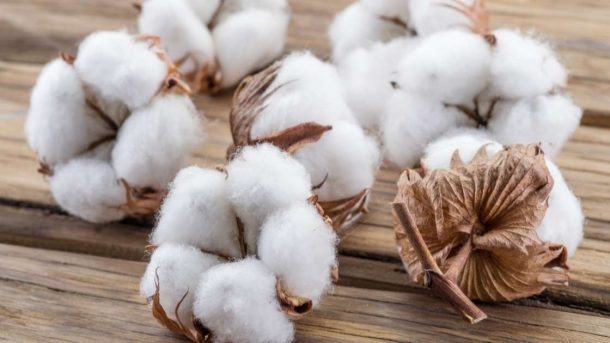
Cotton is a subtropical climate crop. Cotton requires a minimum temperature of 600 degrees Fahrenheit for germination, 70 degrees Fahrenheit for vegetative growth, and 80 degrees Fahrenheit with cool nights during the fruiting season. Unless cotton is produced on irrigated soils, cotton requires at least 50 cm of yearly rainfall. Rains and severe humid weather later in the cotton season may ruin the crop, reduce its ginning qualities, or encourage insect, pest, and disease attack. Rain at this stage will discolor the lint and impair its quality, therefore the weather should be clean while harvesting.
What are the symptoms of calcium deficiency in plants ?
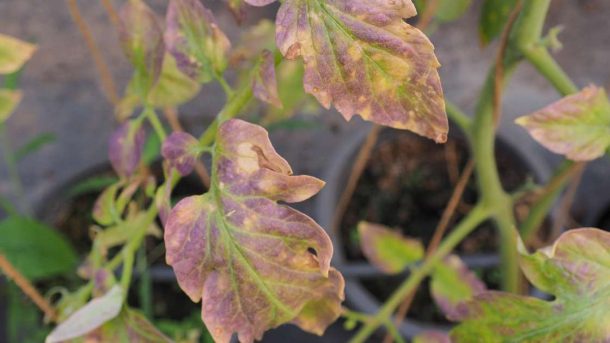
Calcium insufficiency manifests itself first on younger leaves and tissues, with stunted growth and a bushy look. The youngest leaves are often tiny and malformed, with brown chlorotic patches growing along the borders and finally uniting in the middle. Leaves may be cup-shaped and crinkled and the terminal buds deteriorate with some breakdown of petioles. Veins are also brown, making the black veins of fully necrotic leaves a common trait of Ca-deficient plants. Crinkled and torn leaves are also possible. In Ca-deficient plants, root tip development is inhibited. Under severe deficiency ,dessication of growing points of plants occur.
.
What is a breeder seed?
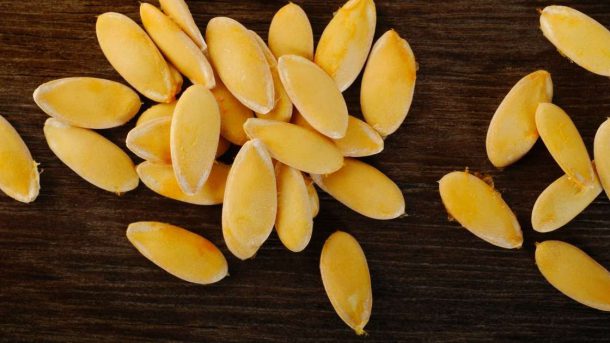
Breeder seed is seed or vegetative propagating material directly controlled by the originating or sponsoring plant breeder of the breeding programme or institution and/ or seed whose production is personally supervised by a qualified plant breeder and which provides the source for the initial and recurring increase of foundation seed. Breeder seed shall be genetically so pure as to guarantee that in the subsequent generation i.e. certified foundation seed class shall confirm to the prescribed standards of genetic purity. The other quality factors of breeder seed such as physical purity, inert matter, germination etc. shall be indicated on the label on actual basis. A golden yellow colour certificate is issued for this category of seed by the producing breeder.
How to control Parthenium weed ?
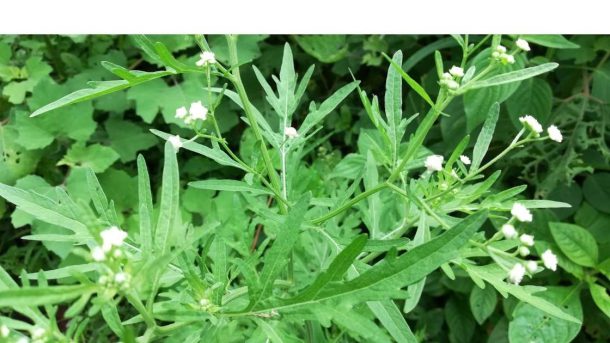
Parthenium weed can be controlled by manual weeding and destruction of Parthenium plants before flowering using machineries. Uniform spraying of sodium chloride 200g + 2 ml soap oil/litre of water (or) Spraying of 2,4-D sodium salt 8 g or glyphosate10 ml + 20g ammonium sulphate + 2 ml soap solution/litre of water before flowering also helps. Parthenium can be replaced by raising raising competitive plants like Cassia serecea and Abutilon indicum on fallow lands. Biological control of parthenium can be done using Mexican beetle, fungal pathogen and nematodes.
What are the symptoms of mango malformation?
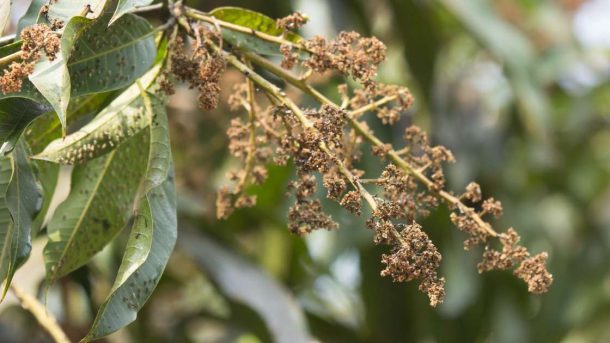
Mango malformation illness is characterised by abnormal, compact growth of shoots and flowers. Misshapen shoots with short internodes and brittle leaves result from growing points such as leaf and stem buds. The leaves are much smaller than those on healthy plants, and they recurve towards the stem, giving the plant a squat, bunchy appearance. Shoot damage affects adult trees, but young plants suffer the most severe consequences, becoming severely stunted. The flowers are bloated, infertile, and fruitless. When compared to ideal flowers, there are generally a lot of male flowers. Panicles can also produce leaves that are dwarfed and deformed.
What is the cause of red rot of sugarcane ?
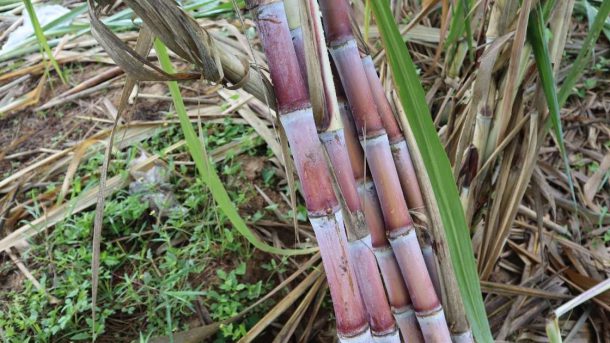
Red rot disease is caused by the fungus Glomerella tucumanensis. Pathogen present on leaf sheaths and blades, solitary or aggregated, often forming short lines between vascular bundles .There has been considerable difference in opinion as to the nature of the fungus that causes this disease. Some insisted that this fungus is more strictly saprophytic than parasitic, and that it cannot attack healthy canes. Others said that it cannot attack mature canes except through wounds, but that it can attack young plants. However, the young canes are usually protected by the leaf sheaths. In some places the fungus has been reported to grow on the dead canes only and the disease is not known.
What measures are included in integrated pest management of tomato?
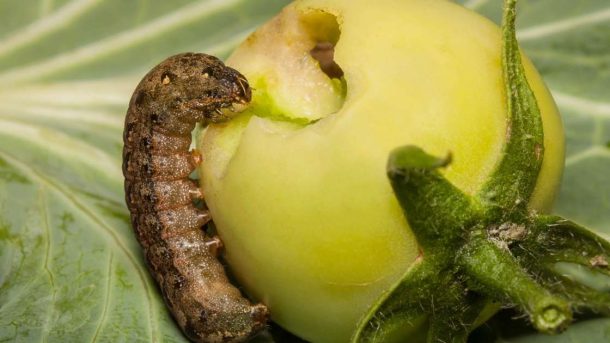
IPM measures of tomato include seed treatment with Pseudomonas fluorescens @ 10g/kg of seeds, nursery application with Trichoderma viride and Pseudomonas fluorescens and application of Neem cake @ 250kg/ha . Selection of good and virus disease free seedlings for planting and roguing out of virus infected plants upto 45 days of transplanting are included in IPM strategies. Marigold is grown as a border crop and as traps Helicoverpa / Spodoptera pheromone are used. Spraying Neem formulations (1%) / Neem seed kernel extract (5%) and use of yellow sticky traps are also inlcuded.