POSTEDITOR OFFICE

What are the benefits of using satellite-based weather forecasting in agriculture?

satellite

Utilising blockchain and satellite technology, every transaction and movement of food products from their point of origin to their final destination is tracked in a transparent and immutable ledger. A safe and auditable record of the product’s journey is ensured by the ability of every stakeholder in the supply chain, including farmers, processors, distributors, and retailers, to submit data into the blockchain.

Through the provision of a decentralised and tamper-proof system for tracking and confirming the authenticity and integrity of food products and this technology facilitates traceability.

QR codes and barcodes are frequently used on food packaging to give consumers access to thorough information on the product’s origin and manufacturing processes, and supply chain trip. Consumers can track the merchandise by using a smartphone to scan these codes.

Satellite remote sensing data is critical for monitoring soil, drought and snow cover, and crop development. Satellite rainfall estimates, for example, assist farmers in planning the quantity and timing of irrigation required for their crops.

For example, weather forecasting enables you to properly plan your farm operations, such as planting, irrigation, fertilizer application, pruning/weeding, harvesting or livestock mating and since farming and agriculture as a whole chiefly depend on seasons and weather.
How are smart farming applications being used for food traceability?

food traceability

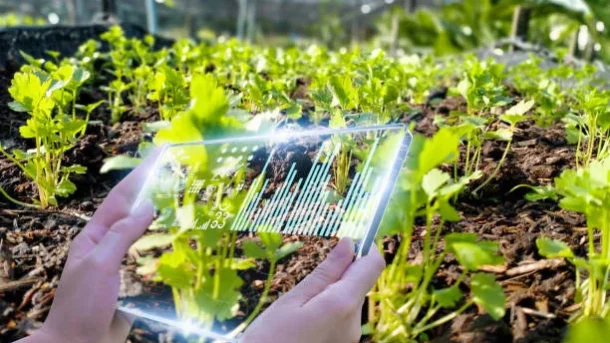
Applications for smart farming are being utilised more frequently to improve food traceability throughout the agricultural supply chain. To ensure transparency and traceability from farm to fork, these applications make use of a variety of technology and data-driven solutions. For food traceability, the following smart farming applications are used.

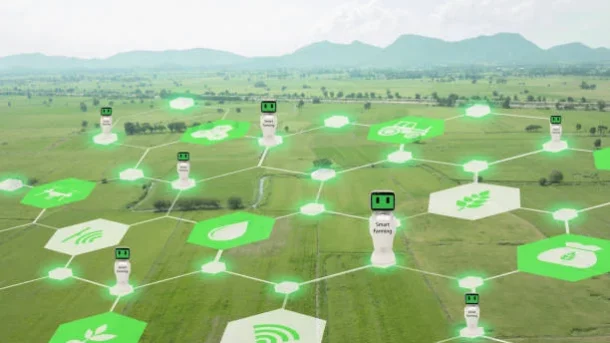
IoT Sensors and RFID Tags: Throughout the supply chain, different parameters are tracked and monitored using Internet of Things (IoT) sensors and Radio Frequency Identification (RFID) tags. To gather information on temperature, humidity, soil moisture, and pesticide use, IoT sensors can be installed in fields and farms. To track the movement and status of individual products as they travel through the supply chain, such as crates or pallets, RFID tags are affixed to them.

Traceability within food control systems is applied as a tool to control food hazards, provide reliable product information and guarantee product authenticity. Recall or Product Recall is defined as “the action to remove food from the market at any stage of the food chain, including that possessed by consumers”.

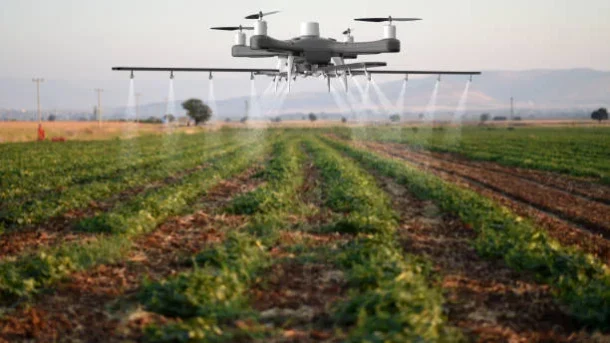
What is the role of remote-controlled drones in agricultural surveillance?

Feature Selection: To provide precise predictions, machine learning algorithms need pertinent features. The most important factors that have an impact on market demand are determined using feature selection approaches. Product characteristics, pricing details, marketing initiatives, seasonality, and outside variables like economic indicators are a few examples of these elements.

Regression, decision trees, random forests, and neural networks are just a few examples of the machine learning models that may be trained utilising preprocessed data. The models discover patterns and connections between the feature inputs and market demand. The models’ internal parameters are changed during training in order to reduce prediction errors.

Model Evaluation and Validation: The trained models are evaluated and validated using historical data that was not used for training. This helps assess the performance and accuracy of the models in predicting market demand. Various evaluation metrics, such as mean absolute error (MAE) or root mean square error (RMSE), are calculated to measure the predictive performance.

How is machine learning used for predicting market demand in agriculture?

market demand

With the use of historical data, current market trends, and other pertinent variables, machine learning is increasingly being utilised to forecast market demand in agriculture. Here is an example of how machine learning is used to forecast market demand.

Data collection: Useful information is gathered, such as past sales figures, industry trends, seasonal patterns, consumer behaviour, and other variables that may affect market demand. This information can be found in a variety of places, including market research studies, governmental databases, and internal corporate files.

The selection of relevant characteristics is necessary for machine learning algorithms to produce reliable predictions. In order to pinpoint the factors that have the greatest influence, feature selection approaches are used. These aspects may include product characteristics, pricing details, marketing initiatives, seasonality, and outside variables like economic data.

Model Training: Using the preprocessed data, machine learning models are trained, including regression, decision trees, random forests, and neural networks. The patterns and connections between the input attributes and market demand are discovered by the models. The models modify their internal parameters during training in order to reduce prediction mistakes.

What are the advancements in aquaponics systems for sustainable food production?

advancements

Aquaponics is a cutting-edge and environmentally friendly agricultural technique that combines hydroponics (soilless plant cultivation) and aquaculture (fish farming), Here are some developments in aquaponics systems that help produce food sustainably.

Water, nutrients, and trash are recycled and reused in closed-loop systems, which have been the focus of aquaponics advancements. In these systems, nutrient-absorbing plants are grown in hydroponic beds using water that is circulated from fish tanks. A continuous cycle is created when the water is filtered by the plants and then returned to the fish tanks. Because of its closed-loop system, aquaponics is both very water-efficient and environmentally benign. It also reduces nutritional waste.

Automation and monitoring technology integration: To enhance productivity and optimise operations, aquaponics systems are incorporating automation and monitoring technologies. Water quality indicators like temperature, pH, dissolved oxygen, and nutrient levels are tracked using sensors and controllers. These variables are controlled by automated devices, which guarantee ideal conditions for both fish and plants. The connection improves system management and productivity by reducing the need for human monitoring and intervention.

Aquaponic lighting may now be more energy-efficient and individualised thanks to advancements in LED lighting technology. It is possible to customise LED lighting to meet the unique lighting needs of many plant species, maximising photosynthesis and growth. They use less energy than conventional lighting sources, which lowers overall energy costs and increases the sustainability of aquaponics.

What are the benefits of using precision spraying systems in agriculture?

precision spraying

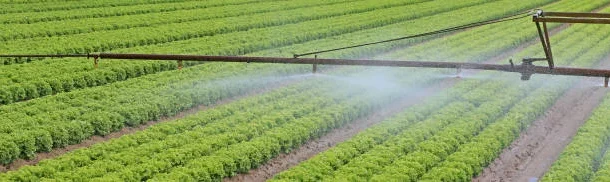
Reduced Chemical Use: Precision spraying systems precisely identify and target certain plants or problem areas using technologies including sensor-based identification, computer vision, and machine learning algorithms. These systems reduce the use of chemicals by precisely spraying herbicides, insecticides, or fertilisers only where necessary, hence lowering overall chemical usage and minimising environmental effect.

Greater Efficiency: Precision spraying systems allow for accurate and focused application, eliminating overspray and cutting down on waste. As the appropriate amount of chemical is delivered directly to the target plants or locations, this results in better chemical usage efficiency. Farmers can save money by using resources more effectively, including labour, chemicals, and water.

Environmental Protection: Precision spraying technologies assist save the environment, nearby crops, and natural habitats by reducing chemical drift and runoff. The impact on beneficial creatures, water bodies, and unwanted plants is minimised due to the targeted application’s lower probability of chemicals reaching undesired locations. This encourages ecological sustainability and lowers the risk of ecological harm.

Crop health and quality are enhanced by the timely and precise administration of treatments made possible by precision spraying systems. These systems aid in the management and control of crop stresses by efficiently focusing on pests, diseases, or nutritional deficits. The timely delivery of remedies thanks to precise application lowers the possibility of production loss and raises crop quality overall.

How are smart greenhouse systems improving crop production?

smart greenhouse

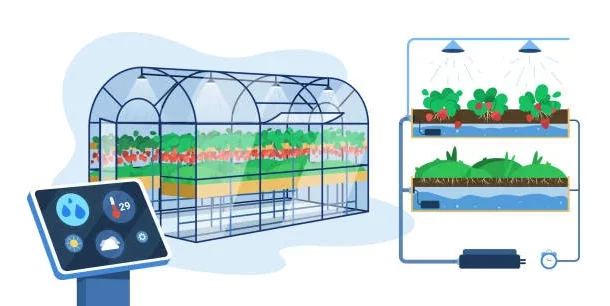
By offering precise environmental control and enhancing plant development conditions, smart greenhouse systems are revolutionising crop production. Here are some ways that crop output is being enhanced through smart greenhouse systems.

Climate Control: Sensors, actuators, and automation technologies are used by smart greenhouse systems to track and manage environmental variables like temperature, humidity, light levels, and CO2 concentration. Independent of the weather outside, gardeners can produce the ideal growth conditions for particular crops with this fine control. It makes it possible to produce all year long, lengthens the growing season, and improves crop quality and productivity.

Irrigation Management: Advanced irrigation technologies are incorporated into smart greenhouse systems to accurately provide water to plants based on their requirements. Automated irrigation systems deliver water in a targeted manner while sensors measure soil moisture levels, minimising water waste and increasing water usage effectiveness. This reduces the possibility of overwatering or underwatering and encourages healthy growth by ensuring that plants receive the proper amount of water.

Nutrient Management: Intelligent nutrient delivery systems are included into smart greenhouse systems to give plants the nutrients they need in a regulated way. These systems keep an eye on the concentrations of nutrients in the soil or nutrient solutions and change the composition and concentration of nutrients as necessary. Plants acquire the right balance of nutrients for optimum development and productivity thanks to this exact nutrition control.

What are the advancements in livestock genomics for breeding programs?

breeding programs

Breeding programs have been considerably impacted by improvements in livestock genomics, which have made the selection of desirable traits in animals more exact and effective. These significant developments in livestock genomics for breeding programs are listed below.

Genome sequencing: Livestock genomics has undergone a revolution as a result of the capacity to sequence an entire species’ genome. Reference genomes are now readily available, allowing researchers to find and investigate genetic differences linked to particular features, illnesses, or performance qualities.

Marker-Assisted Selection (MAS): MAS identifies genomic regions linked to desirable features by using genetic markers, such as single nucleotide polymorphisms (SNPs). The genetic potential of an animal can be predicted using these indicators, which can also help breeders make choices. By enabling the early selection of animals with desirable features, MAS quickens the breeding process by eliminating the need for time-consuming and expensive phenotypic tests.

genetic Selection: Genomic selection is a breeding technique that determines an animal’s breeding value using genetic data, often obtained by high-density genotyping or sequencing. The precision of forecasting an animal’s genetic merit for particular traits is increased through genomic selection by taking into account genetic markers dispersed across the genome. This strategy permits more rapid genetic advancement and effective management of breeding programs.

How is blockchain technology being used for provenance tracking in agriculture?

blockchain technology

To ensure openness, traceability, and confidence in the supply chain, provenance monitoring in agriculture is increasingly being done using blockchain technology. Using blockchain in this situation looks like this.

Immutable Record-Keeping: Blockchain enables the creation of a decentralised, impenetrable ledger where all data and transactions pertaining to the agricultural supply chain may be stored. This includes details regarding where agricultural products were grown, how they were produced, how they were certified, and how they were handled. A record of the product’s path from farm to consumer is created that cannot be changed or removed once it has been recorded.

Supply Chain Transparency: Blockchain promotes transparency by enabling access to and verification of data stored on the blockchain by all stakeholders, including producers, suppliers, processors, distributors, and buyers. Each participant may offer their information, such as production information or quality

Blockchain technology has the ability to record and preserve data on numerous quality metrics, including soil characteristics, farming techniques, and post-harvest treatment. Consumers who have access to this information are better equipped to judge the value and security of the agricultural products they buy.

What are the benefits of using digital agriculture platforms?

digital agriculture

Platforms for digital agriculture have many advantages for farmers, agronomists, and the agricultural sector as a whole. Among the principal benefits.

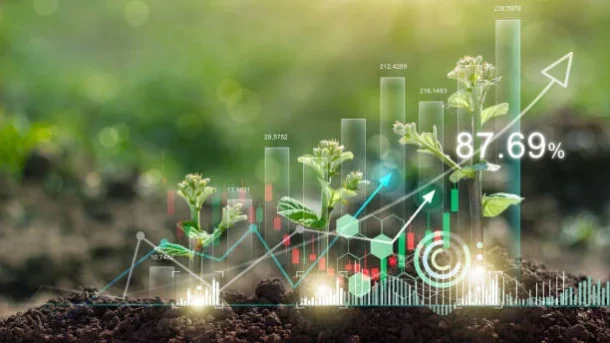
Data-Driven Decision Making: Digital agriculture systems gather, process, and analyse voluminous agricultural data from a variety of sources, such as sensors, satellites, and farm machinery. Farmers are able to make well-informed decisions thanks to these data-driven insights, which also aid in the resource allocation and optimisation of crop management techniques.

Precision farming: Using digital platforms for agriculture, farmers can apply precision farming practises including the variable rate application of water, pesticides, and fertilisers. Precision farming maximises resource efficiency and minimises waste, resulting in cost savings and a smaller negative impact on the environment. This is done by customising inputs to the distinct demands of various sections within a field.

Crop Monitoring and Management: Digital systems provide real-time crop monitoring using drones, satellite imagery, and remote sensing technologies. This ongoing observation assists in spotting early indications of stress, ailments, or pests, allowing for prompt intervention and averting potential output losses.

Yield Optimisation: Digital agricultural platforms can assist farmers in maximising crop yields by integrating data on soil health, weather patterns, and previous yield records. Better crop planning, ensuring the proper crops are planted in the right places, and implementing practises that increase yield are all made possible by analysing this data.