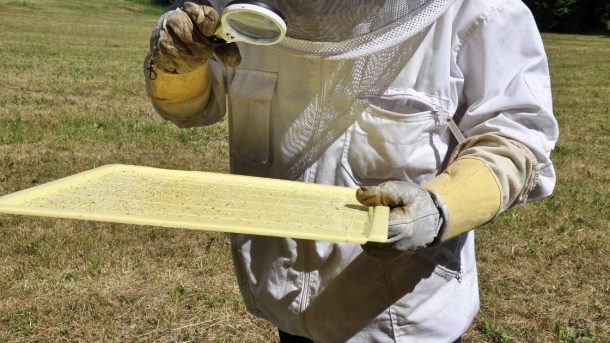
Pest monitoring done using field surveys and surveillance helps in forecasting the population build up of pest. Once a pest manager has taken precautions to prevent pest infestations, it is important to watch regularly for the appearance of insects, weeds, diseases, and other pests. This is called monitoring. The primary goals are to locate, identify, and rank the severity of pest infestations. It reduces the load of pesticides application and forms the basis of Integrated Pest Management. Various direct and indirect sampling methods for establishing pest populations are discussed. The use of pheromone lures and traps forms one of the important ingredients of integrated pest management, which calls for integration of all available methods in a cost effective and environmental friendly manner offering consistent efficacy.
How to manage tomato early blight?
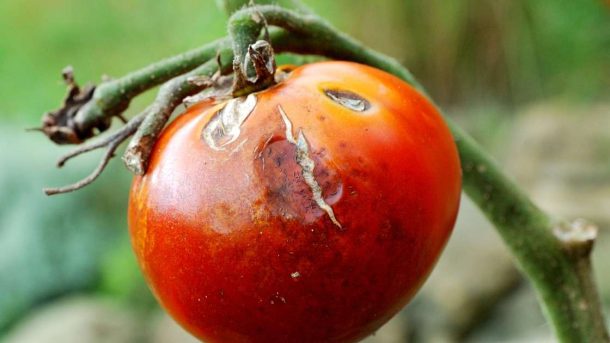
Early blight in tomato can be managed by using disease free seeds for sowing and by practicing field sanitation. Crop rotation with non-solanaceous crop and optimum irrigation that helps in avoiding stress condition are another method to prevent tomato blight. Seed treatment using thiram at the rate of 2g/kg and 3 sprays with difolatan 0.2 % at fortnightly interval also helps in controlling tomato blight.
What is propping in agriculture?
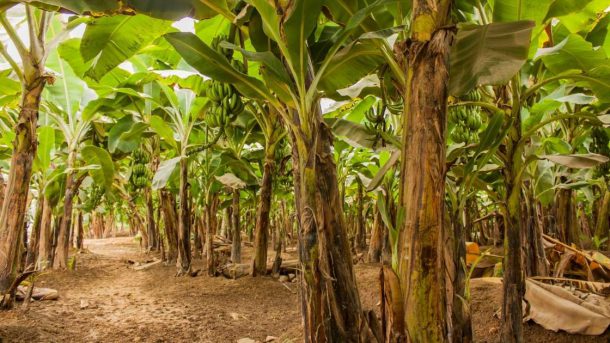
Propping can simply be defined as a cultural operation of plantain / banana plant which give additional support of the plant , which bear heavy load during bunching (flower period).Plants are generally weak during the dry season and strong winds, nematodes and stem borers also increase the rate of loss. For these reasons, bearing plants always need support from 1 or 2 wooden props, usually made of bamboo. At the time of bunch emergence , pseudo-stem requires support from props. Tall varieties which produce heavy bunches need propping. Bamboo or casuarinas poles which have effective life of 3-4 years are commonly used for propping. Coir or polythene wire can also be used for propping.
How de-suckering is practiced in banana?
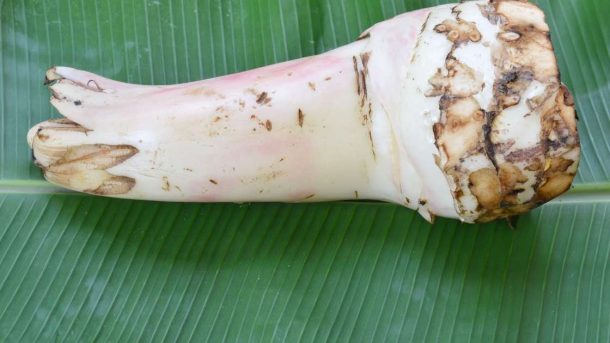
De-suckering is removal of surplus and unwanted suckers from banana plant. Suckers are removed from the mother either by cutting the sucker at ground level or by destroying the heart of the suckers without detaching the sucker from the plant. De-suckering can also achieved by pouring kerosene oil into the heart of the sucker. Under garden land and wet land cultivation, de-suckering is done at monthly intervals. In hill banana ,two bearing plants and two suckers per clump are considered as the optimum condition and the rest are de-suckered. Only one sucker is retained per plant and set for ratooning.
Why de-suckering is practiced in banana?
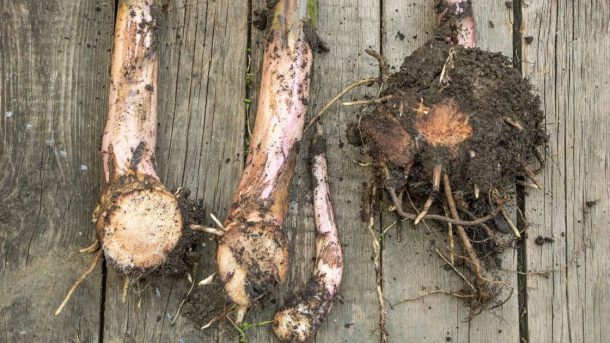
De-suckering is the process of removal of suckers. A number of suckers from the underground stem are produced during the life cycle of banana resulting in intra-mat competition through creation of multiple sinks and intensification of root and rhizome competition for space, water and nutrients. Therefore, growth of excess suckers should be discouraged before they become too large and unmanageable to interfere with growth of the parent plant.
What does soil color indicates?
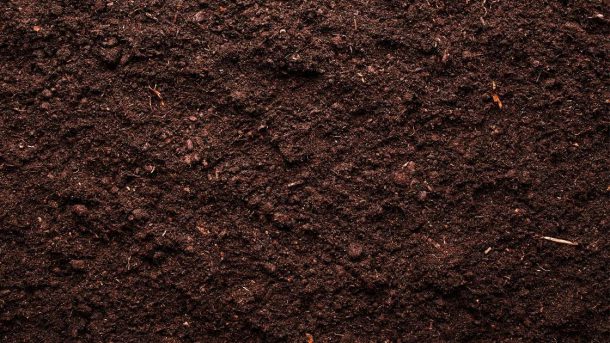
Dark color indicates usually medium to high fertility due to high amount of organic matter. These soils have usually high amount of nutrients, good water holding capacity and structure and are well aerated. Light color indicates medium to low fertility. These soils may have leaching issue (water makes organic matter and other nutrients move
downward faster).
What is precision farming?
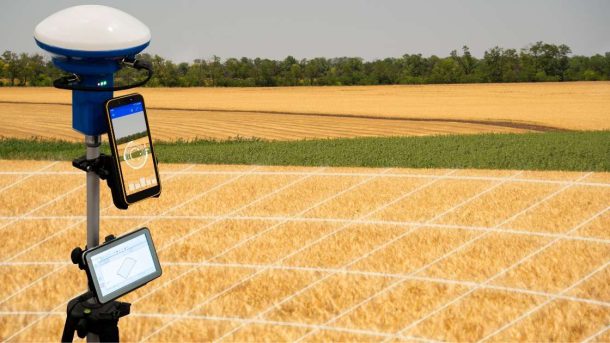
Precision farming can be explained as a technology-enabled approach to farming management that observes, measures, and analyzes the needs of individual fields and crops. The goal of precision agriculture research is to define a DSS (Decision Support System) for whole farm management with the goal of optimizing returns on inputs while preserving resources. Precision farming is a new concept adopted throughout the world to increase production, reduce labor time, and ensure the effective management of fertilizers and irrigation processes.
What is MSP( Minimum Support Price )?

Minimum Support Price (MSP) is a form of market intervention by the Government of India to keep a fixed price on agricultural products to protect producers from any sharp fall in farm prices. Government announces MSP at the beginning of the sowing season for certain crops on the basis of the recommendations of the Commission for Agricultural Costs and Prices (CACP).The minimum support prices are a guarantee price for farmer’s produce from the Government. The major objectives of government behind introducing MSP is to support the farmers from distress sales and store food grains for public distribution. In case the market price for the commodity falls below the announced minimum price due to bumper production and glut in the market, government agencies purchase the entire quantity offered by the farmers at the announced minimum price.
How weed management is done in wheat?
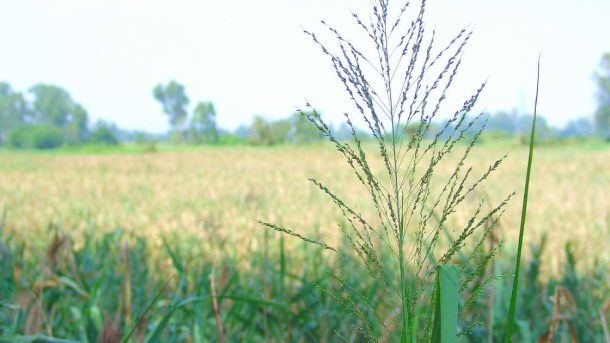
Cultural methods for weed management include hand hoeing ,Inter cultivation, crisscross sowing. Hand weeding is done after 35th day of sowing. Spray Isoproturon 800 g/ha as pre-emergence spraying 3 days after sowing. Use of MCPA (1 – 1.5 kg ai/ha) dissolved in 700 – 800 litres applied at 25 – 30 DAS Efficiency can be increased by mixing urea@ 3%. Mixture of Isoproturon (0.75 kg ai/ha) and 2, 4D (0.4 kg ai/ha) during 30- 35 DAS.
What are the symptoms of Fusarium Wilt in cotton ?
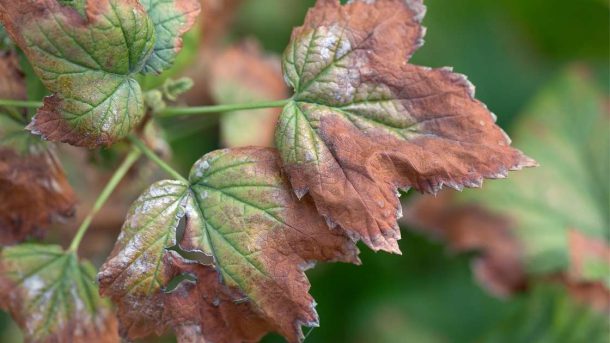
Fusarium wilt results in stunted plant growth , yellowing of plants and defoliation. Yellowing starts in the edges of leaves and then move inwards. Brown discoloration occurs in stems which is more intense in outer layer of tissues. Infected plants fruit earlier and produce smaller boll. In seedlings and young plants, cotyledons and leaves wilt, may turn necrotic, and even fall off the plant, resulting in bare stems. In mildly affected plants, lower leaves develop symptoms but plants survive, but with reduced vigor and noticeable stunting.